Showing posts with label young adult. Show all posts

Friday, March 21, 2025

Why Young Adult and New Adult Romance? Blast from the Past by Lynn Lovegreen

(This Blast from the Past was first published in 2016.)

We’re celebrating New and Young Adult romance this month! I am honored to be asked to write an extra post for this theme. (My usual gig is the second Thursday of the month.) These age categories are my favorites, and I’ll explain why.

Young adult (YA) is usually defined as the teen years, when most kids are in secondary school and figuring out who they are. New adult (NA) is often defined as the period right after that, when young people are holding their first jobs, going to college, and learning to be on their own in the world. Both ages are full of drama and possibilities, especially in fiction. Add a little romance, and you have the perfect ingredients for a novel.

Depending on who I’m talking to, I often just say I write YA. But if my audience knows about NA, I will say YA/NA. In my Gold Rush books, there is a combination of YA and NA characters. Because of the time period, most of my teenaged characters are taking on adult roles earlier in life. Plus, there is not an obvious border between the two age groups then, so teens are spending time with what we might call new adults. In Quicksilver to Gold, for example, set back in 1900, Jeannie has never set foot in a school building, but today she’d probably be a senior in high school. The object of her affection, Clint, would have graduated high school already since he’s a little older. When they meet at their mining claims outside Nome, Alaska, they are both seen as adults. But when you see Jeannie’s emotional reactions to things, there is no doubt she is a teenager.


I write YA and NA because I remember my teen and college years vividly. I knew even then that it was a dramatic stage of life; I recall thinking that if I ever wrote a book, it would be set during that time. (No, none of my books are that close to autobiography, but you never know what I might write in the future!) For most of us, those years are an emotional roller coaster. Everything is important, and so much feels earthshaking. That’s built-in drama for a novelist.

While adults also enjoy reading YA and NA, I hope teens can use my characters as examples of what they might do with their own lives. If Jeannie can strike it rich with her mining skills or Charlotte can help create Denali National Park, why can’t our readers achieve their own dreams? I hope they will.

For more on why I write YA, see my video at https://youtu.be/rJDWwrSnXuMhttps://youtu.be/rJDWwrSnXuM.


Lynn Lovegreen grew up in Alaska, and still lives there. Her young adult/new adult historical romances are set in the Alaska Gold Rush, a great time for drama, romance, and independent characters. See her website at www.lynnlovegreen.com.

Saturday, May 21, 2022

What the World Needs Now: Empathy by Barbara Binns


In " What the World Needs Now: Empathy", first published December 10th, 2014, YA and Middle Grade Author Barbara Binns presents the importance of being able to see things from another person's vantage point, and how reading diverse fiction helps children develop empathy. (File this one under "Educate/Inspire")

Hi everyone! I am YA and Middle Grade author B A Binns , writer of contemporary and realistic fiction for teens. My tagline says it all - Stories of Real Boys Growing Into Real Men - and the people who love them. 


This month I'm blogging about the E-word.

This is that season, you know, the one were everyone shouts about peace on earth and good will toward men. I have to think about another word. Empathy. You know, that ability to see things from another point of view. To understand and at least temporarily share someone else's feelings, even if that someone else is outwardly very different from yourself.

I have a quote from Purple heart recipient Charlene Lauderdale, a retired master sergeant in the United States Air Force. She was also born with both female and male anatomy. After living most of her life as a man, she is now legally a woman faced with all the challenges the transition represents. Instead of the walk a mile in someone else's shoes cliche, I will use her words:
You never know until you step up to the plate and swing at the ball coming at you.
See, it's not about feeling sympathy or approval. It's about understanding.

Two weeks ago at my adult Sunday School class, the subject of Ferguson Missouri and the Michael Brown came up. One member of the group made a statement saying he could never understand how anyone could ever try to hit a police officer for any reason.

Never understand.

I'm not going to pretend I know the right or wrong or the final truth about anything that has happened or is happening in this arena.  But I know that anyone content to relax and say "I'll never understand" and let that be the end of things, lacks the ability--or the desire--to even consider the possibility that another individual might look at the world and see something outside their own vantage point. 

Not long ago I saw a call from a teacher looking for books for her elementary class she could use to help teach them empathy. My answer: get any book about anyone who is different from them, who lives a life different from theirs in terms of social class, race, ethnicity, and physical location. Hand them books that show these characters face the kinds of challenges her kids can understand. Let her readers walk through those books wearing the character's shoes so they also see his or her motives, issues, thoughts, goals and emotions. See their sorrows and their triumphs. Become someone different from themselves, at least for the time it takes to get through that book.

A good book can be the perfect empathy training ground.  The march 2013 issue of the Rotarian included an article called The Truth About Fiction. In that article, cognitive psychologist Keith Oatley is quoted as saying:
…reading more fiction enables you to understand other people better.  Fiction is about exploring a range of circumstances and interactions and characters you’re likely to meet.  Fiction is not a description of ordinary life; it’s a simulation. ...fiction tells us what can happen, which can stretch our moral imaginations...

Inside the pages your mind can occupy another space, another body. You can see the world through different eyes. Unfortunately, too many of us read books about people who are like ourselves.  I don't mean that we're all beautiful heroines or navy seal heroes. But a load of the books we read are about people who are basically like the reader. White, middle class or wealthy, primarily suburban. As a result - little or no empathy is required or promoted during the reading of that book, and opportunities are lost. WNDB was born for various reasons. Partly by authors and concerned members of the publishing industry who saw how many children's books featuring a protagonist outside the typical "universal" background could not find a publisher. That included fantasy and speculative fiction,  aliens and yetis were more plentiful than kids of color, kids who lived in poverty, or people who existed outside the US, Canada, England or the UK. Don't even ask about non-christian kids or the handicapped.  

I believe that books featuring Heroes or Heroines from all places and walks of life can have stories that bring something to enrich us all. That characters who are neither rich nor middle class can share their form of the universal story with readers, and in the process, enhance the readers' lives. Those books can teach readers they do not have to condone an individual's actions, but that understanding is the path toward a better future.

That's why I write diverse books. It's also why I teach a class for writers who want to write about people who are different from themselves.  It's not an easy task. If done wrong, the author can do more harm than good, promoting stereotypes that negate the need for empathy because the reader Ends up feeling, "Everyone knows that's how those people are."  And people from the group can feel victimized when seeing themselves portrayed as a caricature.  The class is for authors who want to do the work needed to do a good job understanding and portraying someone else. And, in the process, developing more than a little empathy themselves.

Learn more at Diverse Writing

Saturday, August 15, 2020

A Blogversation: YA Romance by Lynn Lovegreen

Unlike genres, young adult (YA) is a category or age range. The main characters are teens, roughly 12-18 years old. You can find YA contemporary, fantasy, paranormal, mystery, and many other genres. I write YA historical fiction set in Alaska, and there’s always at least a thread of romance in there. YA romance is a perennial favorite. Why not—who can resist the first kiss, the high school date, all the heady experiences of teenage romance?


Some young adult novels focus on the love story and can be called true or straight YA romance. For example, Chris Cannon’s Boyfriend Chronicles series starts with Blackmail Boyfriend (http://www.chriscannonauthor.com/book-store/):


Blackmail Boyfriend by Chris Cannon

Sometimes, blackmail is the only weapon a girl has…

Haley Patterson has had a crush on golden boy Bryce Colton for ages. But when she hears a rumor that he hooked up with her she gives him a choice: be her boyfriend for a month to show other guys that she’s dateable—despite her overprotective and very intimidating brothers—or deal with the angry, cage-fighting boyfriend of the girl he actually did hook up with.

Bryce didn’t know the other Haley even had a boyfriend. He was just trying to get his ex off his back. And now, not only is he being blackmailed, he's being blackmailed by an honor student. His new “girlfriend” has two three-legged dogs, her father mows grass at the country club, and she's…well, difficult. And different.

Can something so fake turn into something real?


Pintip Dunn’s upcoming Dating Makes Perfect (http://www.pintipdunn.com/dating-makes-perfect) is another good example:


Dating Makes Perfect by Pintip Dunn

The Tech sisters don’t date in high school. Not because they’re not asked. Not because they’re not interested. Not even because no one can pronounce their long, Thai last name—hence the shortened, awkward moniker. But simply because they’re not allowed.

Until now.

In a move that other Asian American girls know all too well, six months after the older Tech twins got to college, their parents asked, “Why aren’t you engaged yet?” The sisters retaliated by vowing that they won’t marry for ten (maybe even twenty!) years, not until they’ve had lots of the dating practice that they didn’t get in high school.

In a shocking war on the status quo, her parents now insist that their youngest daughter, Orrawin (aka “Winnie”), must practice fake dating in high school. Under their watchful eyes, of course—and organized based on their favorite rom-coms. ’Cause that won’t end in disaster.

The first candidate? The son of their longtime friends, Mat Songsomboon—arrogant, infuriating, and way too good-looking. Winnie’s known him since they were toddlers throwing sticky rice balls at each other. And her parents love him.

If only he weren’t her sworn enemy.


Others integrate romance into the plot, like Sherry Thomas’ The Magnolia Sword: A Ballad of Mulan(https://www.sherrythomas.com/the-magnolia-sword-a-ballad-of-mulan.php):
The Magnolia Sword: A Ballad of Mulan by Sherry Thomas

CHINA, 484 A.D.

A Warrior in Disguise
All her life, Mulan has trained for one purpose: to win the duel that every generation in her family must fight. If she prevails, she can reunite a pair of priceless heirloom swords separated decades earlier, and avenge her father, who was paralyzed in his own duel.

Then a messenger from the Emperor arrives, demanding that all families send one soldier to fight the Rouran invaders in the north. Mulan's father cannot go. Her brother is just a child. So she ties up her hair, takes up her sword, and joins the army as a man.

A War for a Dynasty
Thanks to her martial arts skills, Mulan is chosen for an elite team under the command of the princeling--the royal duke's son, who is also the handsomest man she's ever seen. But the princeling has secrets of his own, which explode into Mulan's life and shake up everything she knows. As they cross the Great Wall to face the enemy beyond, Mulan and the princeling must find a way to unwind their past, unmask a traitor, and uncover the plans for the Rouran invasion . . . before it's too late.

Inspired by wuxia martial-arts dramas as well as the centuries-old ballad of Mulan, The Magnolia Sword is perfect for fans of Renee Ahdieh, Marie Lu, or Kristin Cashore--a thrilling, romantic, and sharp-edged novel that lives up to its beloved heroine. 


Let’s talk! What do you prefer, straight up YA romance, or a young romance woven into the story? Or maybe you have a title or author to recommend?


Wednesday, September 12, 2018

Nobody's Perfect

Hi everyone! 

I am YA, and now MG author Barbara Binns , writer of contemporary and realistic fiction for adolescents and teens. My tagline tells you what I am about - Stories of Real Boys Growing Into Real Men - and the people who love them.  My debut middle grade novel, Courage, was recently published by Harper Collins.

My first book was published nine years ago (where has the time gone?) Pull won a Reader’s Choice award, and was a finalist in the Reveal Your Inner Vixen contest. Pull garnered good review from Kirkus and School Library Journal and several other professional reviewers.

But one reviewer noted there was an unresolved subplot. I was mortified. I reread the book a dozen times trying to find what plot line was left dangling. Every book I have written since then (Being God, Minority Of One, and now Courage) had me going over every subplot with a microscope to be sure I never made a horrible mistake like that again.

Right now I am racing to a deadline on a new story. I've also been victimized by writer’s block for several weeks. The source of my block was another review, only this one was not from a stranger. It came from a member of the librarian community, someone whose blog I have read and whose recommendations I have trusted for years. I actually put an ARC for Courage in her hands and asked her to read and review when we met at a conference over the winter. Mind you, I didn’t expect a mind-blowingly awesome recommendation. I simply thought she would be fair. What I didn't expect was that she would write falsehoods about the content of Courage.

I teach a class on diversity and inclusive writing.  I begin a new session next month. So I was horrified when her review accused me of creating a stereotypical Asian tiger mother. I actually doubted myself for a moment.

Then I remembered, there are zero Asian women in the pages of my book. Black women, white women, but not a single Asian women. The mother in question is a white, over-enthusiastic soccer-type mom, or, in the case of Courage, a pool mom.

The reviewer made an honest mistake, I told myself. She goes through so many books, she somehow mixed mine up with another. So, even thought I have been told to never have respond to reviews, I did the unthinkable and wrote to explain the mother was not Asian, her heritage is described on page 20. I felt good, until I saw that she “fixed” things by adding a note admitting the mother was not Asian, but then accusing me of turning her adopted Filipino son into a stereotyped super-Asian kid. He was, she proclaimed, the only Asian in the book and illustrated the dangers of the “single story.”

Well, he is adopted and from the Philippines. But he is not the only Asian in my story. He is also not a superkid, just an 11-year-old diving student who wants to improve. Taking one last chance, I reminded her that there is more than one Asian in Courage. She changed her comment to admit that, while he was one of many, he was still an example of the single story AND a represented an attempt to use a checklist to to insert diverse characters to make a story commercial.

I bowed my head and licked my wounds. I sank like the Titanic, into an ocean-deep funk, knowing that the Internet is forever and that people would read her and believe I had written stereotypes. Never mind that anyone who read the book first would know she was wrong. Those who read her blog first wouldn't touch my book, ever.  I had a meeting with my critique partner last week, and had to struggle to think of anything to say about my WIP – the one with that deadline approaching. My mind just wasn't there.

My new story involves magical realism, and includes one ghost (and the danger of that single story looms again). The ghost sends some modern kids back in time, then reverses things and brings a kid from the past into the present. Frankly, after the review turmoil, I simply couldn’t think straight, much less deal with a couple of time paradoxes.

At least now I can cease worrying about that forgotten subplot. I’m ready to cease trying to fix a problem that probably never existed outside one reviewer's mind.

I’ve stopped worrying about this issue as well. I've heard from too many other people about Courage. This coming Sunday (September 16) I will be one of the featured authors at the Chicago Children’s book fair. I’ve also been asked to speak at the Illinois Library Association Conference on the subject of invisible populations and how librarians can reach out to them. And just yesterday I was asked to participate in an Illinois Youth Literature festival in 2019. These invitations come from people who believe in the way I strive for diversity and inclusion in my stories for children.

My block has cracked, and my ghost is ready to fit on the page.

PS, At least this has given me a new anecdote to relate to my diverse writing class next month, what happens when you do things right and readers still see a distorted picture in their minds. If you are interested in taking the class, you can find out more at http://www.babinns.com/spice-class/

As a reward for reading this, if you sign up for the class you get a 10% reduction, just for mentioning this post. This online class  begins October 1. 

Wednesday, March 14, 2018

Lost in YA stories


Hi everyone! I am YA, and now MG author Barbara Binns , writer of contemporary and realistic fiction for adolescents and teens. My tagline tells you what I am about - Stories of Real Boys Growing Into Real Men - and the people who love them.  My newest book, Courage, is middle grade fiction that will be coming out this summer from Harper Collins.


At the ALA Midwinter conference, I saw very few adult romances. Publishers attend the conference in droves for the opportunity to get their books in front of librarians from across the country. There are literally thousands of advance reader copies of books handed out to attendees to build hype for up-and-coming releases.

I grabbed an advance reader copy of What A Difference A Duke Makes by Lenora Bell by Avon from their booth. Outside of titles in the Harlequin booth and a few in some of the Indie booths, there was little or no other adult romance books at vendor booths during the librarian conference. I know, I actively searched for romance books. While there may be more during the larger, summer conference in New Orleans (Unfortunately I will not be able to attend) the lack was disturbing.

What A Difference A Duke Makes is a classic, and joyously funny, story of a governess and her employer, a Duke with a set of headstrong twins. His father abused his power and position with the more comely servants and he is determined not to continue that tradition.  Mari knows how to deal with rebellious orphans, surely she can deal with two pampered Duke's offspring without having to smother her rebellious nature for their father's benefit. Thus begins a game of governess versus duke, where even loosing is a victory.

What A Difference A Duke Makes goes on sale at the end of March, 2018.

On the other hand, there were tons of YA, including booths dedicated to them. Just as some people turn their backs on “bodice rippers”, too many adult readers continue to shun a fantastic area where authors are taking risks and readers are loving it.

Why Not YA?

Young adulthood is a time when passions run high. Witness what is happening in Florida and across the United States right now. I still remember the days when I too eschewed the dictum that you can’t beat city hall, when I fully believed that with right on my side I and my peers could accomplish anything. That’s an element that sets YA apart from other books, that youthful passion and belief that somewhere there has to be rightness and justice. The right books shows how that passion and optimism bleeds over into romance.

YA stories are seldom about people seeking happily ever afters. Very few of us find soul mates at sixteen (although I know some people in long term marriages who met in high school and would argue that point). It is about firsts, finding your place in the world, hopefully including a happily for now. As a result, books about younger protagonists present something special and different. That's what many readers of any age want, the same...but different.

A few of the YA gems I uncovered while at the ALA conference:

Me and Me by Alice Kuipers explores the “road not taken” a la Robert Frost’s poem. The fork in Lark’s life comes the day she has to chose one life to save. Either the five year old child she used to babysit for, or her boyfriend. The future will be different depending on who she selects to go after. She knows this, because in the book she splits and lives both timelines, just like in an episode of Star Trek. We journey with her as she explores both possible futures, the loss of the boy she loves or the end of the child she cares about. It’s a journey inside ourselves most of us never face, but she uncovers clues that say her mother also once had a similar split.

Me and Me goes on sale in October, 2018.


In Twelve Steps To Normal, author Farrah Penn describes Kira’s attempts to reclaim a lost love, a familiar theme in adult romance novels. What is unfamiliar, is the reason why she lost him. She's been away for almost a year while her father was in rehab for his alcoholism. Now he's been released and she is back home with him, her ex-boyfriend Jay,  the former best friend who is now with Jay, and Alex, a boy she has known forever and whom she liked, until he sent her a shocking text when she first left home.

Thanks to social media she has kept up with events back home, at least enough to be unsure how she will handle the grand reunion. She puts together a list of twelve steps for returning her life to normal. One of those steps is forgiving her father. Another is getting back with Jay. She also has to decide if she can still be friends with Alex and the information in that text.

Twelve Steps To Normal was just put on sale this week.


We Regret To Inform You is the young person’s version of an unsuccessful job hunt, even when your resume is perfect. Mischa Abramavicius (I kid you not, that is her name) finds that her star student status at an elite private high school is not enough to get her accepted into any college, not even her safety school. On paper, she is perfect and any school would be thrilled to have her and her many class and extracurricular accomplishments - unless the paper was altered. (I did say YA was a time of passion, and no passionate person will take rejection easily.)

Mischa sets out to discover who tampered with her record. She enlists the aid of Nate, even if it is embarrassing to be his "poor" friend. Armed with that youthful passion, she ends up exposing a school conspiracy that goes beyond her. Life in high school is exactly like Game Of Thrones where there are only so many spots at the top. That means someone has to be at the bottom. The conspiracy she and Nate uncover could land her a birth at a prestigious college - as long as she is willing to keep silent and preserve the status quo.

We Regret To Inform You will be released in August, 2018.

And of course there is my upcoming novel, Courage. At seventh grade life is more about developing friendships, initial relationships with peers, instead of genuine romance. T'Shawn, the protagonist, doesn't want the impossible. He just wants life to continue being good. Unfortunately,  that's impossible with his ex-con brother returning home, and preparing to live in the same bedroom with him.

This becomes an area where friendships are tested, including his budding interest in Carmela and Linda, two girls in his class ready to help him deal with the problem that is his prodigal son brother. Unfortunately, they hand him contradictory advice on how to handle the future, and, in the end, what to do next has to be his own decision.

Courage is being released in July, 2018.

Thursday, December 14, 2017

Writing YA/NA Historical Romance

You may recall that Romancing the Genres celebrated New Adult novels in August and September, and I explained then how my books could be considered both Young Adult and New Adult. (See my post at https://romancingthegenres.blogspot.com/2017/09/new-adult-or-not-by-lynn-lovegreen.html.)

I’ve learned a lot about writing YA/NA historical romance over the years, including these points:

  • A writer can’t just take a modern young woman and throw her into past centuries.

  • The historical information must be woven into the story without slowing down the plot.

  • The romance has to be organic and appropriate for the characters involved.

For more tips and tricks, you can sign up for “Writing YA/NA Historical Romance,” an online workshop I’m leading through Hearts Through History Romance Writers on January 3-31, 2018. Here’s the course description:

Can you just throw Bella or Katniss into the nineteenth century to create a historical romance? This four-week workshop will provide the skills an author needs to write a historical romance with young characters. In this course, we will practice writing romance grounded in historical fact. We will consider setting, character, and plot points, and ensure the language is appropriate for the story. Part of our discussion will include how young women had more limitations in the past, sexuality has changed over the years, and that adolescence was seen differently way back when. We will also discuss researching and weaving in historical information. While Lynn will provide lectures and short homework assignments, participants will be encouraged to add to the conversation with their own ideas and knowledge.


Lynn Lovegreen has lived in Alaska for almost fifty years. She taught for twenty years before retiring to make more time for writing. She enjoys her friends and family, reading, and volunteering at her local library. Her young adult/new adult historical romances are set in Alaska, a great place for drama, romance, and independent characters. See her website at www.lynnlovegreen.com. You can also find her on Facebook, Goodreads, and Pinterest.

Saturday, September 9, 2017

New Adult, or Not? by Lynn Lovegreen

When I first started writing my Gold Rush series, I knew the main characters were a little older than the typical YA (Young Adult) heroines and heroes. As I learned more about the NA (New Adult) category, I saw that my books could be New Adult, too.

Young Adult is usually defined as having main characters who are teens, and YA themes involve finding yourself or discovering who you are, and how you can develop relationships with people in your life. New Adult books follow the next part of our lives. According to the blog NA Alley (which later led to the blog NextLit: Coming-of-Age Fiction for the Modern Era), “Typically, a novel is considered NA if it encompasses the transition between adolescence (a life stage often depicted in Young Adult fiction) and true adulthood.” NA issues include finding your place in the world, identity, and living on your own for the first time.

Because my main characters were older teens but often on their own, they kind of fit in between. Four years ago, when I started doing promotion for my books, I often referred to them as YA/NA because they had elements of both, and I wanted to include both audiences. But as I looked at the market more closely, I saw a couple trends that worked against that.

One was the fact that Young Adult books are often bought by gatekeepers: librarians, teachers, and parents. Those gatekeepers are looking for YA and might be confused or put off by the NA label. Another was the fact that NA books at that time were usually steamy.

As many of you know, my books are squeaky clean. I tell people they’re G-rated and you can hand them to your grandmother or your granddaughter without fear. NA books, on the other hand, had a reputation for being R-rated. As one agent told me a couple years ago, New Adult makes her think of "beer pong and sex on the floor.” Of course, there are NA books that aren’t about that, but the perception is there.

So, after much thought, I started dropping the NA part of my descriptions unless I thought the audience was familiar with New Adult and/or wouldn’t assume my books were the steamy type. (For example, readers of this blog are either familiar with me or savvy enough to know there are different kinds of NA.) If you look at my internet presence today, you’ll see that most of the entries list YA and only a few indicate YA/NA. 

Is that a fair representation? I guess it is, for now. But I’m hoping that the perception of NA will change as more people write New Adult books and the category becomes more varied. In the meantime, I’m calling my books YA. But I support New Adult books and authors, and hope to see more published.


Lynn Lovegreen grew up in Alaska, and still lives there. She taught for twenty years before retiring to make more time for writing. She enjoys her friends and family, reading, and volunteering at her local library. Her young adult/new adult historical romances are set in Alaska, a great place for drama, romance, and independent characters. See her website at www.lynnlovegreen.com. You can also find her on Facebook, Goodreads, and Pinterest.

Thursday, March 31, 2016

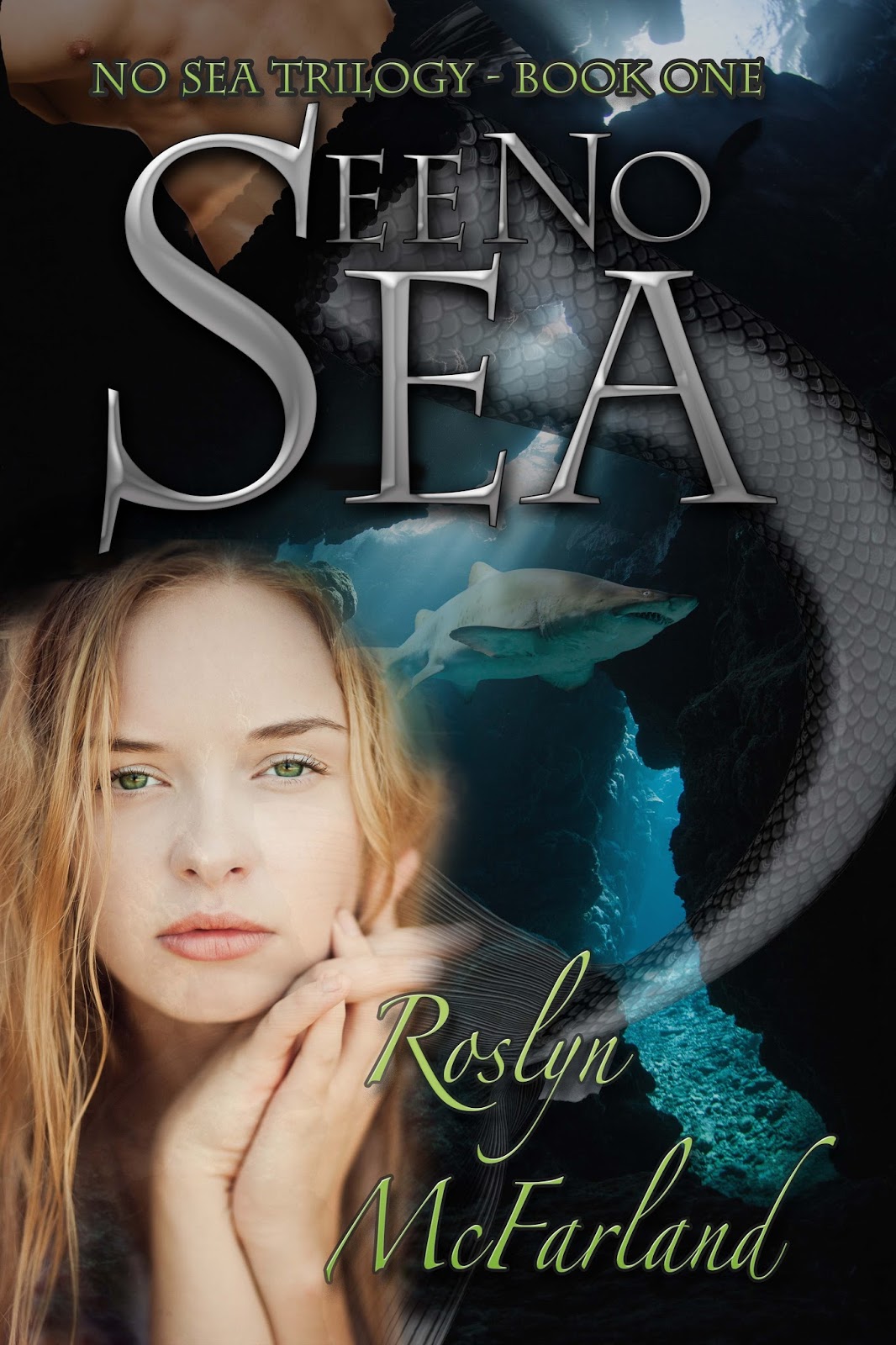
BEGINNING STORY by Young Adult Author Roslyn McFarland


Most reputable writing education material will tell you not to open your story with a dream. It's overdone, cliché, etc. And they're right.


My story, however, is all about a dream. Several, in fact.

More specifically, it starts with a recurring dream. At the tender age of 8, I experienced the same dynamic vision almost every night for a year, at which point it seemingly went away. Only it didn't, re-emerging once a year, even into adulthood.

A little back story.

SEE NO SEA
I have always been an avid reader with a love of creating stories. Somewhere along the line I convinced my self I couldn't possibly write the type of literature I felt the most awed and inspired by (Shakespeare, Tolkien, etc.). Writing anything not work related disappeared from my life.

Flash forward about fifteen years. Disabled by an illness, and no closer to a diagnosis than I had been five years before. My mystery illness was killing me. I lived a waking nightmare, desperately needing an outlet to break through the spiraling depression taking hold of me.

 
HEAR NO SEA
Then my dream came back. Three nights in a row.
I felt compelled to write it down.

With nothing better to do, I decided to tweak the dream a bit, transforming an eight year old me, to a teen not-really-me-at-all. Scene after scene emerged, scattered all over the place, until I wrote them down and put them in order. Eventually playing connect the dots, I finished the first draft of my first novel approximately six months later.

Despite my painful, symptomatic body, I don't recall ever feeling quite so giddy over an accomplishment. Even the birth of my kids, which my body pretty much took care of without a lot of direction from me. No, I still feel birthing a novel is by far one of the most mentally and emotionally involved processes one can undertake.
 
SOLDIER BOY
Then the editing began, but I'll leave the telling of that two-and-half-year grueling learning process for another time. Halfway through it, however, I did finally receive a diagnosis of Lyme disease, followed swiftly by treatment, giving me back much of my mobility.

The point is, it took a nightmare situation to bring me back to my dream. That of being a writer.


LIGHT THE WAY
The original story idea expanded, not quite finished in my first book, "See No Sea", becoming a mental trilogy.  Since then, I have also started a Short story collection ("Soldier Boy"), and a Science fiction series ("Light the Way"). Book two of my original series ("Hear No Sea") comes out next month. All my stories are Young Adult, Coming of Age Romances, clean language and simple light fun.

I didn't need to be the next Shakespeare or Tolkien. I only needed to be true to me.
 
DOODLE DUCK
I've also helped my nine-year-old daughter (now ten) get her first story published ("Doodle Duck").

The point?
It's never too late, or too early, to start writing. Don't get in your own way.

ROSLYN MCFARLAND

Oh, and that recurring dream? I haven't had it since. ~ Roslyn McFarland


Tuesday, August 11, 2015

Hottest New Trends in Romance Publishing

by Madelle Morgan


I was fortunate to be one of the more than two thousand authors attending the sold out RWA 2015 Conference in New York City in July. Aspiring and published authors packed the room for a panel discussion on the hottest new trends in romance publishing. Panelists included high profile bloggers, romance novel reviewers, public relations experts, and those representing the library point of view. The session was not recorded.

Important caveat: what I heard from the eight panelists and describe below is filtered through my own interests and is my own interpretation of their statements. They may have meant something a little different from what I understood. That's why I don't quote a particular panelist. With that in mind, here's my synthesis of their remarks.

Genre-Blending

Authors are writing books that mash up two or more genres (e.g., Paranormal Romantic Suspense). It's difficult to categorize these crossovers for library or retail shelves. In general, popular culture is driving trends. So, authors, there's your justification for watching the latest hit TV series. Game of Thrones, anyone?

Coming Around Again

Romantic suspense is on the upswing. Vampire fiction is back. As we all know, vampires don't die! A micro trend is Gothic Romance. Who remembers Dark Shadows? I betray my age when I tell you I watched the original television soap after school in the late '60s. The 2012 movie of the same name starred Johnny Depp. In the spirit of genre mash-ups, could we call it a "Vampire Gothic Comedic Romance"?


It Ain't Over 'til it's Over

Small town contemporary series, and series in general, continue to be very popular. Interestingly, street teams and readers commenting on social media are driving additional books in a series. When readers clamor for a favorite secondary character's story, indie authors are responding by adding more full length novels and novellas to a series. So make your wishes known, readers. Authors are paying attention.


Starting Out

A subset of contemporary romance is New Adult. I learned that New Adult is the offspring of Young Adult (YA) and Chick Lit. New Adult is less light-hearted and more emotionally intense, because, basically, the economy sucks. It's more difficult these days for twenty-something women to launch their careers. Money is tight. There's also a trend to first person point of view in New Adult, driven by its use in YA and fan fiction.

Historical Romance Marches on...Into the 40s

We've already seen many recent historical romances set in the 20th century up to the 1930s, thanks to the popularity of television series and films like Boardwalk Empire, Downton Abbey and The Great Gatsby. Panelists are seeing historicals set during World War 1 and World War II.The 1940s decade is now considered an historical time period. Gads!

Diversity Rules

As our culture becomes more openly diverse and multicultural, romance is trending to reflect the evolution. Panelists are seeing more romances with diversity of all kinds - physical and mental disabilities, inter-racial couples, LBGT, etc. Readers are looking for romance that mirrors society. Older readers are looking for issue-related stories such as those dealing with PTSD, autism, etc.

Leader of the Pack

What do biker gangs, shapeshifter werewolves, the military, and sports teams have in common? They're all pack, with their alpha males, hierarchies, and codes of conduct. One panelist predicted the up-and-coming "pack" heros in romance are men involved in organized crime.

The 1964 #1 hit by the Shangri-Las reminds us that the romantic "pack" hero is nothing new. 


Panelists are starting to see more sports-themed romance novels in print, especially with hockey player heros. Print publishers are catching up to the popularity of ebook romances with sports heros.

Short, Fast Reads of Excellent Quality

Much of the growth of reading on devices is driven by the fact that so many books are digital first. The trend to shorter (novella-length) is partially driven by the growing popularity of reading or listening on devices, and partially by time crunch. People are busy. Audiobooks are popular with commuters. With little time to sift through all the options available, people value recommendations on curated lists. And with a hundred books at a reader's fingertips, authors need to hook her in the first few pages or else she's on to the next book.

Last but Not Least...

Panelists are seeing a lot of red-haired heroines. Hey, am I on trend or what! My heroine, a feisty geologist, happens to have red hair.


Are You a Book Reviewer?

Diamond Hunter, a romantic suspense set in Canada's Land of the Midnight Sun, is on NetGalley until the end of August. It's available to reviewers for free upon request.

Enjoy the rest of the summer!

Madelle

www.MadelleMorgan.com

Friday, May 1, 2015

Books, Books, Books

I’m Judith Ashley, author of The Sacred Womens’ Circle series, romantic fiction that honors spiritual paths that nurture the soul and celebrates the path from relationships to romance.

Welcome to Romancing The Genre’s 4th Blog-O-Versary! I hope you had a  chance to stop by our Mega Global FB Event April 29 and 30. We had an amazing time and celebrated RTG’s reach from the UK to Australia and many points in between.

During the month of May, the Genre-istas will be talking about and recommending great books for your summer reading pleasure and our guests will be book sellers, including librarians and Kobo.

Whatever your reading pleasure, the Genre-istas’ have you covered.

Like historical?
Check out Bronwen Evans and Vivienne Lorret (Regency) Kris Tualla (Norwegian)  Margaret Tanner, Australian/WWI

Like romantic suspense?

Like Paranormal?

Like SciFi?
Like Westerns?
Paty Jager writes westerns with native American elements
Susan Horsnell from Australia writes American westerns set in Texas.

Do you know reluctant readers? Check out B.A.Binns for contemporary Young Adult (YA) books that feature diverse characters.

Steampunk?

Military Romance?

Older heroines? Check out Courtney Pierce’s boomer books

What about contemporary?
Marcia King-Gamble writes contemporary with a Caribbean flavor


And Judith Ashley writes contemporary rich with spiritual elements and a touch of the mystical.

Whatever your reading pleasure, you’ll find our authors’ books available through major e-retailers and their websites.

Please stop by on weekends to meet our featured book sellers and learn what you can do to support your local independent brick and mortar book store. 

Wednesday, March 11, 2015

I'll Take Mine Spicy

Hi everyone! I am YA author B A Binns , writer of contemporary and realistic fiction for teens. My tagline tells you what I am about - Stories of Real Boys Growing Into Real Men - and the people who love them. 

This month It's all about spice!

Over the weekend I visited a Sikh religious service. A group of people from my church, Methodist, accepted an invitation to attend a service at a nearby Sikh house of worship.


We attended their worship service with a guide who spoke at length about the Sikh religion. The Sikh traditions include a community meal at the end of service called the Langar. This Langar or free kitchen is a practice that goes back 500 years to the religion's early days. It was initiated by the first Sikh Guru, Guru Nanak Dev Ji. (FYI Guru means teacher, Sikh means disciple or student).


The Langar is designed to uphold the principle of equality between all people of the world. Rich eat beside poor, and people of any caste are welcome. People sit on the floor, except chairs are provided for those of us with bad knees. To be inclusive of members who cannot eat beef, or pork, or any meat, the meals are vegetarian.

They also contain very little spice.

I'm not trying to be a spoilsport. I enjoyed the company and the meal. We had soup, beans and rice, homemade yoghurt, and a sweat pudding. But a little more spice would have pleased my palate, probably proving I am spoiled.

I tend to try spoiling my readers. I have just wrapped up teaching my four week online course, Adding the Spice of Diversity to Your Writing. In there I try to show authors how they can do the same by adding to manuscripts that frequently contain all-white, all able-bodied, middle class or wealthy, heterosexual people who rarely if ever even mention religion. Some authors and publishers see this as being universal.

It can also be a little bland.

I use the spice metaphor in my class title for a reason. Food is fuel. But it is also a social lubricant.
Food brings people together, just as it did with the Christians and Sikhs at the Langar on Sunday as we broke bread sitting on the floor (or in a chair). I see that 500-year-old tradition as being ahead of its time as a means for promoting harmony. But spice adds color and flavor to a meal...and to a story. That's why I see the lack of diversity in many books, especially children's and young adult books, as being behind the times. The CCBC statistics for 2014 show that still only about 10% of children's books feature prominent characters of color. The stats for LGBT+ and disabled characters are even smaller. More than thirty percent of US children are Kids of Color. This rises to 50% if you look at the baby set. Add in an estimated 4% of LGBT+, and people with some physical, emotional, or mental disability, and you may be able to see why I can't consider bland as something to be desired, at least not in the world of books.

I was recently invited to be a member of the WeNeedDiverseBooks™ team. All of us feel honored by the recent announcement that School Library Journal has named our organization one of the named 2015 Movers & Shakers. As SLJ put it, "Movers see the future and bring it to life." I'm proud to be part of WNDB, a change agent, and a spice bringer.
http://lj.libraryjournal.com/2015/03/people/movers-shakers-2015/the-reveal-announcing-ljs-2015-movers-shakers/