Showing posts with label #clubmobilegirls. Show all posts

Tuesday, February 11, 2025

A Bygone Era when Kindness was a Default by Eleri Grace

My immediate thought on learning of this month's theme was to spotlight an organization I've always intended to become involved in - Random Acts of Genealogical Kindness (RAOGK). But as I've never had the time to volunteer myself, it seemed like an odd choice for this month's blog. I will give it a brief shout-out here before moving on. RAOGK allows individuals to request a genealogical record look-up at a courthouse or a tombstone photo at a cemetery that is located too far a distance to visit in person. Local researchers commit to performing at least one act of genealogical kindness each month. Even though untold resources have now been digitized, we genealogists often really do need someone who can be boots-on-the-ground in places where maybe courthouse and other civil records are not yet fully online or where the cemeteries are sometimes tiny and located on private property. It's a great idea and I hope to one day be in a position to make someone's day by providing them with some treasured bit of genealogical data!

I decided I could be more specific if I instead focus on how kindness was often the default, not the exception, during the WW2 years. My Red Cross Girl heroines relied heavily on the good-hearted local people who could locate hard-to-find resources, explain the area's customs, connect the women to local artists, vendors, and tradespeople. I'm sure I've noted it before, but the Red Cross created and ran thousands of on-base and off-base clubs of varying sizes all over the world during WW2. Sometimes the military designated a specific building on a base to be used for a Red Cross club for the enlisted men, but it was almost always sparsely furnished and undecorated at best. To get a club up and running required the Red Cross Girls to exercise a good bit of ingenuity and persistence, plus call on a certain amount of charm, to obtain everything from paint for the walls to furniture, supplies, games, sports equipment, and on and on. They also relied on off-duty servicemen or local people to perform some of the labor - painting the walls, repairs, moving heavy furniture, hanging decorations, and so on. Granted, many of the men might had more than kindness in mind when they volunteered their off time to helping out the Red Cross Girls, who were often the only female presence in a male-dominated landscape! 
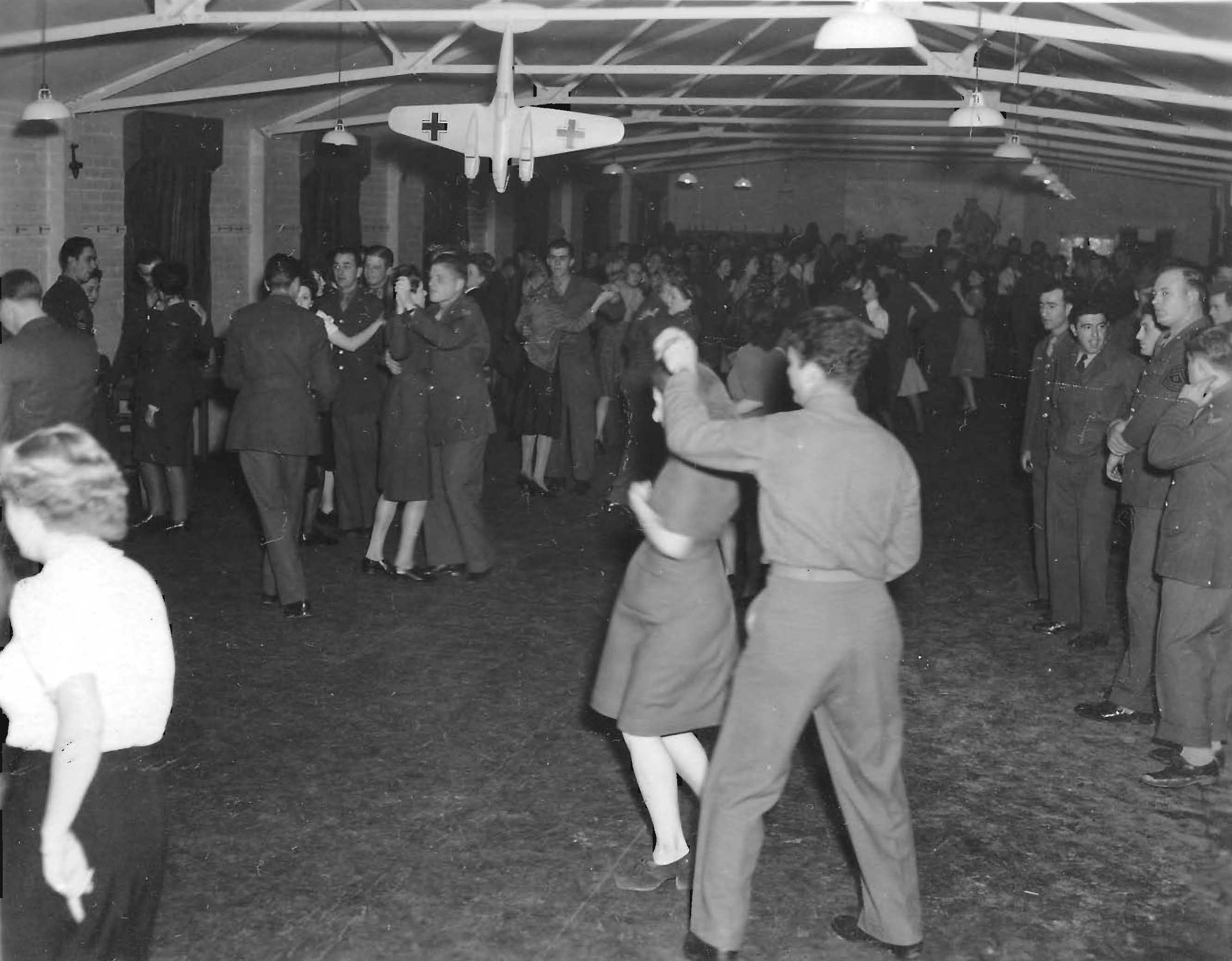
305th Bomber Group Aero-Club, Chelveston, England

But certainly an eagerness to be of help and be kind motivated so many people to come together in common purpose in those times. In the UK, the local villagers were especially pleased to not only invite lonely American fly-boys into their homes for a home-cooked dinner but also to provide resources to the bases. It was only a passing reference in my novel Courage to be Counted, but one local family who had sons serving overseas donated their piano to the 305th Bomber Group based at Chelveston, delivering it to the club on the back of a hay wagon. My heroines might need to do a little legwork, but they could almost always round up whatever supplies they needed for parties and special events by asking around in the area villages. 

Here's a few more examples of the kinds of events or clubs overall that required the kindness of strangers, a kindness that so many people didn't hesitate to extend in those uncertain war years -- enjoy!


You can read more about me and my writing on my website!  


Tuesday, December 10, 2024

Wartime Christmas Memories by Eleri Grace

Each Christmas I enjoy re-reading a blog post that a man wrote in tribute to his mother, who had served as a Red Cross Girl in Europe from 1943-45. Unfortunately, it seems the original blog is now behind a pay site, which is very sad as I don't think I ever printed out a copy. 

Thankfully I've blogged about it before and can refer back to my previous reflections. In the man's memory, there was such a contrast between the small tabletop Christmas tree decorated with simple handmade decorations (paper chains and ornaments, popcorn strings and the like) and the larger "real" tree that his family decorated for their living room each year. It wasn't until many years later, when he read his mother's wartime journal, that he understood why she always wanted to put up that smaller tree each season. Her journal recounts how she and her fellow Red Cross Girls set up a similar tree in Belgium in December 1944. 

For those that might not recall, the Germans launched a deadly counter-offensive (later known as the Battle of the Bulge) in mid-December 1944, and several Clubmobiles and their crews were unexpectedly caught behind or very near enemy lines. Even the crews who had been serving far back from the front in western Belgium were forced to trek back into France for safety. It was Christmas Eve before all the women safely reached their units back in France.

Though they were thrilled to mark the holiday with simple decorations and whatever food and liquor they could scrounge from supplies, the women were also mourning the loss of one of their own. A Red Cross Girl, recuperating from a mild illness in a hospital, was killed during a bombing raid on the hospital, and word of her death reached the others shortly before Christmas. 


Putting up this small simple tree was one of the ways his mom coped with stressful memories of her wartime service. Many Red Cross Girls, like the servicemen who fought, returned home changed in no small measure and continued to be affected for years afterward. His mother also nestled photos of "her boys" in the branches of that small tabletop tree -- that bitterly cold and uncertain Christmas of 1944 lived powerfully in her memory for the rest of her life. 

My wish for 2025 is that we might all recall the selfless spirit of the Greatest Generation and be guided by the kindness, generosity of spirit, and optimism for a brighter future that motivated both the servicemen and servicewomen of that bygone era. Wishing all of you a festive holiday season, a Merry Christmas, and New Year filled with health, happiness, and love!


You can buy my books on Amazon and learn more about me and my writing on my website

Tuesday, February 13, 2024

New Year, New Covers by Eleri Grace

Yes, despite the title of my post, I do realize we're now in February!  I just couldn't come up with a catchy title that conveys the content of this blog, and I couldn't think of a great way to relate it to our prompt this month. Going rogue!  

On January 26th, the new blockbuster WWII mini-series "Masters of the Air" premiered on AppleTV+ -- and because Donald Miller's book of the same title influenced my own series so very much, I launched new cover-art for my series, and revitalized my author blog with a promise to my readers that I would blog about each week's episode of "Masters of the Air" and share some additional tidbits in my author newsletter. 

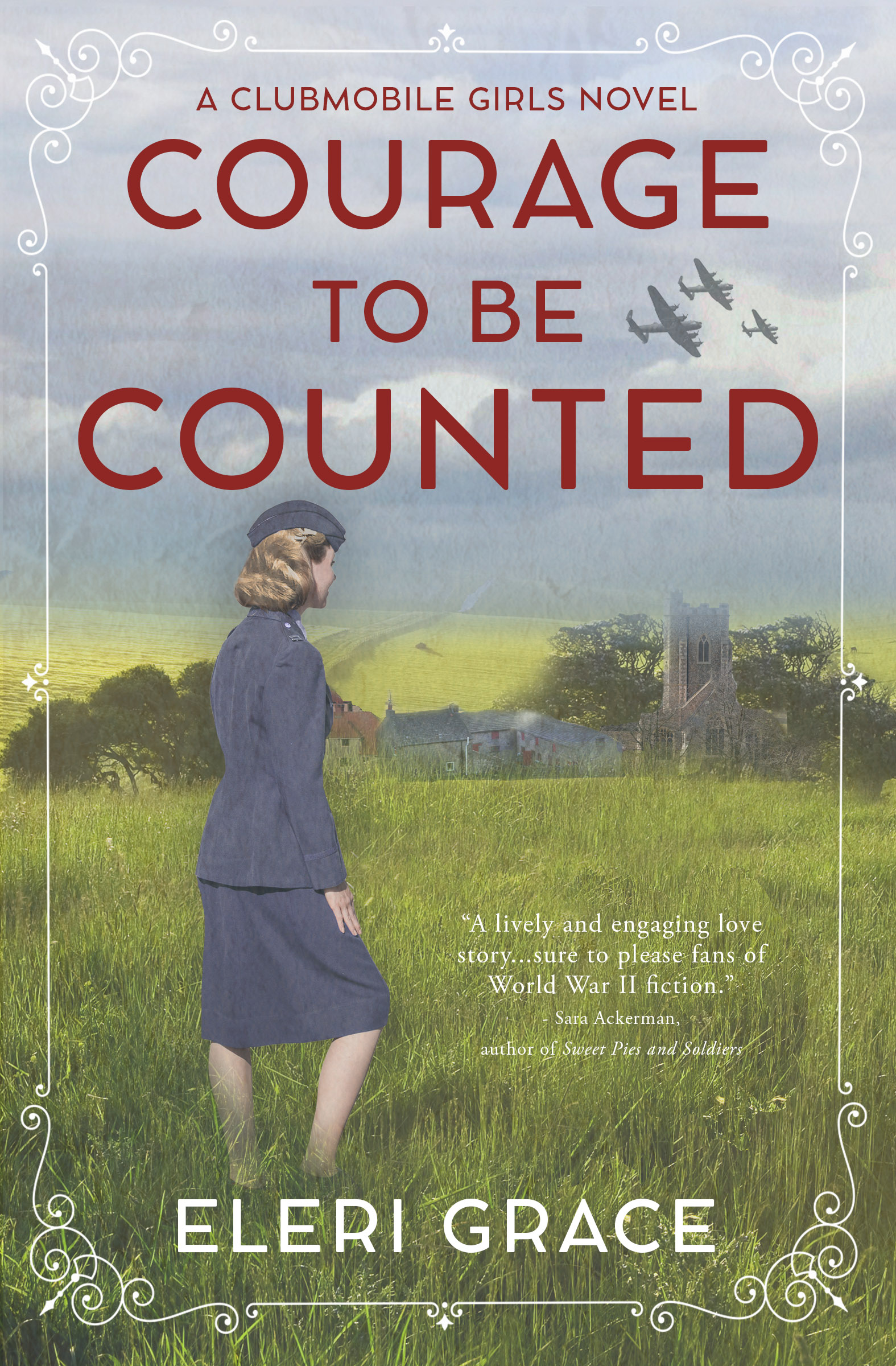
So without further adieu, let me introduce you to the stunning new covers I've launched for my novels:


For this one, I love the backdrop of the old Norman English church, which looks so very like the one where Vivian often visited the pastor in the village of Chelveston. Vivian's gaze is turned slightly upward to the bomber formation soaring overhead amidst the perpetually gray English sky, perhaps they are returning from a mission, and she is watching for some sign that one of the B-17s is Jack returning safely back to base. 


I absolutely love the lushness of this cover design, a clear signal that this novel takes place in the Pacific Theater. The distant mountain ranges represent New Guinea's coastal topography. Hadley has her musette bag slung over her shoulder and is wearing the less formal Tropical Red Cross Girl uniform (the formal one was a seersucker suit). She too is watching a distant B-25 bomber, likely hoping that it's Skip returning safely from that day's mission. 

Again, I'm also so excited to share here a link to my blog where you too can follow along as I describe for readers what we're seeing in the depiction of the Red Cross Girls in "Masters of the Air" (and what is not conveyed on the screen but is happening behind-the-scenes). I hope you'll check out my ongoing blogs here -- the first 3-4 blogs are spoiler-free for the series, though my latest blog for Episode 4 does include some mild spoilers. 

I've focused my blogs on the portrayal of the Red Cross Girls in "Masters of the Air." I'm delighted that they are featured in several episodes -- they absolutely should/could have been included in "Band of Brothers" and "The Pacific."  I participated in a "Masters of the Air" tour of the East Anglia bomber bases and other related UK sites, led by Dr. Donald Miller, author of "Masters of the Air," in 2016. The tour was hosted by the National WW2 Museum in New Orleans and was an exceptional all-around experience. Dr. Miller was a wealth of resources and would often respond to my many emailed follow-up questions within hours. He was not, however, familiar with the Red Cross Girls really at all, and I spent the entirety of the tour advocating for their inclusion in the mini-series, which was already underway at that time. I'd like to think I played some small part in their inclusion in the series and am honored to share my thoughts about what the series is getting absolutely right about the service of these remarkable women (and what could have perhaps been handled better in some cases). 

I also plan to continue blogging regularly to share tidbits from my "Masters of the Air" tour with Dr. Miller and other historical details relating to the Red Cross Girls and their WW2 service. 

I hope you'll enjoy those blogs and the extraordinary series, with new episodes being released each week through mid-March.  


You can learn more about me and my writing on my website and follow my blog and find me on Facebook, Instagram, Twitter, and Pinterest.  


Tuesday, September 12, 2023

Bookstore Finds by Eleri Grace

For me, the appeal of shopping very much depends on what I'm shopping for and who I'm with. Where I once happily spent hours at the mall shopping for clothes -- by myself, with my mom and sister, with friends -- I rarely find any joy in clothes shopping for myself. I'm still happy to take my daughter shopping, but it's much more about the time with her rather than the additions to my own wardrobe that might result. 

But bookstore shopping? I will never not enjoy browsing the shelves of bookstores. 

My best bookstore find ever was in Baldwin's Book Barn in West Chester, Pennsylvania. While visiting a friend who had relocated to the Philadelphia area from Texas, my group of BFFs decided to spend the afternoon at an indie bookstore our friend had already found. It is a book-lover's paradise -- our pictures don't really do it justice. It's a large old barn dating back to 1822, and has been operating as a bookstore for decades. It requires climbing up some narrow and questionably-safe ladders and staircases to reach all the floors that are brimming with old and new books, including a large selection of original and collectible editions. 

It was in this collectibles section where I made my find -- on the first level not long after we entered the store. I wish one of my friends would have thought to snap a photo of me when I first spotted it -- I recall squealing out loud (not my usual demeanor at all!). What caused this reaction you might ask? A Folio Society boxed set of Paul Scott's "The Raj Quartet." Before my children were born, I had belonged to the Folio Society and bought a few editions from them each year. But since I discontinued my membership long before, I'd had no idea that Folio issued one of my favorite series in their beautiful illustrated editions in 2009. 

My friends did take a photo of me on one of the upper levels still clutching my find -- the lighting is poor but possibly you can see my huge smile. I refused to leave it at the downstairs checkout and instead carried this heavy four-volume hardback boxed set up and down all the rickety ladders and narrow staircases. 

I'm not sure whether to classify my most recent excursion to a indie bookstore as a "best" or "worst" shopping experience. It too was surreal in that the first book I picked up at Austin's Book People was a recently-published historical fiction novel about a trio of Red Cross Girls in WWII. I had no idea it had been published, and while I'm delighted to see other authors exploring the stories of my beloved WWII Red Cross Girls, it was a bit jolting to realize I've been missing out on some marketing opportunities over the last several months. Whether I can find the time to familiarize myself once again with the technicalities and strategy of Amazon and/or Facebook ads remains to be seen. But I certainly should try! I'm not quite finished with this novel, but I'm fascinated by the author's personal connection to the Red Cross Girls. His mother was Phyllis (McLaughlin) de Urrea, and she served on a Clubmobile crew with Jill (Pitts) Knappenberger, whose WWII story was documented so nicely by Illinois Public Media


Bookstores -- you'll never know what you might find!


You can learn more about me and my Red Cross Girls novels at my website or on my Amazon page. 


Tuesday, December 13, 2022

Christmas Unity by Eleri Grace

 Each Christmas I am reminded of a lovely blog post from several years ago that a man wrote in tribute to his mother, who had served as a Red Cross Girl in Europe from 1943-45. He recounted a special tabletop Christmas tree decorated with simple handcrafted decorations -- paper chains, popcorn strings and candy canes -- that he and his mother put up every year. It was many years later before he understood the significance of that small, humble tree, which stood in such contrast to his family's far larger "real" Christmas tree in the front living room. His mom's wartime journal described the small simple tabletop tree she and her fellow Red Cross Girls created for themselves and the units they were attached to at the time in December 1944. 

What her journal doesn't describe was that her Clubmobile group likely had made a sudden move back into France from Belgium or Luxembourg. The Germans launched their Battle of the Bulge counteroffensive in the early morning hours of December 16, 1944, and several Clubmobiles and their crews were caught behind or very near enemy lines. Even the ones who had been situated reasonably back in western Belgium were forced to trek back into France for their safety. It was Christmas Eve before all the women reached their units back in France.

Though happy to see the safe return of their friends, that Christmas was also marked with mourning for one of their own who died while recuperating from a mild illness in a hospital that was bombed in battle. The women also, as his blog described, continued to be profoundly affected by their work with soldiers who had been in the thick of battle and were left physically wounded and/or psychologically scarred. His mother often included photographs of "her boys" nestled into the small Christmas tree -- that bitterly cold and uncertain Christmas of 1944 lived powerfully in her memory for the rest of her life. If you wish to read the entirety of his blog post, you can find it here.

As always, my wish for 2023 is that we all might recall the selfless spirit of the Greatest Generation and be guided by the kindness, generosity of spirit, and optimism for a brighter future that motivated both the servicemen and servicewomen of that classic era. Wishing all of you a very festive holiday season, a Merry Christmas if you celebrate, and a New Year filled with love, hope, and happiness! 


Tuesday, October 11, 2022

Lions and Tigers and Bears! Oh My! by Eleri Grace

 WWII novels aren't typically scary in the traditional sense -- not in the same way that a paranormal or suspense novel might keep you up at night. 

Yet historical novels can include scenes driven by psychological terror or danger, and I like to believe my novels include plenty of page-turning scenes that leave the reader in suspense. I've written here about the fear of heights common to so many pilots and how that sense of control that most pilots feel in the cockpit evaporated in the face of WWII combat flying, especially with the ever-present odds of being forced to bail-out of a damaged plane. 

My Red Cross Girl heroines likewise faced dangers and fears during their service. In my debut novel, Courage to be Counted, my heroine Vivian was forced to flee in the dead of night when German forces overran the previously-peaceful R&R town of Clervaux, Luxembourg in the opening day of the Battle of the Bulge. She and her fellow Clubmobilers bedded down in the French countryside in the same fields as the advancing American troops, with artillery shells booming overhead. Vivian also experienced a close call with death when a German fighter bombed a US Army work-crew she was serving, forcing her to dive for cover under a nearby Jeep. 

In my 2nd Clubmobile novel, my heroine Hadley's journalistic curiosity lands her in one sticky situation after another. Wanting to write stories of substance for her newspaper back home, she accepted a pilot's offer to go up in a small plane for a quick reconnaissance trip, yet ended up in a combat scenario. Chasing a scoop, Hadley ignored protocol for having a male escort for any drives beyond their immediate work territory in New Guinea and took a female war correspondent into a remote jungle region where they were nearly killed in a crash. 

Though it has no title or cover yet, I decided to share a brief scene of danger and fear experienced by my latest heroine Maggie in my work-in-progress (ever-hopeful that this 3rd Clubmobile Girls novel will be published early next year). Maggie is serving with the Red Cross in eastern India, near the Burma border. She and her fellow Clubmobile worker Jill had done a Clubmobile run to serve doughnuts, coffee, and cheer to the work crews building the Ledo Road, which would later provide the much-needed land route from India to China. Though they had a male Field Director escort in the Clubmobile runs on the Ledo Road and camped overnight with Army troops, the women shared a basha (small hut constructed of native bamboo and grasses) at the edge of camp. An unexpected visitor to their basha kept Maggie pinned to her cot in terror for hours one night. 

Source: Davidvraju via Wikimedia under CC BY-SA 4.0

Consciousness returned in gradual waves. Her body didn’t want to relinquish its hold on a deep, restful slumber, yet something in her brain continued trying to rouse her. 
Something warm and moist nudged the mosquito net flat against her face and moved the netting in a gentle caress over her nose, her cheek, her jawline. Like a lover nuzzling, hoping to reignite an earlier passionate interlude. 
It was the deep throaty rumble near her ear, similar to a cat purring — but deeper and with a hint of menace — that jerked her mind into hyper-alertness. Every muscle in her body tautened. 
Its warm breath near her own mouth carried a coppery tang — an unfamiliar smothering scent that spiked her already rushing adrenaline levels. Blood. Blood in its breath. Blood on its mind.
With soft chuffs, it raked the mosquito netting down her arm, then across her hand. As it nudged its nose against her waist, Maggie’s heart froze in her chest. 
Her escalating fear could prompt it to attack at any moment. An ice-cold shiver snaked down her spine at the thought of its sharp teeth and claws. The engineers and work crews working on the Ledo Road had reported several tiger attacks — men who had been mauled, grievously wounded, or even killed. 
Maggie fought through her suffocating panic and forced herself to center enough to consider options. 
What did she know about tigers? Was it a tiger? It was a big cat — she had grown ever more certain of that. The deep rhythmic sound it was making — akin to a saw scissoring through wood — put her in mind of a cat. It wasn’t a continuous purr like a house cat makes, but similar enough. There were bears here too, but she didn’t think a bear would make this sort of sound. 
 To Maggie’s ears, its investigatory noises reverberated through the basha. Could Jill hear it? She might be deep in sleep and blessedly unaware of their plight, or she too might be lying there, frozen into panicked silence. 
It might grow bored and disappear. As badly as Maggie wanted that outcome, it seemed unlikely. 
If one of them screamed for help, would that scare it off? Or would it pounce, snarling and ripping and sinking its long teeth into her tender flesh? It was the threat of the latter that kept her eyes squeezed tightly shut, her body completely rigid and still. Her every breath seemed to amplify and must be every bit as loud as the birds and other animals who continued their nighttime conversations, oblivious to the mortal danger in which Maggie and Jill found themselves.
Its soft fur brushed against her arm, what might be its tail swished in the air near her ear. The deep chuffing noise allowed her to follow its progress as it moved around her cot and now pressed against the netting on her other side. Maggie still didn’t dare open her eyes. Feigned sleep had worked so far. On the other hand, it surely must sense her wakeful state from her thudding heartbeat and accelerating pulse. 
It circled the cot twice more, insistently pressing its nose against her body from head to toe through the netting. It seemed to like the texture of the netting - Maggie had the sense that it was rubbing its face against it as cats so often rub their heads against furniture and objects. Grandpa said cats rubbed against things to mark them as their own. Was this one marking her as its next meal, or was it merely enjoying the texture of the soft, feathery netting? 

I hope you enjoyed the above teaser (and yes, Maggie is the heroine, so she does survive her night of terror, though the experience left its mark). 

In case you missed my earlier novels, you can find my Clubmobile Girls novels on Amazon. You can learn more about me and my writing on my website and by following me on Facebook, Twitter, Instagram, and Pinterest.  

Tuesday, May 10, 2022

Extraordinary in the Ordinary by Eleri Grace

 In case you missed it -- this was a post from 2019 not long after I began posting here regularly. This seems an appropriate one for Memorial Day month too!


A "superhero" is a fictional character with extraordinary or superhuman powers or an exceptionally skilled or successful person.

Rather than paying tribute to the numerous actual people who populate my life and have exceptional or superhuman perseverance, strength, and empathy for others, I decided to write today about a group of women who straddle both worlds in a sense. The heroines of my Clubmobile Girls novels are fictional, yet they are rooted firmly in our documented history. Based on the thousands of women who answered the call to wartime service with the American Red Cross, my heroines have a strong sense of duty and patriotism, resilience, an adventurous and independent streak, and exceptional courage.

Courage is the first word in the title of my first Clubmobile Girls novel, and it is the attribute my heroines call forth more than any other. As all good fictional characters do, my heroines must summon their mental strength to withstand and extricate themselves and others from dangerous situations. But my heroines evidence mettle from the beginning way before they are in any sort of perilous situation. Indeed, they have built up and drawn on an enormous reservoir of tenacity before my readers meet them. Of course, most American women served in some capacity during WWII, whether working in a factory or defense plant, enlisting in one of the auxiliary military service units, volunteering with the USO, the Red Cross, or a local hospital, or tending a victory garden and economizing in her household. But the women who secured the overseas assignments with the American Red Cross evinced particularly exceptional spirit and drive.


Well before the first women shipped out, before their overseas work was operational, the Red Cross intuited that the women who would organize and staff their clubs and mobile units all over the world must be self-starters with stamina, confidence, and adaptability. Most of the women who applied (only one in six would be successful) were poised, charming, and accomplished professionals who could draw on a varied life experience. They were good conversationalists who could hold their own in a male-dominated environment, who could laugh at a dirty joke but retain "girl next door" respectability, who could offer comfort and stability to both the homesick and shell-shocked soldiers. But it was her inner fortitude that likely won her the job, and it will be that same strength that will see her through it all.


Stand in her shoes and close your eyes. It's 1942, and you've just signed up for the duration. You don't know where you will be posted (a bomber base in southeast England or in the large cities of southeast Australia, a club in Algiers, Calcutta, or Chungking, a train serving men working in the deserts of Persia, a naval base in Iceland or Cuba) or what your day-to-day work will entail. You don't know when you might next see your parents or family and friends. Tied to that, of course, is the dawning realization that you don't know what the "duration" actually means. You have no crystal ball that shows a return to normalcy by 1946. You don't know how the war years will shape and change you profoundly forevermore, how those years more than any others will stand out as having been the most meaningful of your entire life. But you know one thing for certain: you wouldn't trade this opportunity to serve your country with courage for anything.

You can buy my books on Amazon, learn more about me and my writing on my website, or follow me on Facebook, Twitter, Pinterest, and Instagram

Tuesday, April 12, 2022

This Land is Your Land by Eleri Grace


As the lyrics of folk singer Woody Guthrie's classic "This Land is Your Land" note, we all share in the joy and splendor of nature's bounty "from the redwood forests to the Gulf stream waters." I would go further and say that the song is a call to action, a reminder that we all share communal responsibility for preserving our land and resources.  

It's important to note the underlying history of what many view as an alternate national anthem and tribute to the varied and dramatic landscape we Americans call home. Guthrie was annoyed by how frequently Kate Smith's "God Bless America" played on the musical radio programs of the day -- he understood it was meant to stir up feelings of patriotism and nationalism in the face of a looming European war that many believed would surely involve America at some point. But Berlin's lyrics to "God Bless America" stood in sharp contrast to the America Guthrie had seen in his travels.  His original title "God Blessed America for Me" more than hints at his anger at the socio-economic disparities within America, the land of "plenty." Like so many others from the Dust Bowl states, Guthrie migrated west during the Depression years. He criss-crossed the country at a time before interstate highways existed and at a time when people didn't have money or time for leisure travel. What he saw of America then inspired the sharp social commentary that underpins his music and writings. His music influenced the folks songs of the 60s as well as more contemporary artists such as Bruce Springsteen. 

Guthrie served in the Merchant Marines in WWII, and he recorded the original version of "This Land is Your Land" in 1944 while on shore leave. The original recording included a verse that was later excised when the song was released in 1951, but it was the sixth and final verse that was never recorded that perhaps best illustrates what motivated him to write and record this enduring American classic folk anthem: 

“One bright sunny morning in the shadow of the steeple,
by the relief office I saw my people.
As they stood hungry,
I stood there wondering if God blessed America for me.”

I fear I've gone far astray from my original point, but the more I researched the song's lyrics and origins, the more it fascinated me. While it can certainly be viewed as a tribute to the concept of a beautiful landscape that stretches from sea to shining sea, "This Land is Your Land" has quite a lot more to say about the social inequities in America that persist to this day. 

I originally intended to use the song title to springboard into a discussion of how much the Red Cross Girls who served in WWII appreciated the opportunity to see more of the world and appreciated the natural surroundings in which they served, so I'll share a few of the photos that I originally intended to include. 

Boat trip on the Nile (from Cairo)

Relaxing at a rest camp for Navy flyers - Gold Coast of Australia

May 1944 - Poggia, Italy

If you are interested in learning more about Woody Guthrie, and the history underlying "This Land is Your Land" in particular: this NPR piece, a Blackwing blog, and this Kennedy Center piece may be of interest.

You can find my Clubmobile Girls series on Amazon, and you can learn more about me and my writing on my website and on Facebook, Twitter, Instagram, and Pinterest


Tuesday, January 11, 2022

I Could Write a Book by Eleri Grace


What's new for you in 2022? 


Well, as my title says, hopefully I'll write a(nother) book! 


The tune from Rodgers and Hammerstein's 1940 hit "Pal Joey" is a love song of course, but a few lines from the lyrics speak to my mindset:

But my busy mind is burning to use what learning I've got
I won't waste any time
I'll strike while the iron is hot

Those are my hopes for 2022: not wasting time and striking while the iron is hot so to speak. 

Maybe I would have developed writer's block anyway, who knows, but I can conveniently blame Covid-19 and its destructive siblings Alpha, Delta, and Omicron for my lack of output and motivation over much of 2020 and 2021. 

I'm once again using the Cultivate What Matters goal-setting system. Even though I wasn't filling out all the reflection work each month or quarter as the system urges one to do, I bought it again this year because my goals I had set were always in my mind, even if I wasn't always faithful about recording it all. My goals for 2022 are more similar to 2021 than not. This could be read as an indication that I failed 2021, that I didn't accomplish all that much. But the truth is that some of my goals don't lend themselves to being checked off or completed in full over the course of a single year. 

The one writing goal that could have been completed but wasn't is the publication of my third full Clubmobile Girls novel. My intention is to finish and publish it this year, come what may. But I'm celebrating that I learned how to write a novelette and published it in 2021 (and I now have the barebones start on 3 other novelettes to complete a quartet of stories). I've also got new branding in the form of new cover-art that will be released this year. I'm waiting until I can reveal the cover for Book 3 before then announcing the new cover-art for my first 2 novels -- but truthfully I'm so excited by the new look of my covers that I may not wait much longer. My hope is that these new covers will speak to a wider network of readers as they are more in keeping with the look and feel of other WWII fiction released in the last couple of years. Watch my social media and blog for my new cover-art reveals in the coming months! 

My goals for 2022 are varied, as Cultivate What Matters encourages people to evaluate many facets of their personal, working, and leisure lives. Whatever your goals are for 2022, I hope you find joy, peace, fulfillment, and pride in all that you do!


You can find my Clubmobile Girls series on Amazon. Learn more about me on my website, or on my social media accounts through Facebook, Twitter, Instagram, and Pinterest


Tuesday, December 14, 2021

A Novel Notion: the Novelette by Eleri Grace

 One of our themes this month is "what's new in publishing." While it may not be new to publishing -- and if our dear friend Merriam-Webster is to be trusted, it's not a new concept generally -- the novelette is new to me. 

Since the pandemic has been a strain on my creativity, my editor suggested I pursue writing a short. "A short story?" I asked. "No, no. A short," she replied. "A novella?" I queried. She patiently explained the concept of a story that is longer than a typical short story, yet shorter than a traditional novella. She called it a "coffee cup read." It wasn't until I was musing about writing about this overall topic this month that my google searches revealed that I could be calling my latest release a novelette, which sounds so sweet and dainty. A novelette, I've learned, is often light and romantic or sentimental. And indeed the novelette I released in late October for the holiday season is both romantic and sentimental. It is meant to hearken back to a simpler time and provide readers with a cozy, nostalgic holiday story. 

I wasn't sure a shorter format narrative arc -- whether short story, novelette or novella -- would suit my style at all, as I tend to write long (read: verbose and prone to using complex sentence structures). To my happy surprise, it did. As it's set in Iceland in December 1944, it's also perhaps appropriate that I wrote the first draft during Texas's Winter Storm Uri (I thankfully never lost power, but did lose water for several days). They aren't yet written, but the other three novelettes in this series are generally plotted, and I'm ready to dive in with the next one. This will be my Arctic quartet in time -- each of the four Macalester sisters serves as a Red Cross Girl in a different Arctic location, with the story centered around a different holiday. In this first novelette, my heroine Elise is serving in Iceland at Christmas time in 1944. 

Elise Macalester is convinced her shy, girl-next-door personality prevents her from being the kind of Red Cross Girl that helps soldiers forget war and guarantees she’ll never be open enough to fall in love. In a moment of uncharacteristic boldness to reunite brothers torn apart by combat, she reconnects with a handsome stranger with whom she shared one enchanting dance months earlier. But self-doubt and unspeakable tragedy prove formidable enemies to the heart.

Tommy Towson believes his service as an Army radar technician at an Icelandic weather station is less noble than that of men serving in combat -- men like his beloved older brother, Mike. Their bittersweet reunion, along with a second-chance encounter that challenges him to hope, proves a bigger test of Tommy’s courage than anything on the battlefield.

The first in a planned quartet of Clubmobile Girls Shorts set in the Arctic, At His Side for Christmas transports the reader to an often-overlooked wartime locale, in an era that continues to exert a hold on our hearts during the holidays. Fans of “A Christmas Story,” “It’s a Wonderful Life,” “Miracle on 34th Street” and old television favorites such as “The Waltons” will enjoy this nostalgic and festive step back in time.


You can find At His Side for Christmas, and my other Clubmobile Girls novels, on Amazon. You can learn more about me and my writing on my website or by following me on Facebook, Twitter, Instagram, and Pinterest


Tuesday, October 12, 2021

Don't Fence Me In by Eleri Grace

Cole Porter's "Don't Fence Me In" is seemingly about physical freedom in a wide-open landscape, and the recording by Bing Crosby and the Andrews Sisters in late 1944 was not inspiration to the women who answered the call to duty after Pearl Harbor. But the phrase "Don't Fence Me In" is in some ways a very accurate reflection of the attitude many of the Red Cross Girls held. They were trailblazers, independent thinkers, and pushed up against and beyond barriers on many levels in their lives -- both before, during, and after the war. Freedom undergirded it all. 

Camouflaging the Clubmobile - Normandy 1944
All the women the Red Cross selected through a rigorous interview process for overseas service were resilient and fiercely independent self-starters. Many were single and had been working in a professional capacity for several years (which was one of the Red Cross requirements). Most craved even more freedom and autonomy -- perhaps escaping family members who were pressuring them to settle down into domesticity or seeking the lure of adventure and duty in the thick of the action. And as the war wore on and the Red Cross Girls increasingly recognized their own worth, many dreaded returning home, fearing that they would face pressure to give up their careers or that the opportunities in post-war America would go mostly to the returning male soldiers. One Red Cross Girl wrote her boyfriend that he should understand that she could no longer see herself ever being happy as a housewife and that he should be prepared to carry some of the domestic load because she intended to continue her career. 

Florence, Italy 1944
They experienced unprecedented responsibility and freedom during the war, and many were concerned about adjusting to post-war realities. Based on the numerous memoirs and oral history interviews I used in my research, many of them refused to scale back their aspirations or relinquish the additional freedom they experienced during the war years. Many of these women went on to resume their careers or pursue a new profession, learning how to balance their professional and home lives. I like to think that the daughters of these trailblazing WWII heroines led the charge for women's rights in the 1960s. But the Red Cross Girls (and many other women in the era) played a large role in pushing boundaries and resetting expectations. 

I have a new release coming out this month -- a Clubmobile Girls "short" for your holiday reading. This is the first of a planned anthology of stories set in the Arctic locales of Iceland, Greenland, Alaskan Territory, and the Aleutian Islands. In At His Side for Christmas, Elise Macalester, serving as a Red Cross Girl in Iceland, puts aside her shyness to help reconnect two brothers torn apart by combat. Can she overcome self-doubt and tragic circumstances to find her way to love and happiness? 


You can learn more about me on my website or follow me on Facebook, Twitter, Instagram, and Pinterest

You can find my Clubmobile Girls series on Amazon. At His Side for Christmas is available for pre-order now! 

Monday, August 9, 2021

The Gift of Normalcy by Eleri Grace

Like so many others, I'm thankful for good health - both my own and those I love. I have not lost anyone in this pandemic, and I pray that will continue to be the case as the Delta variant surges throughout our country. As the largest school district in the state (and one of the largest in the country) kicks off the school year in two weeks, I am so very thankful that Houston ISD has chosen to safeguard the health and wellbeing of its 250,000 students and personnel and that I can send my son back to high school, secure in the knowledge that masks will help continue to keep him safe and healthy. 

In addition to their good health, I remain thankful each and every day that my two children are able to pursue their passions. The pandemic has been disruptive to them both, but they have now each begun to see improvement in opportunities once again. My daughter received an offer for a fall internship in D.C. that is exactly on point for her interests in counter-terrorism and countering domestic extremism. I'm visiting her this weekend in D.C., and she is so obviously thrilled to be back in the city she loves so much. Her campus will return to in-person learning this fall, and even though masks will be required, it's going to be a dramatic improvement over virtual learning. Her weeks will be full again. Between her internship, her campus tour guide job, her classwork, her involvement in her sorority and her time with friends, it's hard to imagine she won't be over-stretched. Because she missed an entire year of being on campus, she must now weigh whether it's worth being away from DC for another semester to do a study abroad program, which we always assumed would be part of her college experience. Despite the need to pack in as much as she can and the challenge of possibly foregoing experiences she might have done, she and I are both thankful she now has the ability to return to normalcy again. 

After 8 months of enduring one medical exam after another and submitting endless piles of paper, the FAA finally cleared my son for the medical certificate he needed in order to continue on toward earning his private pilot license. He's now done his first solo flight and is on his way again. I'm thankful for the huge hug he gave me when I handed him his first class medical certificate from the FAA in June. I'm thankful I was able to see his exhilarated face when he climbed out of the plane after his first solo flight the next month. And I'm thankful for the clarity I experienced about his plans to pursue a career in aviation despite not having a pristine bill of health. Hearing the compliments of his instructor, listening in on the flight school radio to him communicating with the tower, watching his pure happiness at being able to fly -- that all helped me realize how important it is for him to pursue his dreams, challenges notwithstanding. I'm thankful for that realization and insight and so very thankful that he too can return to normalcy. 

My hope is that normalcy is already making a reappearance in your lives too and that our country will meet the moment to truly restore normalcy and good health for all. 


You can read more about me and my writing on my website. You can find me on Facebook, Twitter, Instagram, and Pinterest. And you can find my Clubmobile Girls series novels on Amazon