Showing posts with label #wwiinovels. Show all posts

Tuesday, February 11, 2025

A Bygone Era when Kindness was a Default by Eleri Grace

My immediate thought on learning of this month's theme was to spotlight an organization I've always intended to become involved in - Random Acts of Genealogical Kindness (RAOGK). But as I've never had the time to volunteer myself, it seemed like an odd choice for this month's blog. I will give it a brief shout-out here before moving on. RAOGK allows individuals to request a genealogical record look-up at a courthouse or a tombstone photo at a cemetery that is located too far a distance to visit in person. Local researchers commit to performing at least one act of genealogical kindness each month. Even though untold resources have now been digitized, we genealogists often really do need someone who can be boots-on-the-ground in places where maybe courthouse and other civil records are not yet fully online or where the cemeteries are sometimes tiny and located on private property. It's a great idea and I hope to one day be in a position to make someone's day by providing them with some treasured bit of genealogical data!

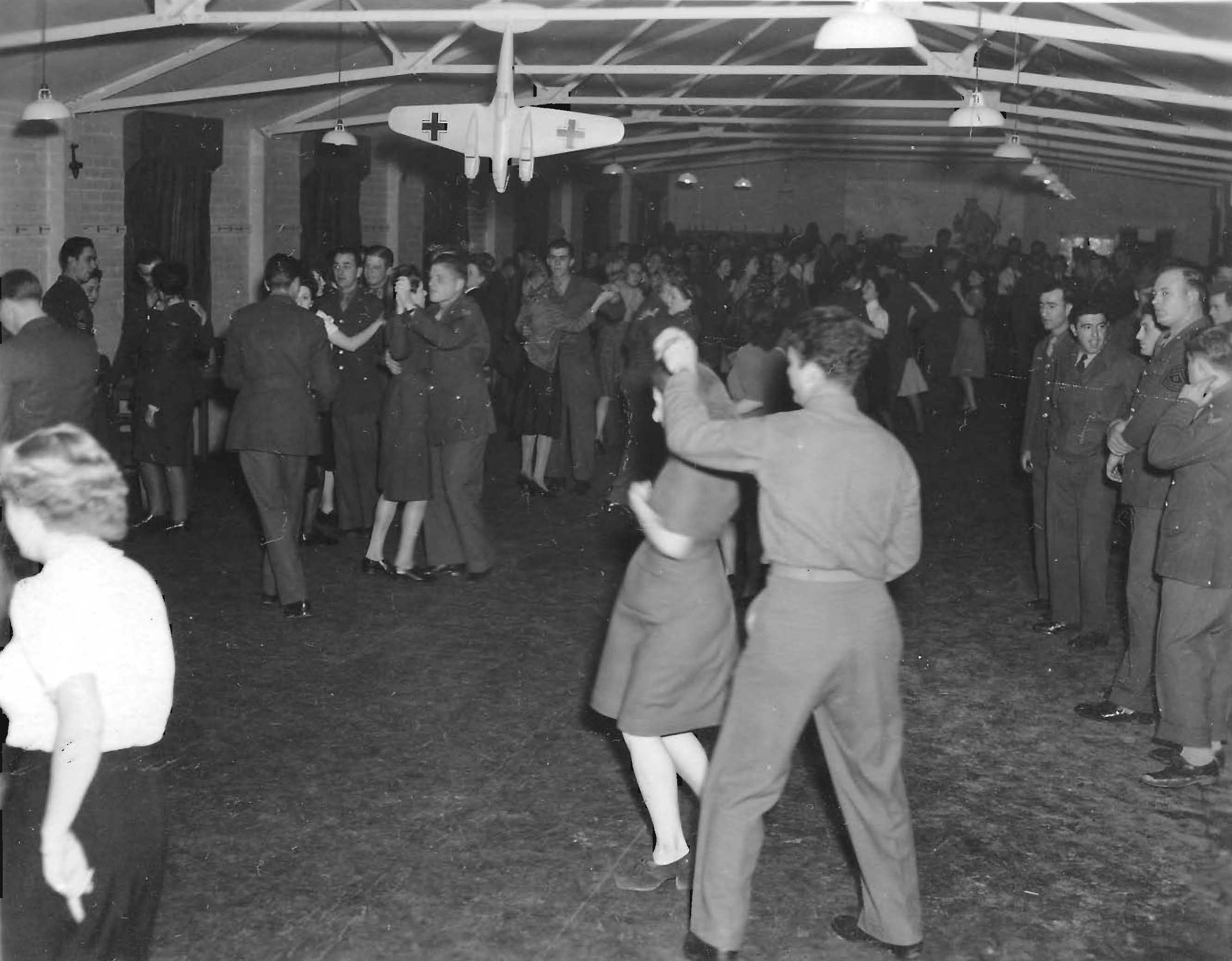
I decided I could be more specific if I instead focus on how kindness was often the default, not the exception, during the WW2 years. My Red Cross Girl heroines relied heavily on the good-hearted local people who could locate hard-to-find resources, explain the area's customs, connect the women to local artists, vendors, and tradespeople. I'm sure I've noted it before, but the Red Cross created and ran thousands of on-base and off-base clubs of varying sizes all over the world during WW2. Sometimes the military designated a specific building on a base to be used for a Red Cross club for the enlisted men, but it was almost always sparsely furnished and undecorated at best. To get a club up and running required the Red Cross Girls to exercise a good bit of ingenuity and persistence, plus call on a certain amount of charm, to obtain everything from paint for the walls to furniture, supplies, games, sports equipment, and on and on. They also relied on off-duty servicemen or local people to perform some of the labor - painting the walls, repairs, moving heavy furniture, hanging decorations, and so on. Granted, many of the men might had more than kindness in mind when they volunteered their off time to helping out the Red Cross Girls, who were often the only female presence in a male-dominated landscape! 

305th Bomber Group Aero-Club, Chelveston, England

But certainly an eagerness to be of help and be kind motivated so many people to come together in common purpose in those times. In the UK, the local villagers were especially pleased to not only invite lonely American fly-boys into their homes for a home-cooked dinner but also to provide resources to the bases. It was only a passing reference in my novel Courage to be Counted, but one local family who had sons serving overseas donated their piano to the 305th Bomber Group based at Chelveston, delivering it to the club on the back of a hay wagon. My heroines might need to do a little legwork, but they could almost always round up whatever supplies they needed for parties and special events by asking around in the area villages. 

Here's a few more examples of the kinds of events or clubs overall that required the kindness of strangers, a kindness that so many people didn't hesitate to extend in those uncertain war years -- enjoy!


You can read more about me and my writing on my website!  


Tuesday, August 13, 2024

The Stuff of Nightmares - A Blast from the Past

This post was first published on October 13, 2020. WW2 Romance Author Eleri Grace can be counted on to write thrilling romantic stories that immerse her readers in the realities of llfe during WW2.

By Eleri Grace

I too don’t write horror, suspense, paranormal or another genre that might have a classic “scary scene.” I write WWII historical novels – what’s scary about that?

            Well, more than might be readily apparent. As Judith noted, real life presents plenty of scary situations, and war certainly amplifies dangerous situations.

            One of the scariest scenes I’ve written tracks along with what is a fairly common nightmare for many people. How many times have you jerked awake, heart pounding, with the sense that you are free falling? Probably at least a few times in your life, I would wager.

            Fairly early in my drafting process for my debut novel, I realized that my hero Jack Nielsen was afraid of heights. A common fear, sure, but Jack is a pilot. How can a pilot cope with a fear of heights? It seems counter-intuitive, and I was initially intrigued with whether that was too outlandish. So I googled “pilots fear of heights,” and it turns out that research shows that acrophobia is markedly, dramatically higher in the pilot population than among non-pilots. Some studies indicate up to 90% of pilots have a fear of heights. So I asked my teenage son, an avid flight simulator who wants to be a pilot and spends quite a bit of time with like-minded young adults: “Yes,” he nodded. “Most of us are afraid of heights.” It turns out that, as my son indicated, most pilots feel very in control in the cockpit, thus keeping their natural acrophobia at bay.

            But in combat? No, in combat, a pilot faces far more threats than usual to his or her ability to feel – and be -- in control of the plane. And that was the stuff of nightmares – both for Jack and for ME.


I read so many non-fiction accounts of WW2 bailout scenes that I woke up with that free fall sensation far more in that one year than at any other time in my life. But I knew that Jack would have to jump eventually, and I forced myself to write it, knowing his experience might yank me from sleep for many months or years to come.


    “No more time! Out!” Hank pushed him closer to the hatch.

    Jack froze. His stomach lurched and dropped to his ankles, and his heart thrumped in his throat like a staccato fusillade of artillery. He swayed and gripped a handle on the hatch door with his good hand. “Go ahead,” he yelled.

    Hank shook his head violently. “You gotta jump!” he screamed in Jack’s ear.

    Waves of dizziness roiled him. Jack’s legs were as numb as his injured hand. No. No way. There was absolutely no way he could jump out into the clouds.

    Hank pried at Jack’s fingers, locked around the hatch handle in a death grip. “Damn it, let go!” He pulled hard on Jack’s waist, and they stumbled back to the narrow catwalk of the bomb bay.

    Before Jack could clamp his hand around the handle again, Hank put the chute rip cord into Jack’s uninjured hand and closed his fingers around it. Then he shoved hard with both hands in the middle of Jack’s back.

    Jack was out, free-falling in the icy slipstream, tumbling end over end. Out of control, exactly as he had always dreaded in his imagination.

    The ground rushed toward him. Slow down, slow down, slow down!

    The ring. The ripcord D-ring. Hank had put it in his hand. Jack jerked his hand downward.

    The parachute burst out of the chest pack and opened above him with a resounding crack. His body jerked upward.

    A loud, sustained bang sounded behind him. Jack turned his head, horrified to see his trusty, much-loved ship exploding in mid-air, engulfed in fiery flames.


Being the hero, Jack does land safely. But does he connect up with Allied troops or the German forces who imprison him in a wretched POW camp? Does he encounter German civilians who might decide to exact vigilante justice against him as another terror flieger?

You can read more of his experiences and his love story with Red Cross Girl Vivian in my debut novel, Courage to be Counted.


As the bombs fall on Europe, their love affair must survive a deadly war…

Vivian Lambert wants to do her part. When she wins a coveted overseas post with the Red Cross, she focuses on her war service. Falling hard for a sexy pilot wasn't part of her plan.

Jack Nielsen has a mission. Motivated by patriotic duty and desire to avenge the death of his best friend, Jack commands a ten-man B-17 crew. Keeping himself and his men alive in the fire-filled skies over Europe will require Jack's full focus. Romancing a headstrong Red Cross Girl is a distraction he knows he shouldn't indulge.

While Vivian's work takes her across France and into the heart of Nazi Germany, mounting casualties drive Jack to confront his dwindling odds of survival. As Allied forces converge on all fronts, can Vivian and Jack's relationship withstand an excruciating battle between love and duty?

Courage to be Counted is the first book in the Clubmobile Girls series of sizzling hot historical romances. If you like brave military heroes, trailblazing heroines, and romance under fire, then you'll love Eleri Grace's page-turning tale.


Learn more about me and my writing on my website, and you can also find me on Facebook, Twitter, Pinterest, and Instagram

Tuesday, May 14, 2024

13 Momentous Years by Eleri Grace

 Happy 13th Blog-O-Versary to Romancing the Genres and its wonderful founders Judith & Sarah!  

In thinking about all the changes in my own life over the last 13 years -- divorced, saw my two fabulous kids mature into young adulthood and pursue their own dreams with passion and energy, strengthened some friendships and made new ones, reentered the workforce, launched my dream of becoming a published author, and founded a thriving and growing entrepreneurial venture (my college counseling business) -- it occurred to me to wonder what the 13 year time periods around WW2 looked like for many Americans. 

The years spanning 1933- 1945 profoundly shaped our history and national spirit in so many ways. 

  • FDR was President for just under 13 years during these defining years
  • Hitler ascended to power in January 1933
  • In March 1933, in his first inaugural address, President Roosevelt notably assured Americans that the only thing we have to fear is fear itself. 
  • By the end of 1933, FDR had launched the Civilian Conservation Corps, the Public Works Administration, and the Public Works of Art Project, formed the FDIC, and signed the Securities Act of 1933. 
  • Notable accomplishments over the next few years included the Social Security Act, the Works Progress Administration (WPA), the Rural Electrification Administration, the National Labor Relations Act, the US Housing Authority, the Fair Labor Standards Act, and a host of federal programs aimed at preserving our national heritage and its cultural/artistic works
  • Even as the American people finally began to feel some relief from the years of poverty and want, the winds of war are swirling around the globe, and by the end of 1941, the US, with the attack on Pearl Harbor, enters the war
  • It will take nearly another 4 years and millions of lives lost before the war at last comes to an end in August 1945
Since we're all about books here, I also thought it would be fun to highlight a few of the bestselling books of this 13-year slice of time.

In early 1933, as FDR took office, the bestseller was Ann Vickers by Sinclair Lewis (interestingly, I just finished Becoming Madam Secretary by Stephanie Dray, centered around the life of FDR's Secretary of Labor, Frances Perkins (first female Cabinet member). Perkins was a romantic interest of Sinclair Lewis at one time, and she was incensed when she learned of Ann Vickers, convinced their mutual social circle would assume the protagonist was based more on her own life than was strictly the case. 


Here's a sampling of a few more of the bestselling books during the Great Depression and WW2 years (not in any particular order):


I should also note that among my personal favorites are the Little House novels by Laura Ingalls Wilder, which were published from 1932 - 1943 (roughly corresponding to these dates)!


I hope you've enjoyed recalling the history and some of the bestselling books of another noteworthy 13-year era! 

You can read more about me and my WW2 novels on my website and purchase my novels on Amazon!


Tuesday, February 13, 2024

New Year, New Covers by Eleri Grace

Yes, despite the title of my post, I do realize we're now in February!  I just couldn't come up with a catchy title that conveys the content of this blog, and I couldn't think of a great way to relate it to our prompt this month. Going rogue!  

On January 26th, the new blockbuster WWII mini-series "Masters of the Air" premiered on AppleTV+ -- and because Donald Miller's book of the same title influenced my own series so very much, I launched new cover-art for my series, and revitalized my author blog with a promise to my readers that I would blog about each week's episode of "Masters of the Air" and share some additional tidbits in my author newsletter. 

So without further adieu, let me introduce you to the stunning new covers I've launched for my novels:


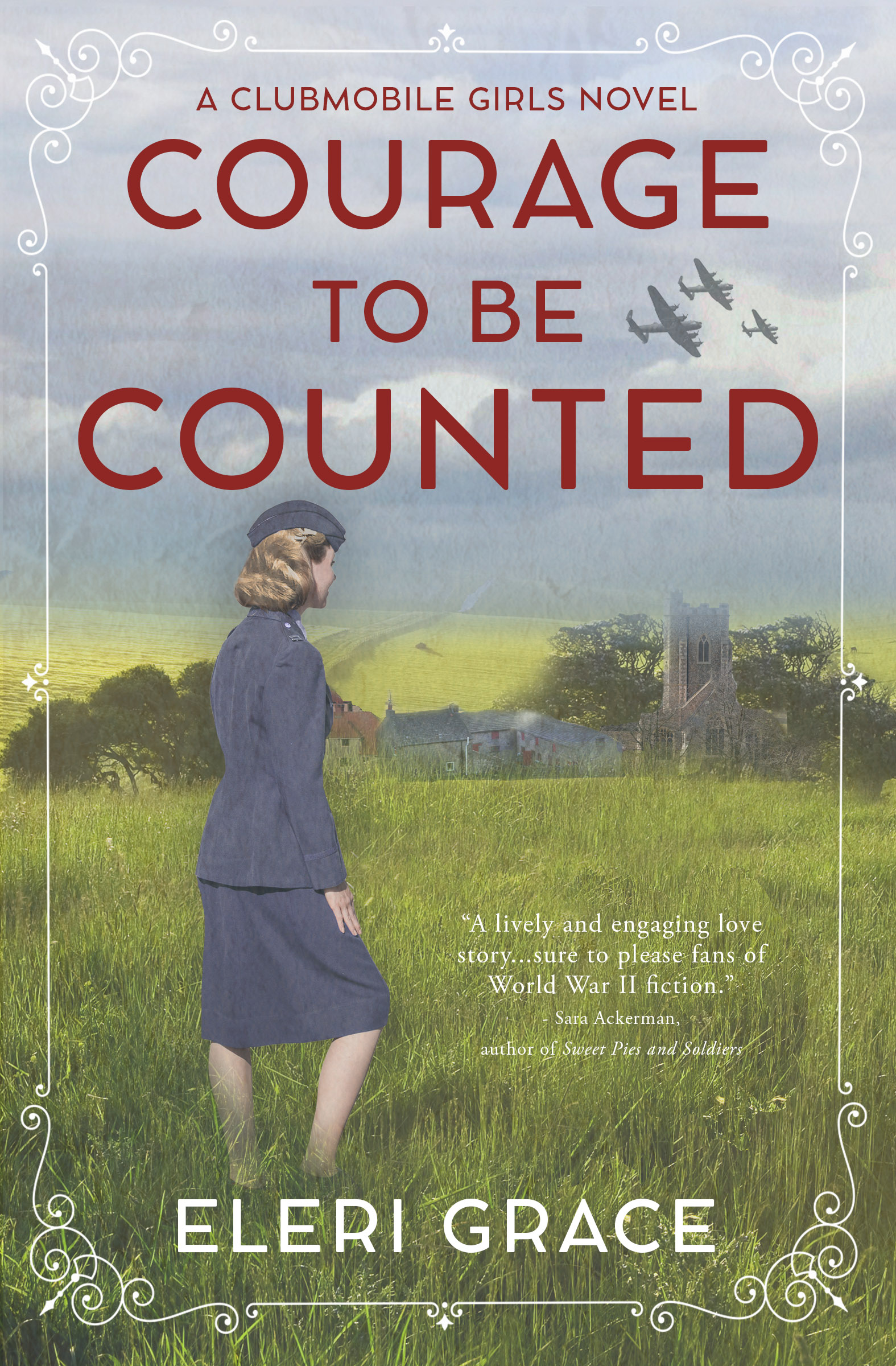
For this one, I love the backdrop of the old Norman English church, which looks so very like the one where Vivian often visited the pastor in the village of Chelveston. Vivian's gaze is turned slightly upward to the bomber formation soaring overhead amidst the perpetually gray English sky, perhaps they are returning from a mission, and she is watching for some sign that one of the B-17s is Jack returning safely back to base. 


I absolutely love the lushness of this cover design, a clear signal that this novel takes place in the Pacific Theater. The distant mountain ranges represent New Guinea's coastal topography. Hadley has her musette bag slung over her shoulder and is wearing the less formal Tropical Red Cross Girl uniform (the formal one was a seersucker suit). She too is watching a distant B-25 bomber, likely hoping that it's Skip returning safely from that day's mission. 

Again, I'm also so excited to share here a link to my blog where you too can follow along as I describe for readers what we're seeing in the depiction of the Red Cross Girls in "Masters of the Air" (and what is not conveyed on the screen but is happening behind-the-scenes). I hope you'll check out my ongoing blogs here -- the first 3-4 blogs are spoiler-free for the series, though my latest blog for Episode 4 does include some mild spoilers. 

I've focused my blogs on the portrayal of the Red Cross Girls in "Masters of the Air." I'm delighted that they are featured in several episodes -- they absolutely should/could have been included in "Band of Brothers" and "The Pacific."  I participated in a "Masters of the Air" tour of the East Anglia bomber bases and other related UK sites, led by Dr. Donald Miller, author of "Masters of the Air," in 2016. The tour was hosted by the National WW2 Museum in New Orleans and was an exceptional all-around experience. Dr. Miller was a wealth of resources and would often respond to my many emailed follow-up questions within hours. He was not, however, familiar with the Red Cross Girls really at all, and I spent the entirety of the tour advocating for their inclusion in the mini-series, which was already underway at that time. I'd like to think I played some small part in their inclusion in the series and am honored to share my thoughts about what the series is getting absolutely right about the service of these remarkable women (and what could have perhaps been handled better in some cases). 

I also plan to continue blogging regularly to share tidbits from my "Masters of the Air" tour with Dr. Miller and other historical details relating to the Red Cross Girls and their WW2 service. 

I hope you'll enjoy those blogs and the extraordinary series, with new episodes being released each week through mid-March.  


You can learn more about me and my writing on my website and follow my blog and find me on Facebook, Instagram, Twitter, and Pinterest.  


Tuesday, February 14, 2023

Wartime Friendships by Eleri Grace

 Our theme of relationships this month -- as it so often does each February -- brought me up short. I'm divorced and haven't even been on a date since before the pandemic. Sure, I could focus this blog on non-romantic relationships -- my relationships with my young adult children, with my wide circles of friends, with the larger writing community, and on and on. But I was not particularly inspired, nor sure how to tie those potential angles in with my writing. 

So I'm revisiting a theme from several years ago in February and putting a slightly new twist on it. In that blog, my focus was on how my Red Cross Girl heroines marched to the beat of a different drummer than their contemporaries in so many respects and how I, as a writer, have created novels that don't fully follow the standard tropes of historical romances or historical mainstream fiction. 

The Red Cross recruited extraordinary and accomplished women for overseas assignments. Marked not only by higher education and far more professional experience than most women of that era possessed, the Red Cross recruits possessed some or all of the following attributes in some measure: poise, charm, conversational skills, self-assurance, independence, ingenuity, adaptability, stamina, and creativity. Even in the earliest days of WWII, the Red Cross realized they needed self-starters who could draw on a range of varied life experiences to do unprecedented work. 

Because they were all so exceptional and at least somewhat out of step with the times, Red Cross Girls formed very strong bonds with one another. Fast friendships formed -- in the weeks of training stateside, on the voyage overseas or on location. One Red Cross Girl writing back to her training instructors from Europe noted: "Some fellas think we're brave, but we really don't know enough to be scared. Some think we'd be better off at home, where a woman's place used to be . . . about 200 years ago." I think most of us probably find it astonishing that a 1940s woman viewed the housewife trope to be an outdated norm. For some of these women, the war presented them with yet another opportunity to break free of strictures imposed back home. Based on many of the memoirs these amazing women wrote later in life, many of them went on to start or continue a successful career outside the home, whether they married or remained single. 

Yet, it took no small amount of courage to take such a leap of faith in signing on for destination unknown, duration unknown, and dangers unknown. The women frequently didn't know where they were assigned until they were out at sea (although they could make educated guesses based on whether they were shipping out from the east coast or the west coast). They didn't have a crystal ball to know the war would end in 1945. Most importantly, they had no idea what they would be called on to do or face in the course of their duties for the Red Cross, though most were smart enough to assume it would involve a lot more than serving coffee and doughnuts! 

Their unique qualities didn't shield them entirely from fear or from experiencing profound anxiety, stress, and war-weary despair. And in those times, they leaned on one another. The Red Cross friendships forged in wartime continued on after the war in many cases, with the women often remaining in touch for decades after their service. And like their male combat soldier counterparts, the women recalled their wartime service as the most significant years of their lives. The relationships they formed during those years, whether they continued on after the war or not, left their mark in so many important ways. 

You can find my Clubmobile Girls novels on Amazon, and you can learn more about me and my writing on my website or through my social media accounts on Facebook, Twitter, Instagram, and Pinterest


Tuesday, April 12, 2022

This Land is Your Land by Eleri Grace


As the lyrics of folk singer Woody Guthrie's classic "This Land is Your Land" note, we all share in the joy and splendor of nature's bounty "from the redwood forests to the Gulf stream waters." I would go further and say that the song is a call to action, a reminder that we all share communal responsibility for preserving our land and resources.  

It's important to note the underlying history of what many view as an alternate national anthem and tribute to the varied and dramatic landscape we Americans call home. Guthrie was annoyed by how frequently Kate Smith's "God Bless America" played on the musical radio programs of the day -- he understood it was meant to stir up feelings of patriotism and nationalism in the face of a looming European war that many believed would surely involve America at some point. But Berlin's lyrics to "God Bless America" stood in sharp contrast to the America Guthrie had seen in his travels.  His original title "God Blessed America for Me" more than hints at his anger at the socio-economic disparities within America, the land of "plenty." Like so many others from the Dust Bowl states, Guthrie migrated west during the Depression years. He criss-crossed the country at a time before interstate highways existed and at a time when people didn't have money or time for leisure travel. What he saw of America then inspired the sharp social commentary that underpins his music and writings. His music influenced the folks songs of the 60s as well as more contemporary artists such as Bruce Springsteen. 

Guthrie served in the Merchant Marines in WWII, and he recorded the original version of "This Land is Your Land" in 1944 while on shore leave. The original recording included a verse that was later excised when the song was released in 1951, but it was the sixth and final verse that was never recorded that perhaps best illustrates what motivated him to write and record this enduring American classic folk anthem: 

“One bright sunny morning in the shadow of the steeple,
by the relief office I saw my people.
As they stood hungry,
I stood there wondering if God blessed America for me.”

I fear I've gone far astray from my original point, but the more I researched the song's lyrics and origins, the more it fascinated me. While it can certainly be viewed as a tribute to the concept of a beautiful landscape that stretches from sea to shining sea, "This Land is Your Land" has quite a lot more to say about the social inequities in America that persist to this day. 

I originally intended to use the song title to springboard into a discussion of how much the Red Cross Girls who served in WWII appreciated the opportunity to see more of the world and appreciated the natural surroundings in which they served, so I'll share a few of the photos that I originally intended to include. 

Boat trip on the Nile (from Cairo)

Relaxing at a rest camp for Navy flyers - Gold Coast of Australia

May 1944 - Poggia, Italy

If you are interested in learning more about Woody Guthrie, and the history underlying "This Land is Your Land" in particular: this NPR piece, a Blackwing blog, and this Kennedy Center piece may be of interest.

You can find my Clubmobile Girls series on Amazon, and you can learn more about me and my writing on my website and on Facebook, Twitter, Instagram, and Pinterest


Tuesday, January 11, 2022

I Could Write a Book by Eleri Grace


What's new for you in 2022? 


Well, as my title says, hopefully I'll write a(nother) book! 


The tune from Rodgers and Hammerstein's 1940 hit "Pal Joey" is a love song of course, but a few lines from the lyrics speak to my mindset:

But my busy mind is burning to use what learning I've got
I won't waste any time
I'll strike while the iron is hot

Those are my hopes for 2022: not wasting time and striking while the iron is hot so to speak. 

Maybe I would have developed writer's block anyway, who knows, but I can conveniently blame Covid-19 and its destructive siblings Alpha, Delta, and Omicron for my lack of output and motivation over much of 2020 and 2021. 

I'm once again using the Cultivate What Matters goal-setting system. Even though I wasn't filling out all the reflection work each month or quarter as the system urges one to do, I bought it again this year because my goals I had set were always in my mind, even if I wasn't always faithful about recording it all. My goals for 2022 are more similar to 2021 than not. This could be read as an indication that I failed 2021, that I didn't accomplish all that much. But the truth is that some of my goals don't lend themselves to being checked off or completed in full over the course of a single year. 

The one writing goal that could have been completed but wasn't is the publication of my third full Clubmobile Girls novel. My intention is to finish and publish it this year, come what may. But I'm celebrating that I learned how to write a novelette and published it in 2021 (and I now have the barebones start on 3 other novelettes to complete a quartet of stories). I've also got new branding in the form of new cover-art that will be released this year. I'm waiting until I can reveal the cover for Book 3 before then announcing the new cover-art for my first 2 novels -- but truthfully I'm so excited by the new look of my covers that I may not wait much longer. My hope is that these new covers will speak to a wider network of readers as they are more in keeping with the look and feel of other WWII fiction released in the last couple of years. Watch my social media and blog for my new cover-art reveals in the coming months! 

My goals for 2022 are varied, as Cultivate What Matters encourages people to evaluate many facets of their personal, working, and leisure lives. Whatever your goals are for 2022, I hope you find joy, peace, fulfillment, and pride in all that you do!


You can find my Clubmobile Girls series on Amazon. Learn more about me on my website, or on my social media accounts through Facebook, Twitter, Instagram, and Pinterest


Monday, March 8, 2021

It Might as Well be Spring by Eleri Grace

As we round the corner on another spring, having cycled now fully through all the seasons under pandemic conditions, I'm reminded of the hopeful 1945 song "It Might as Well be Spring." The hit song from the Rodgers & Hammerstein musical film "State Fair" really didn't have much to do with the impending end of WWII -- in fact the war was over by the time it was recorded and released as a single in the fall of 1945. Yet to my mind it is symbolic of the fresh new springtime start that the end of the war would bring for so many and could be equally meaningful in current times as we begin to climb out of the pandemic slowly but surely. 


I'm as busy as a spider spinning daydreams

I'm as giddy as a baby on a swing

I haven't seen a crocus or a rosebud or a robin on the wing

But I feel so gay in a melancholy way

That it might as well be Spring


One of the things I always keep in the forefront of my mind when writing my WWII era novels is that no one had a crystal ball. My Red Cross Girl heroines faced the prospect of "for the duration" along with the servicemen. When they were packing up at home and in Washington after completing their training, they had no idea how many seasons would come and go before they experienced the familiarity of a hometown seasonal change once again. Many served in a climate quite unlike what they had experienced in their lifetime up to that point.


The holidays that mark the passage of the seasons were something our forces overseas observed however possible. The Red Cross Girls quashed their own homesickness in order to put on a happy face for holiday parties and dances. They knew it was important that these seasonal rituals carry on -- it was a spot of normalcy in what were extraordinary times. 

And so it goes with us. I know we're not there yet. That was true for the men and women serving overseas in 1945 -- feeling happy and hopeful "in a melancholy way," for by then everyone knew it was a matter of time. It's a matter of time on this pandemic too. Spring is in the air -- let's remain vigilant but hopeful!


Learn more about me and my writing on my website or follow me on my social media accounts at FacebookTwitterInstagram, and Pinterest

You can find my Clubmobile Girls novels on Amazon


Monday, February 8, 2021

Be Careful - It's My Heart by Eleri Grace

The drama and larger-than-life grand love affairs of the 1940s was one of the things that drew me to write romance novels set during the pivotal years of WWII. Everything from the era's glamorous Hollywood stars and box office hits to the crooning ballads of Bing Crosby and Frank Sinatra sets the stage for epic love stories.


The war provides the perfect antagonist -- it cruelly separates, endangers, wounds, and forever shapes the character and life path of my heroes and heroines.

But in addition to the romantic love central to my novels, I think some of the most emotional depth in my work comes from the subplots relating to family and friendships that I weave into my Clubmobile Girls series.

In my first novel, there's the love Vivian has for her fellow Red Cross Girl and best friend Mabs, and the fierce love Jack has for all the men in his B-17 crew. There's the greater love of humanity that threatens to crush Vivian's spirit as she watches the mounting casualties among the bomber crews. She's terrified of losing Jack of course, but her heartache for all the Allied forces is genuine. In my second novel, Skip's heartbreak over the loss of his beloved older brother at Pearl Harbor drives him and colors all his actions, while my heroine Hadley wrestles with her own demons and the loss of a dear friend years ago.

Showing a range of love relationships in our novels adds power and resonates with readers. I read extensively in the genre of war memoirs as background research for each of my novels. I also read a few "big-picture" books for whichever locale I'm focusing on for that novel. For my debut novel, I started with "Masters of the Air," which remains one of my all-time favorite WWII nonfiction books. There are quite a number of similar books and combat memoirs written by the men who fought in the skies over Europe. I was particularly touched by the theme that cropped up again and again in these accounts by and about the bomber crews -- those ten men became an insular and tight-knit family.


They were truly brothers-in-arms and dropped all boundaries that military rank, education, race or social class might normally have divided them. They fiercely defended each other -- both up in the air in combat and on the ground in the give-and-take of life on a military base and on recreational leave trips. That's one of the love relationships I'm most proud of in my both my novels -- the bromance that was a bromance before it was cool, the love that was so prevalent among the valiant crews of our airmen.

Love is all around us, and I think our readers appreciate when we take advantage of our ability to show the range of human experience with love in all its forms in our stories. 


Learn more about me and my writing on my website or follow me on my social media accounts at Facebook, Twitter, Instagram, and Pinterest

You can find my Clubmobile Girls novels on Amazon