Showing posts with label Binns. Show all posts

Wednesday, February 12, 2025

Time To Take A Risk


You can't imagine how often, especially over the past year, I have felt almost overwhelmed by the urge to write about politics. Today, just this once, I'm giving in to that urge. 

A few years ago I wrote Unlawful Orders, a biography about an American, a soldier, faced with an illegal order from his commanding officer. Obeying that order would be safe. It would also be wrong. Disobedience meant arrest, prison, possibly even execution. It would also be the right thing to do.

 
I spent long months researching the life story of Dr. James Buchanan Williams, a Tuskegee Airman and Second Lieutenant during World War II who went on to become the chief of surgery in a major Chicago hospital. It’s not often that studying about history inspires me. It’s even rarer that looking at the body politic in today’s world provides any kind of inspiration.


Back when I was young, pennies mattered. I remember searching through the sofa cushions for spare change whenever we heard the sound of the ice cream truck. For some impoverished and desperate people, pennies can be the difference between survival and not. It can also make a difference in how people in other countries view the US. USAID was the sofa cushion where pennies and maybe an occasional nickel could be found to get a cone. Compared to the rest of America’s annual budget, closing that organization that operated on small change cannot give any real savings.


That small change altered the lives of thousands, and helped the US make friends around the world. Right now, some who looked at us with a friendly eye now look at the US and see something untrustworthy. People have already died in areas of the world when the organization was turned down.


I watched Gladiator II the other day, and easily imagined what it must have felt like to live in Rome as emperors like Nero fiddled while Rome burned. While some Romans enjoyed the “eat, drink, and be merry” concept, others rightly feared the vandals hanging around and cringed at the thought of the coming future.

I won’t pretend that any system has ever been perfect. Any system set up by human beings includes the possibility that some shrewd villain might use it to their own benefit. But just because one person might cheat is not a reason to cut off thousands who desperately need the system.

There are plenty of people who will say there is nothing they can do to change anything. They already feel burnt out. Even in novels of dystopian futures, people can feel burnt out. Social media algorithms push the message that “resistance is futile.”


The stand Second Lieutenant James Williams chose to stand on his principles, risking his life like a real life Man Of La Mancha to fight the unbeatable foe, no matter what the cost to himself personally. I enjoyed writing his story and hope I can find the wherewithal to emulate people of principal in my life.

Wednesday, April 12, 2023

Questions re: Traditional Publishing vs Self-publishing


I belong to a number of online groups for writers. I enjoy people telling what the writing life means to them. But over the last few months, the comments have become variations on the same theme. A question like - I've just finished my first book, should I go for traditional publishing, or should I self publish?

I know what it means to be a beginner, and I have tried to provide answers in some cases. Unfortunatly, I sadly admit that I can be long-winded. Furthermore, my kind of answer, especially in the limitations of a twitter or facebook setting, probably ends up being more confusing than helpful. But the questioners keep showing up, many of them asking the same things. So I have decided to try giving my insights and responses to the questions of beginning writers here on this blog.

There are many important things a new author needs to consider when they first begin writing. 

First: You need time, money and, most of all patience 

In some ways, publishing can be analagous to remodeling a home. Some people and projects require the use of a general contractor to take charge.  Other people feel competent put in the time and energy to manage the details themselves, and need the control of engaging individual workers and making certain get exactly what they want. Your personality plays the biggest role in selecting which path you will do best in as far as publishing your manuscript.  

In modern traditional publishing, patience is not only a virtue, it’s an absolute necessity. Years can pass between the time you write THE END and when an acquiring editor agrees to buy the rights to publish your book.  Conversely, you may only need months to do it yourself and self-publish. The self-publishing path will cost you in money more than in time. 


Second: Your individual goals drive the decision

When you first start writing a manuscript, decide if your future plans include publication.  The sooner you make that decision, the sooner you can start looking into things like editing. Not everyone wants to publish. That’s absolutely OK. A member of my critique group is a fantastic writer, with zero desire to publish. Not even in a magazine. I love her writing, and a few years ago I tried to get her to consider publishing. No interest. Her goal is to have something that tells her history to her family when she is gone.
If you want to publish someday, start making decisions before you write THE END. If you are looking at traditional publishing, you can get an early start on researching agents and acquiring editors who are willing to take unagented submissions. If you decide to self-publish and want more than the pride of holding your book in your hands, and maybe seeing copies in the hands of your friends and family, the sooner you stargt learning more a out the realities of publishing the better. If you want to sell thousands of copies and eearn best-seller status while making a pile of money, start moving in that direction as soon as possible.

This includes an honest self-assessment on your comfort with marketing. While it is true that you have to market yourself and your book whether you pursue traditional or self-publishing, marketing is critical to any hope of making significant sales for a self-published book. People prefer buying books from authors they know, or at least feel they know. Celebrities, best-selling authors, authors with a major platform. That’s why you should begin your marketing work even before you finish your book.  

While many self published romance books and authors beat these numbers, the average self-published book sells 250 copies. The average self-published author earns $1,000 per year from their books. 33% of self-published authors make less than $500 per year. 90% of self-published books sell less than 100 copies.

Marketing yourself is crucial to helping you surpass those numbers. Use social media, your website, and any other means you have to build a group that will follow you. Over time, they will feel like they grow to know you, they will feel you are one of them. Then, months, even years later, when you have a completed book, you also have people who feel they know you and are therefore more likely to care about your book.

Third: Know your own personality

Are you ready to face rejection without feeling compleely dejected. Here are a few statistics accumulated a few years ago. 

Agents and acquiring editors reject around 90% of submissions. If you don’t accumulate a large number of rejections in your quest for traditional publication, you have either given up on getting an agent or being acquired by a traditional publisher - or you have the goddess Tyche in your corner (Greek goddess of fortune, chance,  and fate, much like the African goddess Oya who appears in my newest (and as yet unpublished) manuscript). In order to achieve you must be prepared to see a lot of nos first.


I hope I have managed to answer some issues aspiring authors may have, without making things more confusing. I would love to have you share any issues or alternate opinions in the comments. I too am eagefr to learn. For the record, I have traditionally published three books, and self-published two, so I have seen both worlds.   

Wednesday, August 10, 2022

Why I Prefer The Traditional Publishing Route

I have listened to several authors wondering about traditional vs self-publication. I have done both, and for me, there is no question. I prefer traditional. Not just because of the advance, which is admittedly a nice deal. If you self publish, the writing in only step one. Either you perform every additional detail yourself, or you project manage people you hire, and pay, yourself to do those details. Or you can engage with someone calling themselves a publisher and pay them the big bucks to get things done.  Doing things yourself is the only low cost option, but it does require the kind of person who loves managing a bunch of tasks.  


I have never been a controlling person (unless you talk to my daughter). I hate the tiny details, so to me, taking the slow but steady option of having a publisher take control from me once the writing is done is basically a godsend.  

Some observations on how fiction and non-fiction is treated by publishers.

Editing is very different. In both fiction and non-fiction, the editor choses to buy the rights to publish your book largely based on your writing voice and your knowledge of the subject. But in fiction, my editors were always ready to suggest changes, sometimes down to individual paragraphs or even sentences. Lots of changes, all the while telling me my work only needed a “light edit”. I’d really hate to see a heavy edit. 

Some writers worry that a traditional publisher might want them to change their work into something they don't want.  In my experience the editor's only make suggestions, and when I look, they make sense and end up making the story better.  With Courage, for example, the editor suggested I change the last few chapters. Mind you, she did not tell me what to change things too, just stating that she found the ending confusing.

Frankly, she was right. My ending kind of confused me too. Fortunately, months had passed since I first wrote the manuscript, and I was able to look at it through new eyes and see an alternative. If you have ever read Courage, well, just trust me, the published ending beats the original one hands down. There was a chase through an abandoned warehouse while being pursued by a group of thieves and a SWAT team lead by Mr. Cho who had only pretended to be a parole officer, the better to conduct a sting on the criminals and handle his confidential informant, the heroes’ older brother. Like I said, confusing. I really bless the editor for suggesting that be changed.

ALSO - if you are, or know of a teacher, let them know ASAP that WNDB (We Need Diverse Books) is currently doing a back-to-school giveaway. Winning classrooms and organizations will receive one set of books, and Courage is one of the books in the Elementary School / Middle Grade / YA Bundle. They can find more information, and enter to win, at http://ow.ly/tmOG50KcFW4, The giveaway deadline is only a few days away.  

This year, my first non-fiction middle grade book, Unlawful Orders, has been traveling the long and winding road toward traditional publication, a journey that will end when it hits bookshelves in October.  With non-fiction, I think my editor assumed I really was subject matter expert, or an all-knowing wizard. She suggested so few changes I was amazed, mostly only grammar and misspellings. In fact, she let stand something I expected her to change. I used it as much for shock value as anything else and was so confused when she let it slide that I wrote to ask if she was really going to leave that in. I couldn’t believe they were willing leave something so inflammatory on the pages. Since I never really expected that to hit the final version, I ended up editing it out myself. (And no, I won’t tell you what it was.) The fact-checkers did come after me on a few things. Fortunately, most of the time I was a able to tell them, “I know things are different here in the twenty-first century, but back in the 1940’s…” and then point them to references they had missed. That always felt good. Maybe I deserve those wizard robes!

That is an area where traditional publishing makes me happier than self-publishing. Yes, the traditional route takes longer, but they also add value extras like fact-checkers that act like goalkeepers to ensure the information on the pages is accurate. They also handled the book illustrations. In addition to finding the right cover artists, I discovered that my publisher employs people whose job descriptions involve getting permissions to use the dozens of photographs included in the book. No wondering if I can or cannot include the great pictures we chose together.  Plus, the publisher hired someone to format the chapter notes and bibliography once I demonstrated my utter helplessness in that area. They made a good book so much better.

People talk about how little the publishers do for marketing, but that’s not always true. My publisher interviewed me for a group of librarians, the interview is on YouTube at https://www.youtube.com/watch?v=4hlLlI3Y4PA  

In April they had me on an online School Library Journal panel to discuss the book with librarians. They also arranged to send me to the National Council of Teacher’s of English Homecoming conference in July, the first in-person event the organization has held since Covid descended on us. There was no stipend or honorarium, but the company did pay my transportation and lodging.  I had an audience of educators that I hope I thrilled with my talk. They did line up for me to autograph their ARCs, and many stayed to chat with me, a true ego boost.

As an unanticipated plus to the visit, the NCTE Homecoming event was held in Louisville, Kentucky, close enough to my home in Chicago, Illinois for me to drive instead of fly. After everything I have been seeing about airports and flying these days, it was not a difficult decision, although the hours long drive down highway 65 was no picnic. But as I headed south of Indianapolis, I found the name of a town that somehow seemed familiar. Seymour. I wracked my brain trying to figure out why that word kept rolling around inside my head, then suddenly it hit me. Seymour, Indiana was the location of Freeman Field air base during World War II. That is where the unlawful and illegal orders were given to the characters in my newest book.
 

I literally felt like a fangirl. Even though the airfield itself is long gone, I had to leave the highway and enter the town. It was almost a pilgrimage to a place I had not even known existed only a few years earlier. The location where a hundred Tuskegee Airmen took a stand against discrimination in the military and said no to an illegal order. They were willing to risk their lives by that act of mutiny a decade before Rosa Parks refused the order to give up her seat on a bus.


PS, Seymour also happens to be John Cougar Mellencamp's hometown, so I got one extra treat during that detour.


Wednesday, May 11, 2022

Being An Author - A Natural High


Yesterday my computer decided to die, taking a number of files I had not backed up with it. I really should be in tears.
 
Plus, I recently purchased a new set of eyeglasses. Now I hear that I probably need a cataract removed, which will probably change my prescription and lead to the need for different glasses, aka a need to spend more money.


And yet, I can’t get too upset about thosethings or anyhing else. I have an ear-to-ear smile is painted on my face. (Don't tell me that's a cliche'd saying, i happens to be 100% true today,)

Why? Because my ARCs have arrived!! I have copies of my new book, Unlawful Orders, in my hands. And they look wonderful!!

This is it, I feel it every time one of my books is published. It's an old fashioned, natural high.
 

Being an author means going through a gamut of emotions, at least it does for me.  Someone once said writing a book and getting it published was like running a marathon. I agee, as long as you include all the time spent training and preparing for those 26 plus miles.   There's getting the idea, and then spending time and energy getting to know the characters. There's writing the first word, and the next; a paragraph and then a chapter. I alternate between thinking I'm doing a good job, and then I hit "the wall." That point in the marathon where I wonder if I have lost my mind. 

Then I turn the manuscript in to my editor, who has to be the nicest person in publishing, because she tells me she loves it. She publishes it. And now she has sent me copies, and I can see  this thing that began as an idea in the back of my head, right in my hand.


Things might be aweful tomorrow. Reality does have a way of doing the unexpeced just to show me whose boss.  But for now, I'm flying, just like the characters in this biography!

Wednesday, April 13, 2022

Fiction Vs NonFiction


At the end of this month, I will be participating on a panel of authors from Scholastic discussing the value of non-fiction, titled: Three Reasons Kids Need to Read More Non-Fiction. During this discussion, I will talk about my debut historical biography, Unlawful Orders.  Preparing for this has set me thinking about my most recent books, some of their differences and similarities, and why both fiction and non fiction are valuable.  I'm putting down some of the things I have come up with for both genres.   

Fiction helps young readers learn empathy for others. Empathy enables building social connections that can prevent bullying, help children make friends, and ready them to receive help from others. Non-fiction helps nurture a young person’s “insatiable curiosity,” a term that had to be invented to describe the way the very young ask a thousand questions a day. Okay, maybe the number is really closer to a hundred, but you get the picture. They wake up each day with a desire to know more, and good non-fiction can be a fertilizer to keep their blossoming curiosity to from withering as they grow older. In the words of Albert Einstein: 
“I have no special talent – I am only passionately curious.”


I have entered both worlds in my writing career. A few years ago I penned Courage, middle grade fiction written to encourage empathy by immersing them in the lives of kids coping with a variety of issues. Among them are a child dealing with the recent death of a parent from cancer, and one who is just trying to live a normal life despite having sickle cell anemia, a chronic and sometimes debilitating illness. One child is homeless and friendless, another is feels he has to be an overachiever to meet the expectations of his adopted parents. Yet another kid is best friends with the daughter of the Chicago policeman who sent her father to prison. All these young people come together in a story about finding the strength to forgive and grant others second chances. I wrote Courage as a modern day version of the prodigal son story, in hopes it would entertain young people, and at the same time encourage readers to forgive others who have hurt them.


Unlawful Orders, my upcoming nonfiction book (Oct 2022), shares the true story of a family that deserves to be everyone’s role model. I love superhero stories, and tales of wonder-kids who save their dystopian world. But there is something extra in a stories about real human beings in real locations handling real events. And the Williams family saved lives and changed all our futures in more ways than one.

The book centers around one member of the family, James Buchanan WIlliams, “JB” who grew up in a small town attending a one-room schoolhouse - taught by his mother. She was the first African American to graduate with a Bachelor’s degree from the University of New Mexico. How the school’s English department building eventually came to be named after her is a story all its own.

From there the story takes readers on a journey through the history of the twentieth century, with bits of engineering, aerodynamics, psychology, and medical science thrown in. After growing up on the family farm, JB went off to fight for his country during World War II. He and a hundred other Tuskegee Airmen staged what came to be known as the Freeman Field mutiny, an act of disobedience against a superior officer’s order that could have cost him his life, but that preserved his dignity.

After the war, JB headed back to college to obtain both an MD degree and a Master of Science in surgery, before moving to Chicago. The book tells how he became the chief of surgery in a major hospital while working to expand healthcare for the poor across the United States. His efforts included a trip to Washington DC and to lobby President John F. Kennedy for an end of discrimination in medical schools and hospitals.
He also lived long enough to accept a special invitation to attend President Obama’s 2009 inauguration. Dr. Williams and his two brothers not only worked to advance the field of medicine, they raised families whose members continue to excel in the fields of healthcare and of education to this day.

If you are interested, the webinar panel discussion will take place on Wednesday, April 27th at 2:00pm EST. I do not have access information yet, but I should have that soon and will update this post. I will also update my website with the information once I have it. 


Wednesday, March 9, 2022

Strong Black Women In History - my muses


Strong women in history. This post should be a slam dunk for Women’s history month. Yet somehow, the subject was a hard one for me. Then my thoughts went to two women I had already written about. 
 
The first was a strong woman named Clara Belle Williams. She raised three strong sons who not only fought America’s enemies in World War II, they each became prominent physicians who helped change the world of medicine by fighting against segregated medical schools and hospitals that employed discriminatory practices with Black patients.
 
Clara Belle Williams has been honored with a spot in the teacher’s hall of fame (yes, she not only raised three sons, she was also their elementary school teacher in a one room schoolhouse in New Mexico). She was the first Black student to receive a BA from the University of New Mexico were she majored in English. Decades later, the University handed her an honorary doctorate because of  her contributions to humanity, and named their English building after her.
 

She actually deserves her own book, to be more than just the parent of the hero of my upcoming book, Unlawful Orders.  She was the real inspiration for the book, learning about Clara Belle during Woman's History Month five years ago led me to er sons. She lived to be 108,  with more than enough accomplisments to fill four lives.

PS, patients at the Chicago clinic her doctor sons founded all called her “Grandma.”


Bessie Coleman was another strong woman, one that is the central figure of my new work-in-progress, tentatively titled Fill The Air With Black Wings. Bessie never had the chance to become a mother, shew died in a plane crash at the age of thirty four.  But she was a beloved aunt to the children of her many siblings. She wanted to make sure they had the kind of family life she never had as a child.

From penniless southern girl to Chicago South Side celebrity. America’s future Queen Bess started out with two strikes against her. She was a woman, and she had both Black and Native American heritage - Choctaw and Cherokee. Bessie was black, with Native American heritage, and female—all of which placed her in the lowest rung of perceived social classes of the day.

But Bessie was the little girl who always knew she would become someone special. As an adult she decided to achieve that goal by doing the near impossible and becoming a pilot.  In the days before Amelia Earhardt, Bessie Coleman became the first Black American and Native American woman to obtain a pilot's license, although she had to travel to France to find a flight school that would agree to teach her.  

This was in the 1920's, and planes were made out of cardboard, cloth, wires and pressed wood.  Pilots flew war surplus planes and made money by barnstorming, entertaining crowds with tricks like barrel rolls or wing walking.  The life was only for the very brave.  Bessie grew into one of the top pilots of the day, in constant demand to appear in air shows across the US. And she had the power to insist her audiences be integrated.

Back in America, she was sought after by wealthy American businessmen and an African prince. She enjoyed being romanced and welcomed their company, but apparently had no intention of settling down as a wife. Perhaps that decision was related to watching her parents seperate when she was nine.  Besides, she had a goal. She planed to use her lecturing to interest youth in aviation, and to make enough money to fund an American flight school that would accept Black students. 

Unfortunately, she died in a plane crash just when she was on the verge of accomplishing that goal. But she did become someone who inspired generations of future flyers, including her nephew who grew up to fly combat missions in World War II.


Wednesday, November 10, 2021

A Writer Learns A Few Lessons From Squid Game


Squid Game was my first taste of K-drama. I am not a fan of the survival of the fittest/horror genre,not even one illustrating the theme of the end of childhood innocence. But the social media hype sucked me in and I found myself hooked right away. This post is not about ways to survive the games, there are plenty of those tips all over. I write books for young people, and most of the mentor texts I use are other books. Still, I now use lessons from Squid Game to help improve my writing.

Believe In Yourself And Your Work.

Sometimes I wonder if repeated rejections mean an old piece of writing should be tossed. For Hwang Dong-hyuk, the writer/director of Squid Game, the answer was to never give up, not while he believed in his work. He began trying to market the story of Squid Game in 2008, only to receive a succession of emphatic rejections. He continued shopping it around for a decade until 2018 and Netflix. By then the world had changed. Audiences were more likely to  empathize with the show's characters and not consider them weird. In fact, many of the circumstances depicted in episode 2, aptly named “Hell,” represent economic reality for many individuals in Korea and around the world.
Lesson: Rejection is not always a bad thing. Sometimes it is a matter of timing and having to find an audience, or maybe wait for your audience to evolve.

Market Yourself 

Indian actor Anupam Tripathi, who played the role of Ali Abdul, player #199, constantly markets himself. He was raised by parents who pushed him to give up his dream of acting and get a “real job.” Instead, he applied for an almost impossible to get scholarship from the Korean National University of Arts. While still a student there, he marketed himself by going around to Korean studios asking if they needed a foreign actor? He is now lobbying for a spot in a Bollywood production. and also hopes to be in a historical movie. 

Another actor, Seoul born and raised HoYeon Jung possessed enough confidence to begin working as a model at sixteen, years before she was able to attract an agent. She marketed her way into supermodel status.

Netflix did relatively little pre-release marketing for Squid Game. It became a juggernaut largely through word of mouth, ie the power of social media and networking fans. 
The lesson I take from all this is do as much creative and direct to the ultimate consumer marketing as you can. Let your potential audience see your belief in yourself.

All Characters Matter

The two main characters in Squid Game, Gi-Hun (#456) and Sand-Woo (#218), are played by the well known, award-winning Korean actors Ling Jung-jae and Park Hae-soo. Jung-jae, who became rich from working as a villain, jumped at the opportunity to do play the kind of optimistic, funny character that helped differentiate Squid Game from other entries in its genre. Park Hae-soo started his career in musical theater, and now his acting resume includes major roles in dozens of movies and Korean TV shows. 

The rest of the cast includes relative newcomers, fresh faces who had mostly appeared in “blink and you’ll miss it” background roles. While model HoYeon Jung had faced runways and photographers across the globe, this was the first acting role she had even auditioned for. The confident young woman was in her twenties when she was cast in the very important role of #067, the pickpocket Sae-byeok.
Lessons from all these and other examples: Keep the characters on your page fresh. Let them be different, difficult, and/or quirky. While plot is important for any story, but characters are vital to making viewers and readers care. 


Heo-Sung-tae was a successful thirty-five year old businessman when he decided to join a Korean talent competition called Miracle Audition. His fifth place finish and praise from the judges led him to turn down a promotion to get his foot in the door as a beginning actor. (He had never had an acting class.) Years of work in small parts eventually led to a role as #101, Doek-su, the ruthless criminal Squid Game viewers loved to hate. He had to gain forty quick pounds for the role.  His health was badly affected, and during  several scenes he was forced to stop and vomit.
Lesson: Sometimes characters (and actors) have to suffer for their art.


Write What You Know

Hwang Dong-hyuk, the writer/director, adapted characters, locations and situations from his past. His grandmother once worked at the Ssangmun-dong market, the home of main character Gi-Hun and his mother. The director also attended Seoul National University, enabling him to supply pointers to an actor who portrayed an SNU graduate.

Modeling gigs had HoYeon Jung living in lonely hotels in New York just before she was called to play in Squid Game. The girl from Seoul channeled her New York loneliness into her role as introverted pickpocket, Sae-byeok, contestant #067.
Lessons: The age-old maxim to write what you know remains important. So does the next point:

What You Don’t Know, Learn

Some of my fellow writers have asked about the value of additional schooling for their careers, anything from conferences to an MFA. Anupam Tripathi's scholarship meant a move from India to Korea, and immersion in studying the Korean language.  Studying for his role as a Pakistani immigrant worker in Korea meant reading books, watching documentaries, and spending time meeting with actual Pakistani immigrants. The man who achieved almost overnight fame found a way to give 100% to both his role as a Pakistani immigrant, and to working on his master’s thesis in acting.

Culture matters

Director Hwang Dong-hyuk used many pieces of Korean culture into his underdog survival story. Some viewers outside of Korea did not catch the suicide attempt depicted in one episode. A player dresses in his best clothes and climbs into a bathtub next to a container of burning rocks. People knowledgeable about Korean culture would recognize the suicide intent, just as Americans would be if seeing someone in a closed garage with a car motor running. Breathing the fumes from burning coal briquettes is an unfortunately common method of suicide for the poor in Korea.

The crew rented an underground apartment in Ssangmun-dong province to give the early scenes inside the main character's home an authentic atmosphere.  


Some viewers were dissatisfied with finale, entitled One Lucky Day. For many Korean viewers, the title foreshadowed some events tht occur in the episode. It comes from the title of a story about a rickshaw driver written in 1924 by author Hyun Jin-geon. This book is often taught in Korean schools the way children in the US might learn The Gift of The Magi. The Korean Educational Broadcasting System released a film version of One Lucky Day in 2014. 

Lesson: Pay attention to things left unsaid and unexplained on people with different cultural backgrounds. Fortunately, Squid Game showed it is not necessary for everyone to get every cultural reference. Even people who did not understand everything enjoyed what they saw. And what they saw left them wanting more.

So Does Inclusion

Christian Lagahit, an immigrant from the Philipines, became an actor by accident a few years ago when he accompanied some friends to a set to lend moral support. While he watched the action, a manager yelled at him for being out of position. Once he explained that he wasn’t an employee, he was asked if he wanted to be because they needed more foreign actors in the production. He's been acting ever since, even though he is not fluent in Korean.
Lesson: Right place/right time coincidence is a real thing.

The presence of Anupam Tripathi and Christian Lagahit on the screen left viewers in India and the Philipines wild with enthusiasm. Some Filipinos have contacted Lagahit to tell him he is living the life of their dreams. Others have scolded him for being such a poor player in the marble game. (Hint – it was in the script.) The numbers of people following Tripathi on social media has exploded. He enjoys being recognized everywhere, and is thrilled about being called Ali. He wants to be known for creating a memorable character more than he needes people to know his name.
Lesson: People love seeing versions of themselves. They also enjoy real-life glimpses into other cultures.

A Few Final Lessons

Remain agile and versatile. Squid Game was originally intended to be a two hour movie. When Netflix asked for a nine episode series, the writer/director had to adjust. He did so by adding new characters and an additional suplot, giving rise to detective Jun Ho (played by Wi Ha-joon) and his search for his missing brother. When Covid descended in the middle of production, everyone had to adjust to multiple schedule interruptions due to quarantines.


Finally, Meanwhile, I have started looking closer at foreign films. I have just finished my second K-drama, a 2016 zombie film called Train to Busan, that features one of the actors from Squid Game in one of the lead roles. It's a zombies on a train story, handled very differfently from anything I have ever seen from Hollywood.  And I love it, and one of the best performances by a child actress I have ever seen. 

Setting is one of my big weaknesses.  Squid Game's art director Chae Kyung-sun taught me a lot about using setting and color to strike a balance between dark themes and whimsy. She used lots of pink and other bright colors seldom used in horror stories. The oversized playground equipment was designed to give audiences a feeling of being a small child. The white room successfully brought feelings of lonliness and fear to the audience. The bedroom was designed to give audiences the feeling players were objects stacked on warehouse shelves.


I will be spending  this week watching foreign films made for kids at the 38th annual Chicago's International Film Festival. This year, festival films are available both in-person at the Facet's theater in Chicago, and virtually in front of your own device. I'll be watching films from all over the world from the comfort of my sofa.  If you are interested, take a look at https://cicff38.eventive.org/welcome to see the catalog of films and to purchase tickets. The Festival runs until November 14.

Wednesday, August 11, 2021

Thank God for Coincidence


"Why is your pulse 115 beats a minute?"

Not a question anyone wants to hear from their doctor. Not while sitting quietly in a chair.  I was only seeing my primary care physician for a standard physical exam, one scheduled weeksin advance. I expected a prescription refill and maybe another 'polite' discussion about being overweight, and then a return home.

What I received was a strong "suggestion" that I head for the emergency room, post haste.

I'm supposed to be a writer, I've received awards, but I draw a blank trying to describe words to show you the feelings that went through me. I had zero symptoms or problems; no chest flutters or palpitations, shortness of breath, chest pain or dizziness. Zero to show me that I was experiencing afib, or arial fibrullation as the doctor explained to me.  My heart was jumping between 100 and 125 beats a minutes.  An EKG confirmed the problem. The upper chambers of my heart were not beating correctly. The problem I had could result in a stroke.  It was four pm on a Friday. There was no way to get to a cardiologist ... except by heading to an emergency room. 

Yet, this was all a huge coincidence. My problem proved to be intermittant. My heart beat abnormally at 4 on Friday. Testing finally showed a return to normalcy at about 2 am on  Saturnday. With medications, I was allowed to leave the hospital by noon. The episode has not repeated itself. I know because I check my heart about a dozen times a day. Basically, had my doctor's appointment been on Thursday or Saturday, my probelm might never have been discovered. This could have been my first Afib episode, or my tenth. With no symptoms I would nevefr have gone in have myself checked out. Afib frequently results in strokes. 

The coincidence of timing for my regular physical could have saved me from that.  Coincidence is a great tool for building tension in a story, but not much else. Authors know that using coincidence in story is a double-edged sword. My training as a writer is that readers usually consider it sloppy writing, unless it makes life worse for the main character.  Fortunatly there are differences between fiction and real life. Coincidence does exist, and sometimes works for good. I love hearing stories of people who survive disasters thanks to a coincidence in their lives.  I am thankful this coincidence gave me a second chance and the opportunity to do the right thing for myself.


Now I somehow have to figure out an effective, believable way to use this kind of positive coincidence in a story in a way that doesn't sound like sayting, "and then a miracle occurred."  


P. S. I'd love to hear about any coincidences that have impacted you, if you'd like to share.


Tuesday, July 13, 2021

Keeping Life's Backpack Light


I am taking this month's focus, Peace, on a small tangent. I have written a short, creative non-fiction piece about a woman I have grown to know well. In fact, my research on Unlawful Orders began with a study of the main character's mother, Clara Bell Drisdale Williams. She was a wife, elementary school teacher and the mother of three rambunctious sons.  There's no way she lived to be 108 without knowing how to find peace inside herself. This story is based on an anecdote her grandson related to me. Although the book is about her son and this story is not included, I wanted to share this tidbit here. 


Family members considered Clara Belle Williams a very young hundred years old. Her neighbors in Lake Meadows, a lakefront community on Chicago’s south side, considered the elderly Black woman a treasure. Everyone who lived and worked in the area, from the butcher who slipped her a little extra when she shopped to the garbage collector with the laughing eyes, always greeted her and called her Grandma. Patients at the clinic where she had once worked as a receptionist sometimes used the word angel. She considered herself an ordinary, down-to-earth woman who fully enjoyed the privileges that came from reaching the milestone century mark.

 
Like, the privilege of not finding herself bound and gagged while men in ski-masks roamed through her house.
 
Her friend and housemate, a woman more than twenty years her junior, whimpered occasionally. Anyone who knew her could have told the invaders that she lived frugally. She considered her intelligence and common sense her most prized possessions. No one could take those away, she told her students. Unlike her meager physical belongings.
 
At least the marauders were not after Clara Belle or her friend, after tying them up the two women were ignored. They also ignored the bedroom and most of the living room. Maybe they did know her. At least well enough to know there was no money or non-existent jewelry to be found there.
 
Her companion hung her head and sobbed. Clara Belle remained calm as she watched the men. Habit, honed from years working as a schoolteacher in a one-room school while raising three sons, kept Clara Belle calm, although her heart pounded. One of the men stepped beside her and leaned close. Something about the way he moved seemed familiar. Did she know them? She certainly knew and understood the desperation that had them clearing out her kitchen and pantry.

He placed the end of a rope in her bound hands. “Pull this after we leave, it will release the knots holding you,” he said. “Wait twenty minutes, first. We’ll be watching, and we’ll be back if you don’t obey.”

He started to walk away. After two steps and a heavy sigh, he returned to say, “This place is too easy to break into. You need better locks.”

She could breathe easily again. No need to tempt fate. After they left, she followed the order to wait before pulling the rope.

Clara Belle continued to live in her house over the protests of her sons and grandchildren. Members of her family urged her to move so she could get over her trauma. But Clara Belle was not about to let men hiding behind ski masks make her afraid. She had lived in the wilds of a New Mexico homestead in the early years of the twentieth century. She’d faced down white students who did not want to share a college classroom with a woman of color. She survived on prayer when her sons were drafted to fight in World War II. After all that, she was not going to let anyone, not even her boys, talk her into giving up her independence out of fear.
 
Instead of making plans to leave her home, she talked. She shared her story over and over, describing her ordeal to everyone who would listen. Her grandson learned to be patient. Sometimes when he visited, she would spend an entire time telling him about the break-in. Slowly he realized she was not doing this from fear. Repeatedly talking and sharing was her way of conquering her fear and reclaiming the home she loved.
 
One day, when she told him the story, she added, “I know who broke in that night.” It had not been hard to figure out that it was the man who no longer greeted her or smiled when she passed him on the street; the man with the laughing eyes couldn’t look her in the eye or even lift his head.

“No, I’m not going to tell the police who he is,” she explained to her grandson. “Those poor men. They must have been so desperate. They could have done anything to me, but only took food and supplies.

“Besides,” she added, and this time her eyes twinkled. “He’s never coming back again.”

“You can’t know that.”

“I can, because I took his advice and got those new locks.”


He had to laugh with her. His grandmother had always been that way, even as a young girl. She worked through her trauma her own way and didn’t carry anger around afterward.

Maybe that’s why Clara Belle Williams lived to be 108. She kept her backpack of life light by keeping only nuggets of good inside. She was quick to toss aside grudges, anger and other heavy rocks she encountered in her life.


Unlawful Orders, the true story of one of Clara Belle's sons, Dr. James B Williams, will be published in 2022 from Scholastic.

Wednesday, June 9, 2021

Before the Tulsa Race Massacre, Black Americans Fought to Survive the Red Summer of 1919


During my posts this year, I’ve written about my current manuscript, Unlawful Orders, scheduled to be published in 2022. This book started as a tribute to one man, Chicago surgeon James B. Williams, his family, his work as a Tuskegee Airman during WWII, and his many contributions to medicine and history. Along the path of researching Dr. Williams, the project grew. At my editor’s suggestion, I expanded the scope to cover more about the contributions of Black soldiers fighting for America in Europe during both World Wars.
 
And that led me to write about what happened to these heroes after they returned home from battle.  Many found the home front fare more dangerous than anything they faced on the battlefield, especially those returning from WWI. Evan as brave Black soldiers with medals on their chests returned home following the 1918 Armistice, a newspaper published an editorial, titled Nip It In the Bud. According to that editorial, there was a problem. “The conditions of active warfare and the regulations of army life have probably given these [Black] men more exalted ideas of their station in life than really exists …” While the services of Black soldiers in the defense of democracy were appreciated, the writer insisted they needed to be schooled in what would and what would not be permitted upon their return to real life.  

Last week was a commemoration of the 100th anniversary of the Tulsa Race Massacre, where hundreds of Black Americans, many of them former soldiers who served their country admirably in Europe, were hunted and slaughtered on the streets of what had been known as Black Wall Street. 
 
Library of Congress picture showing a group
 of traumatized Black survivors outside a refugee
 camp set up on the Tulsa fairgrounds
For many people, last week's commemorative news specials were their first time hearing about the event that left survivors interned in refugee camps and the dead dumped in mass graves while rioters confiscated their money and possessions. I first learned about the massacre almost a decade ago. More recently, The Watchmen (2019) and Lovecraft Country (2020) brought the event back to the front of my consciousness. (I don't usually go for horror stories, but I sat through the monsters in Lovecraft Country to reach the Greenwood episode that included an elderly woman burned alive inside her home during the massacre.)   

I chose to add a tribute to the brave veterans of WWI on the pages of Unlawful Orders by adding stories of some of the horrors they endured on the home front. That did not include a recap of the Tulsa Race Massacre. While many of the people killed were veterans, so many race massacres occurred across the United States that I had a problem figuring out how to limit myself to only writing about a few.

(If you are interested in learning more about the Tulsa Massacre, let me offer up an eyewitness account written a survivor, Mary E. Jones Parrish. In Events of the Tulsa Disaster, a book she self-published in 1922,  Mary Parrish details her struggles to keep herself and her child alive during that terrifying event. One of her great granddaughters recently republished the memoir under a new title,  The Nation Must Awake.)  

In the end, I picked three uprisings that occurred in 1919, only months after the Armistice that officially ended WWI was signed and soldiers returned home.  (And, not entirely coincidently, it's the year the subject of Unlawful Orders, Dr. James B Williams, was born.) 

 
Washington Bee, DC, 9/6/1919
(Source: University of Georgia Libraries via
Visualizing the Red Summer digital archive)
The three events I chose to highlight in the early chapters of Unlawful Orders were selected because they  illustrated different responses from the Black American veterans who, only months before, had been fighting for their country and democracy. Because so many Black Americans were slaughtered in 1919, the NAACP used the term Red Summer to describe the period. It's another time  American textbooks seem eager to forget. 

Instead of an enclave of wealthy Black citizens like those in Tulsa's Greenwood district, Elaine, Arkansas was home to a large number of poor Black sharecroppers who wanted to unionize. When white landowners fired into a church where the Progressive Farmers and Household Union of America (PFHUA) was holding a meeting, some veterans inside pulled out their guns and fired back.  That began the Elaine Massacre. By the end, white vigilantes had killed hundreds of Black men, women and children. Officials proudly proclaimed the dead insurrectionists and charged that not a single one of the slaughtered was an innocent.   

I also picked Chicago because of the home-town connection. Even though I lived here all my life, I had never heard of the events of the summer of 1919. Like many people, I had at least heard about the exploits of the Harlem Hellfighters. I had no idea that an all-black Illinois National Guard regiment  also fought America's enemies during the war. That regiment earned respect on the battlefield and the nickname, Schwarze Teufel or Black Devils. When white mobs invaded their neighborhoods, those veterans grabbed their guns and formed militias to fight back. over almost a week of fighting, black men successfully fought back  the attack. Chicago escaped the massive loss of life that occurred in other areas of the United States. 

I chose to include Washington DC as the final Red Summer attack because of the strength of the resistance there.  White mobs began attacking Black citizens shortly after Independence Day celebrations. The police ordered gun dealers to refuse to sell weapons to Blacks. Black veterans grabbed the weapons they had brought back from their battles in France and formed organized militias for defense. Many of those defenders had served as members of the Red Hand during WWI, so named because they were the "bloody hand that took the Boche [German soldiers] by the throat and made them cry for mercy."  Those men were ready, willing and able to do the same to protect their homes and families. They set up blockages to defend Howard University, others took to the rooftops to protect their neighborhoods from marauding bands.  

 So much has been hushed up and buried like the dead of the Tulsa Massacre. It "never happened", a silence that allowed white men and women to prosper from their actions while Blacks remained silent from fear that speaking of these incidents might incite a repeat. I hope Unlawful Orders joins other books attempting to shed a light on the long-buried history. It really is true that those who do not learn history's lessons are doomed to repeat it's failures.  Here's hoping that cycle comes to an end.

Wednesday, May 12, 2021

Thoughts on revision, and history, and life


I happen to be  at a low point right now.  Probably lower than I was this time last year, when the pandemic grew stronger almost every day with no apparent end in sight. On the plus side, I have almost no appetite. That is a really big plus. I have managed to lose ten pounds without even trying. (Just imagine what I could lose if I did try.)
 
Maybe it’s because of all the revisions I have had to work on over the last few weeks. Revision is a different animal from editing. (I did a post on the differences a little while ago.) Editing is tedious, but I can do it easily. Revision simply sucks.
 
I sent my editor at Scholastic a draft of my Non-Fiction manuscript, Unlawful Orders earlier in 2021. I say draft, even though, for some foolish reason, I considered my words nearly perfect. Seriously,  I have been writing novels - and having to revise them - for over a decade, but somehow I still foolishly believed I had crafted a revision proof draft. 

Then I received the editorial  letter.
 
The editor assured me she loved the story. Absolutely, it was awesome! There were just had one or two tiny areas she suggested I rethink. Yes, the dreaded revision letter I received for Unlawful Orders read a lot like that. I hate tiny areas. Like, even though the main character is a doctor, she thought there was too much about medicine on the pages. Oh, and there were minor characters she wanted me to make more prominent. Most of these were people who literally entered and then quickly exited the life of my protagonist. She wanted more aout World War II as well. My character lived to be in his nineties and only four years were spent in the army. Still, I needed more about the war. 

No wonder I have no appetite these days.
 
Every change to the manuscript is taking me longer than I estimated. Except deleting an entire chapter she found unnesessary. That was painful, but at least it was quick, surgical. On the positive side, my story is a historical, tracing Chicago surgeon Dr. James Williams and his family though the twentieth century. I'm back to doing research to give her the additions she wants. Sometimes going through the past is as difficult as worldbuilding a story set in some far distant planet. It also makes me think. At least the story is non-fiction. That means I know how things end.

At the same time as I hear news that San Francisco is considered a national model in Covid vaccinations, my research tells me it was a major mask denier during the Spanish Flu, making it one of America's hardest hit big cities.  The long, unending list of anti-Black riots that hit America in the twentieth century helps me understand the main chracter's father. He literally suffered a stroke when his sons were drafted in World War II and sent to Europe to fight, and possibly die, for a country that had never even passed a federal anti-lynching law. (PS, to this day, the US still has not passed one.) The more things change, the more they really do stay the same.
 
But my return to research for the revision effort did hand me one diamond. A poem called Outwitted by Dr. Roman Edwin Markham.
He drew a circle that shut me out 
Heretic, rebel, a thing to flout. 
But love and I had the wit to win 
We drew a circle that took him in.

I will keep that idea in my life (and in my story). I shall draw a bigger circle to become more accepting to the world.

Wednesday, April 14, 2021

There's Nothing New Under The Sun


I have heard authors lament again and again. They were working on a project until they saw or read a story with a nearly identical plot. That leaves them feeling that what they are working on is redundant, even useless. Many end up tossing their work in progress and beginning something else, all because they saw something similar.
 

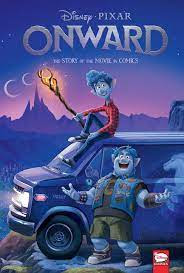
Well, a few weeks ago I saw something similar. I watched the Disney Pixar animated film, Onward. I had never seen the story before, but I practically wrote it.

At least I felt like I did.

As the movie unfolded, I felt like I was watching an animated version of my 2019 novel, Courage. Fortunately, I could not have tossed my words even if I wanted to. And really, I’d never want to. What I can do is enjoy the similarities in character, plot and theme. Loving mother dealing with two sons who don’t understand how badly they need to reconnect to each other. And a dead father who’s loss makes both boys sad and desperate.


There are also differences. The younger brother in Courage has a talent for swimming and diving that his older brother admires. In Onward, the younger brother discovers he has a talent for magic, which makes his older brother wildly enthused for him. Onward has a Manticore, Courage a younger sister. Both are a little scary, and a lot of fun. Courage has a parole officer keeping an eye on the elder brother. Onward uses a centaur police officer. Thank heavens I abandoned the subplot of having the parole officer fall for my heroes' mother. With the centaur trotting around romancing the boy's mother in Onward, that would have been one coincidence too many.

Both the movie and book have the same core, brotherhood at its worst, and at it’s finest. I am really thankful Onward did not come first. Otherwise I might have ignored the advice I give to others in a similar situation and tossed that manuscript. And that would have been a shame. Both stories deserve to exist and can be loved by any siblings who have ever lost a father and nearly lost each other.

There is no such thing as one and only one way to solve a problem or tell a story. Why else is there an endless stream of versions of Cinderella? Nothing an author can write is really unique. Just because your theme has been used once, or twice, or a thousand times doesn’t mean there isn’t room for your Voice to tell that story one more time.

Wednesday, March 10, 2021

Unlawful Orders - To Market, To Market


A year ago this month, my then agent divorced me. As if the opening surge of Covid sweeping the nation wasn't enough, she decided that was a good time to let me know that in spite of her earlier enthusiasm about my work, she was just not that interested in what I was writing anymore.


First, you need to know that I had changed agents in 2018. At the time it seemed the right thing to do. The relationship with my original agent had gone stale.   Like a marriage suffering from the “seven year itch” (https://www.psychologytoday.com/us/blog/meet-catch-and-keep/202002/is-the-7-year-itch-myth-or-reality) we no longer communicated.  The problem was as much my fault as hers, I’m not a natural communicator. But I still felt ignored.

I attended a conference in March 2018 and met an agent who seemed wildly enthusiastic about my work. I was in the mood for enthusiasm, so I said goodbye to my old agent and signed with a new one.

Turns out, all that enthusiasm was only on the surface. By the time I began work on Unlawful Orders, she had already asked for changes on, and then ultimately shot down three other stories I sent her. Unlawful Orders was a child of my heart and almost wrote itself. By the time I felt ready to tell her about the manuscript,  Covid struck. She and her family chose to move from New Jersey last March. She did give me a chance to talk, using that time to admit she had not yet bothered to look at an earlier manuscript I had sent her at the end of 2019.

Then she divorced me.

Reading the email ending our relationship felt like going through a divorce. Possibly what my prior agent felt when I sent her my goodbye email. 

Last month my post described how I got the idea for my next release, Unlawful Orders (https://romancingthegenres.blogspot.com/2021/02/unlawful-orders-black-history-month.html). I was still developing the manuscript in March 2020.  It was still a WIP, but I already knew the manuscript was one of the best things I had ever written. I wanted to get the message it contained out in young readers' hands. I was preparing to remain agentless and self-publish just to it available.

My former agent would at least have read the story, even if she ended up saying no. That thought kept growing in my head.  I ended up swallowing my pride and sending her an email with a quick pitch over the summer.  

As soon as she got the email, my former agent asked to see what I had so far. The next thing I knew, we were together again. The thrill of fixing our relationship and working with her was H-U-G-E!

My agent instructed me on putting together a non-fiction submission package. It was a little different from the fiction submissions I had done until then. Non-fiction does not require a completed manuscript. Instead, I put together: 
  • a cover letter about myself and why I was the right person to tell this story
  • the prologue and first four chapters (sometimes a prologue fits, and one felt right in telling this story)
  • a table of contents with details on what each chapter would cover

She immediately sent that package out. Within days I had a slew of rejections … and offers from two publishers. Next came negotiations and the decision of which offer to accept. It’s a heady feeling to know that publishing professionals feel the same way about my work as I did. My agent and I evaluated the proposals. Over the next month she negotiated with both publishers. In the end the choice was mine. I selected my dream publisher and Unlawful Orders found a home with Scholastic. 

With the terms agreed to, I was surprised to discover that writing the actual publishing contract took over a month. The path of publishing does not run fast. In the meantime I was doing some final editing on the manuscript and growing eager to send them the whole thing. The contract was not finished and signed until December, 2020. As soon as the signing was accomplished, I sent my completed manuscript to my new Scholastic editor. 

The real work of working with the editor to sharpen up the manuscript and getting it ready for publication begins now for a release in 2022. I have received a set of revision instructions from the editor, so I'm about to put nose to the grindstone and begin making the updates that will improve the story. And, in spite of a Covid inspired depression period, I have just finished writing another fiction novel that I will happily be sending to my agent. I now understand why sometimes people remarry a partner they divorced. Sometimes a relationship deserves  a second chance.

Wednesday, February 10, 2021

Unlawful Orders - Black History Month edition

 April 10, 1945

The date doesn't mean much to most people. That's because most people have never heard of the Freeman Field Mutiny.  101 US Army Air Force officers faced a possible death penalty when they refused  a direct order from a superior officer while World War II raged. This exposed each man to a possible death sentence. 


 Years later, the men also earned Congressional Gold Medals in 2006 from former president George Bush.

This is a nonfiction book I wrote last year and that will be published by Scholastic in 2022 titled Unlawful Orders

The book is a biography of one of those young mutineers, following his journey from farm boy who enjoyed shooting rattlesnakes and not having to bathe every day, to renowned Chicago surgeon with a patient list that included Dr. Martin Luther King and jazz great Muddy Waters.  

This is the first of a set of posts that will follow this manuscript from idea  to sale to eventual publication.  Today I will show you how the idea came to me, a question I hear about almost everything I write.


Two years ago I had never heard of the Freeman Field Mutiny or Dr. James Buchanan Williams. I had been asked to write a series of short essays on mother's with black sons for a group called Mother's of Black Boys United, a support and lobbying organization.  They wanted things to post for Woman's History Month, and I found several captivating women to highlight. That included Clara Belle Drisdale Williams, granddaughter of slaves, daughter of sharecroppers, scholarship recipient, valedictorian, and mother of three doctors.  (The picture shows her at graduation from Prairie View College) 

I began by writing about her post graduate career as an award winning teacher  who single-handedly integrated New Mexico State University to earn a second degree, and ended up becoming fascinated by her middle son, James Buchanan, the mutineer.

In the height of World War II, James was a Lieutenant, training to become a Tuskegee Airman. At the end of March, 1945, he was transferred to Freeman Field in Indiana. There, he and the other black officers on the base were confronted by segregation. The commanding officer ordered them to sign a document agreeing they were unequal and accepting segregation.  

James and 100 other officers were arrested after they refused to sign their humanity away and obey their commanders order to admit their black lives did not matter when compared to the white officers on the


base. I think I fell a little in love with James Buchanan, and came to envy his future wife, Willeen Williams. (Pictured are James and Willeen in front of the New Mexico State University English department building named after his mother) I enjoyed reliving the day he graduated from medical school and asked her to marry him because he could not travel to Chicago to begin his internship without her. He became a first at many things in his life, and learned that even after studying in both the US and Canada, earning a masters degree in surgery and becoming chief of surgery at a major Chicago hospital, he still had to face people who thought he couldn't be a good doctor simply because he was black.

He went through life quietly, working for change to help tear down racial discrimination in  the military, in medical schools, and in hospitals at a time when Separate But Equal was a way of life. Like Forrest Gump, he was present at many of the turning points in American history. Unlike Forrest,  he served as an active participant in many of those changes. 

I wanted to write about him. I had no choice, especially since I had learned to love that man who spent many years in Chicago, not far from me.  As a woman who grew up with zero interest in history, the path to Unlawful Orders included months of in depth research to really see the man below the surface, and details of the time he grew up and practiced medicine.

In future months I will return to the subject of Unlawful Orders to discuss how the story helped me get my agent back, taught me some important differences between writing fiction and non-fiction, how the acquiring editor and author work together, the cover process, marketing,  and other steps until the final publication.