Showing posts with label Botanicaust. Show all posts

Tuesday, May 31, 2016

Tam Linsey: Food and a Post Apocalyptic World

Wow, five years Judith and Sarah? Where did the time go? I’m so proud of you both for keeping the Genre-ista’s going strong and steady, and for pursuing your own writing and publishing dreams at the same time. Way to go!

For all you readers, let me give you a little backstory. (I just said the “b” word!) Judith and I met in 2010 during an online class about platform building for writers. I was in the process of switching my writing from contemporary romance to sci-fi, and Judith was cheering me on and keeping me motivated in spite of what seemed like an overwhelming task. I was so honored when she and Sarah started Romancing the Genres and asked me to be a part of it.

Now here it is, five years later, and although I moved on, I remain in contact with my platform partner, Judith. I’ve published three post-apocalyptic novels and two short stories set in a world decimated by genetically modified weeds – yes, there is love after the world ends. 

About a year ago, Audible provided a stipend to turn book one of Botanicaust into an audiobook. Readers call my stories “thought-provoking” and “chilling” along with quotes like “I never would have imagined I would be turned on by a plant.” (That one tickles me!) Most of all, I get comments along the lines of “completely unlike anything I’ve ever read before.” Botanicaust is a crazy mix of cannibals, plant people, immortals, and Amish, but it works, love story and all.

What am I doing now, you ask? When I’m not in the garden or muddling through my day job, I’m working on recording my other books in my tiny, homemade recording studio (also known as the blanket-shrouded closet in my office.) I’m also writing an unsettling post-apocalyptic story about a world destroyed by killer amoebas - I know, first I write about green-skinned seductresses, now the Blob. But I promise, just as Botanicaust isn’t William Shatner hooking up with an alien, my new world won’t be a cheesy conspiracy theory gone wrong. And you haven’t seen the end of the Botanicaust world, either. I plan on giving you the history for the photosynthetic Haldanians, plus there is definitely more to come with Tula and Levi.

I can’t resist one last reader quote to wrap things up. “To all the little Fred Savages out there, I'm sorry, [Botanicaust] is a kissing book. But even if that's not your bag, Tam Linsey has written a solid sci-fi book you will dig.”

In closing, I want to thank you for stopping by. If you’d like to know more about my books, you can sign up for my newsletter at http://bit.ly/Botanicaust or visit my website at http://www.tamlinsey.com. Or, of course, you can also go directly to Amazon if you already know you like post-apocalyptic romance.

Tam lives in Alaska with her husband and two grown children. She lives on a half-acre lot that is more than a garden and less than a farm. When she’s not writing, you might find her in the garden, the orchard, or kitchen.

Other books in the Botanicaust series:


Tuesday, October 30, 2012

Guest Tam Linsey: Science Fiction Romance – A Ball in Both Courts


I playfully claim to write post-apocalyptic dystopian science fiction romance. The description is spot on, if a bit overwhelming. I could go on and on about the subgenres, but today I’d like to focus on science fiction versus romance.

Science fiction is about possible futures: humanity has reached the stars, or aliens have arrived (with their advanced technology,) or our genome has evolved to include paranormal abilities. In science fiction, readers may not care about getting inside characters’ heads, but the events must be plausible. Genetic mutation must explain superpowers, and the laws of physics had better apply to a spacecraft leaving orbit. Sci-fi fans don’t always expect a happy ending, as long as the facts behind the science add up.

Romance, on the other hand, is all about characters in a relationship and the emotional changes they undergo. The last thing the hero and heroine want is to fall in love, yet readers know that is exactly what the characters are going to do. Regardless of whether or not the physics of the warp-drive are explained, the story had better explore the angst of a heroine who kept the birth of her baby from its father, or the self-sacrifice of a hero who would die for his one true love. In romance, emotions need to rule the story. In addition, the story has a guaranteed happy ending.

To satisfy both types of readers, science fiction romance must meticulously incorporate enough science to explain the world, and enough psychological introspection to validate a character’s emotional changes. Yet, it must also resist overwhelming readers with too much of either aspect.

In Botanicaust, genetically engineered weeds have wiped out Earth’s croplands, and the world is no longer hospitable to human life. The heroine is a doctor with green, photosynthetic skin who believes humanity must accept genetic modification in order to survive. The hero comes from a remnant farming community where they believe anyone who has accepted modification is damned to Hell. Who would think they might fall in love? Science is the main source of tension between the lovers, which in turn mimics the conflict between their cultures, creating a rich and deeply emotional plot for fans of both science fiction and romance. But I didn’t include every scientific fact I discovered. I condensed the information into a few salient points about each character – like giving the villain a skin disease caused by his chloroplasts. 

Science fiction romance is a growing genre, and there are many great books that successfully incorporate scientific plausibility with a satisfying emotional experience. If you read romance, how important to you are facts? For science fiction readers, how important to you is developing a character relationship?
TAM LINSEY

Tam Linsey lives in Alaska with her husband and two children. In spite of the rigors of the High North, she grows, hunts, or fishes for much of her family’s food. During the long Alaskan winters she writes speculative fiction. You can find her at www.tamlinsey.com or on Facebook or Twitter

CLICK TO BUY
The only crop left ... is human
 
After genetically altered weeds devastate Earth's croplands, much of humanity turns to cannibalism to survive. Dr. Tula Macoby believes photosynthetic skin can save the human race, and her people single-mindedly embark on a mission to convert the cannibals roaming what's left of Earth. But when Levi, a peaceful stranger, refuses alteration, Tula doesn't think the only options should be conversion or death.
 
Levi Kraybill, a devout member of the Old Order, left his Holdout farmland to seek a cure for his terminally ill son. Genetic manipulation is a sin, but Levi will do almost anything for the life of his child. When he's captured, he's sure he's damned, and his only escape will be death.

Tuesday, June 19, 2012

How a Book Trailer is Like a Wedding

by Tam Linsey

I am creating an arranged marriage - the joining together of video and audio into a book trailer for Botanicaust. (I know the theme for June is weddings, but I'm going to show my inner geek here and talk techno.) Believe me, it's as much work as planning a wedding. Both require picking the right music, arranging visual items like flowers / photo slides, and putting together words to create vows / a movie script.

Finding the right music to accompany my slideshow proved to be a lot like searching for the right man, but I've finally found a score I like. Well, mostly. I made a few changes using Garage Band software. If only a man could be so easily convinced to pick up his socks.
Gimp stands for
"GNU Image Manipulation Program"


When an image wasn't exactly what I imagined, I altered it, like a bride who wants her wedding dress to look perfect. (My images require lots of naked green skin. That's fun.) I've become pretty adept using Gimp, my photo editing software.

Fonts are another issue. Like vows, I could use the standard set, or I could do something special. The words have to be readable, set a tone, and yet be unique to the book trailer. There are several websites out there offering free fonts if you have time to browse.

Writing the script was even harder, like speaking wedding vows aloud. Am I saying it right? Do people understand me? What if I look stupid?

How many married people out there wrote their own vows? You know what I'm talking about.

So, there's my techno-analogy on an arranged marriage. Or planning a wedding. Whatever. I have a feeling when I'm finished with this project, I may just cry for joy. Hmmm, that sounds a lot like a wedding, too.

P.S. I attempted to embed a video of the Botanicaust book trailer, but I'm not sure it will work (I might talk techno, but I'm fairly new at all of it.) If the video does not play, you can also see it here. I'd love to know what you think!


© Tam Linsey, 2011. All rights reserved.

Tuesday, March 20, 2012

What's in YOUR Food?

by Tam Linsey

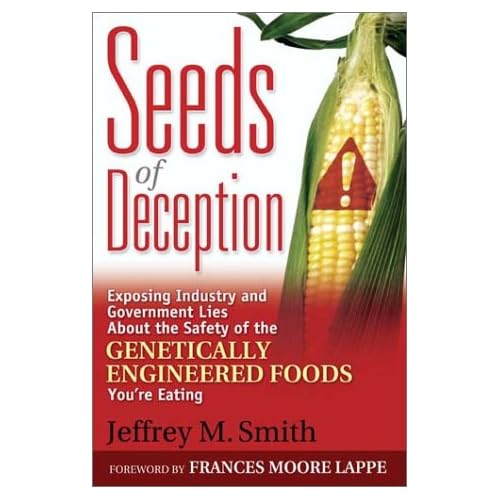
When asked to share my passion, I didn't have to think long about my "soapbox." I love to garden, I love to cook, and I love to eat. My novel, Botanicaust, is about about a future world where these things are taken away. Taken by a rogue genetic manipulation (GMO) that devastates food crops across the globe, and leaves humanity struggling for survival.

You might think this means I am anti-genetically modified organisms. I'm not. I think this kind of science has huge potential. But as the saying goes, "with great power comes great responsibility." Don't rush releasing new organisms into the biosystem. Test it and then have someone else test it again. (And NOT the company that stands to make money from the item in question.) This is an area I think government really needs to take a strong hand.

Right now, if you live in the United States, you are probably eating genetically modified organisms. It is in nearly anything that has corn or soybean based additives. That's nearly everything processed.

And they don't know the long term effects of eating these items. Some evidence points to real problems. Since the late 1990's, food allergies have risen drastically. Just like exposure to sunlight takes years to develop cancer, exposure to the new genetic structure in our foods could take years to manifest. But current regulations allow such crops into the food chain after less than a handful of years of development and testing.


And companies are not required to tell you about it.

The only way to be fairly certain you are not eating GMO's is to buy only organic. And even then there could be contamination.

Now there may be readers out there shaking their heads who don't believe any of the potential dangers. And that's all right. They can believe what they want, eat what they want. But I deserve to eat what I want, too. I deserve to know what I am eating. I deserve a choice. If you think you deserve a choice, too, I encourage you to go to Just Label It right now and tell Congress we want to require companies to provide full disclosure about what they put in our food.

And thanks for listening to my soapbox.

© Tam Linsey, 2011. All rights reserved.

Tuesday, August 16, 2011

All About Choices

When I’m stuck in a loop on one of my ideas (some people call it writer’s block) it’s often because my characters refuse to do what I require. Something in their world is just not quite right. They are missing a motivation, or a skill, or an item that would make things flow again.

At one point in Botanicaust, my characters faced yet another “flight from the bad guys.” I wrote it. And re-wrote it. Ho hum. The two of them had escaped before. They’d do it again. There was no growth or movement. It was just a plot moment, and I want my scenes to always do more.

I watched some TV. Played a game. I even actually cleaned my house.
What if my characters didn’t escape, after all? What if they died? What if I had to introduce something fundamental in this scene that needed to be included in further scenes? So I watched another movie. Ate some chocolate. Sulked.

Would this scene even work in this story? They had to get away from the bad guys, of course. But what would make the reader anxious they might not succeed?

The scene needed more tension. Higher stakes.

So I started asking questions. What would my hero value enough to raise the stakes? What if he had to choose who to save? And who, besides the heroine, would he consider gut-wrenching to lose?

Kids. There were children in the manuscript earlier I’d conveniently written out, and I realized I still needed them. My main character needed more people to protect, people he had to make choices between.

So I reintroduced the children, and they played a major role in the rest of the manuscript. Not only that, but they have become the main characters of my next book in the Botanicaust world.

If I had skipped the flight scene, I would not have enriched the rest of the story with these characters. Or I would have been forced to squeeze them into later scenes for continuity, and it would have felt unnatural. This scene with the children became one of my favorite sections in the whole book.

Do you have a favorite character moment you’ve read or written recently?
© Tam Linsey, 2011. All rights reserved.

Tuesday, June 21, 2011

The Cannibal Irony

Cannibals are evil, right? They kill and eat people, and that is inherently wrong. Yet Cannibals are some of the most interesting characters in my story world. How can readers possibly bond with someone who does something so evil?

In Botanicaust, the Cannibals survived the demise of world food crops by refusing to be picky. Yes, they eat humans, but not exclusively. They eat anything. And they don’t believe in wasting. Their culture evolved as the ultimate conservationists. They have laws to protect people with knowledge that must not be lost. And only certain bands, called Hunters, actively hunt and kill other people. The rest of the Cannibals are gatherers, healers, craftsmen, and parents. If the situation suits them, they take pity on outsiders.

Beyond the one nearly unforgivable trait that defines them, Cannibals in Botanicaust have many good qualities. There is a reason for what they do, proven again and again by a harsh environment. Readers can empathize with the need to survive. And that is the crux of memorable characters; the reader doesn’t have to actively like them, only empathize with them.

Can you think of a character with a serious flaw who for some reason, you bonded with anyway? What redeemed that character for you?

© Tam Linsey, 2011. All rights reserved.

Cross posted at www.tamlinsey.com and www.akrwa.blogspot.com