Showing posts with label Details in writing. Show all posts

Thursday, July 6, 2017

HOW MUCH KNOWLEDGE IS ENOUGH? by Michelle Somers


When do you know enough to speak with confidence and authority?
Interesting question, right?
As a writer, my journey has been a rolling one – hills, dales, tributaries . . .

Large gaping canyons . . .
You know, the usual ups and downs. I’ve done everything possible to learn and develop my craft – bought and borrowed books, attended writing workshops and conferences, entered competitions, had my work appraised and critiqued. And I’ve had some amazing authors guide and mentor me along the way. I feel as if I’ve got this writing gig down pat.
But when do we know enough to be able to give back to the community who have given us so much?
There are so many variables here, but I don’t think any one of them change my view on this . . .
When can we begin to give back?
From Day 1.
I see your eyebrows raise. Your lips twist. Your jaw drop.
How can we help others learn when we are still learning ourselves?
One fact I’ve discovered on this wondrous journey is that no matter where I am on that road to authordom, there will always be someone behind. Someone who knows less or who needs more. And another fact I’ve discovered? Helping others doesn’t infringe on my success, and more, it gives me a warm fuzzy feeling with the realization of how much I’ve learned and how I’ve managed to help someone in the way I was once helped.
If that’s not a warm fuzzy hug, I don’t know what is.


I guess that’s what I love about romance writers. Maybe it’s because our stories are filled with so much love and giving that some of that goodness oozes out and escapes into the real world. Or maybe it’s because we realize more quality books on the shelves provides a more solid platform for our own book babies.
Or maybe it’s because we’re a pretty awesome bunch of writers 😊
Whatever the case, I’ve found that people at every stage of the writing journey all have something to offer. And most give of their knowledge both freely and generously.
And that was my thought as I began to outline an idea for a non-fiction book on writing.
I’m one of those crazy people who love writing synopses. Yet there are so many writers who struggle with the idea. Maybe it’s my highly scientific mind. My love for logic. For structure. Or maybe it’s some deviant form of DNA in my genetic makeup.
Either way, I seem to have – somewhat unconsciously – formulated a strategy to build the synopsis from a story’s key elements. And using that strategy transforms synopsis creation into a simple, non-teeth-pulling process.
Having created this strategy, why wouldn’t I want to share it with others? Easy to do with writers in my immediate circle, but how to share it with writers further afield?
Hence, the first in my non-fiction Simply Writing Series – Simply Synopsis.


This book is my way of giving back to writers, and the romance writing industry as a whole. After all, if I can help take the stress out of synopsis writing, why wouldn’t I?
That’s also the reason I signed up with Romance Writers of Australia to hold a four week online workshop on synopsis creation in September this year. If you’ve ever struggled over the wily synopsis, if you’ve never quite got the gist of how to structure one of these head bangers, then click here and scroll down to find out more about my Simply Synopsis OWL.

Isn’t it funny, but even while writing this book I experienced the generosity and support of authors around me. And their generosity made Simply Synopsis all-the-more richer. Now I have a book brimming with examples and words of experience from authors 'in the know.'
I consider myself lucky to know each and every one of them.
Simply Synopsis has been a while in the making – because I was waiting until I had knowledge enough to share with others. If only I’d known – I’d have shared this with you all Day 1 😊

Where are you in your journey – whether it be writing or otherwise? Is there something, no matter how small, that you are able to share with others? Have you considered it? Even begun to share and enrich the lives around you?
If not, today is a good day to start. Do it and make a difference, to not only the lives of others, but your own life. In giving we get so much more in return.
Thanks so much to each and every one of you for visiting, reading, commenting, and making a difference. I hope you enjoyed my post this month.
If you’d like to know more about me, my writing life or even my books, please pop along to my very new, very shiny website at http://www.michelle-somers.com/
Michelle Somers is a bookworm from way back. An ex-Kiwi who now calls Australia home, she's a professional killer and matchmaker, a storyteller and a romantic. Words are her power and her passion. Her heroes and heroines always get their happy ever after, but she'll put them through one hell of a journey to get there.
Michelle lives in Melbourne, Australia, with her real life hero and three little heroes in the making. And Emmie, a furry black feline who thinks she’s a dog. Her debut novel, Lethal in Love won the Romance Writers of Australia's 2016 Romantic Book of the Year (RuBY) and the 2013 Valerie Parv Award.

Tuesday, July 7, 2015

Archaic Clichés We Still Use

As a newbie author, we often find ourselves using cliché’s without realizing it—because they are comfortable. Familiar. Understandable. Relatable. The thing is, though our first reaction is to use them, do we understand them?

In last month’s post, I used “have a bee in my bonnet,” “jumping on bandwagons,” “everyone and their brother,” and “rest on your laurels.” What do those mean?

To have “a bee in one’s bonnet” signifies a level of agitation prompted by an obsession with an idea. We still say it, even though most of us don’t wear bonnets at any time or for any reason.

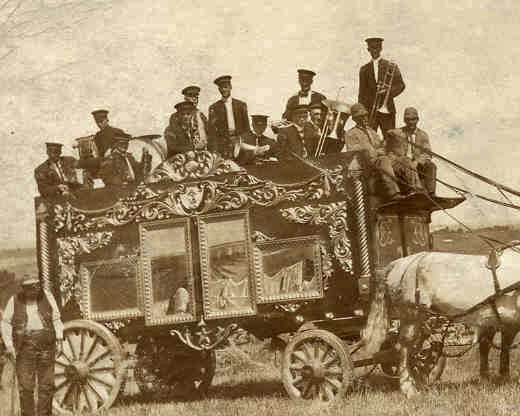
The word bandwagon was coined in the USA in the mid-19th century as the name for the wagon that carried a circus band. When you “jump on the bandwagon” it means you support a hobby, idea, or person after it has become popular or successful. Seen a bandwagon lately? Me neither.

“Everyone and their brother” is obvious: it means pretty much everybody. This one is still relevant.

In ancient Greece, laurel wreaths were symbols of victory and status. In common modern usage it refers to a victory. The expression “resting on one's laurels” refers to someone relying entirely on long-past successes for continued fame or recognition. But I would think resting on one’s gold medal would be more 21st-Century. Or Oscar.

How about “once in a blue moon”? This one is really interesting:

When the Indonesian volcano Krakatoa exploded in 1883, its dust turned sunsets green and the moon blue all around the world for the best part of two years. Then in 1927, the Indian monsoons were late arriving and the extra-long dry season blew up enough dust for a blue moon. And moons in northeastern North America turned blue in 1951 when huge forest fires in western Canada threw smoke particles up into the sky.

So, once in a blue moon refers to anything that rarely happens. At least that example was most recently within the last seventy years!

“Beat a dead horse” is pretty obvious as well: it’s a reference to something that is entirely pointless and cannot result in any productive end. God forbid anyone actually beats any animal – dead or alive. Yet we still say it.

“Take the cake” means either to carry off the prize, or is used as an expression of disbelief. However, calling something “a cake walk” indicates an absurdly or surprisingly easy task. Both refer to an event at a country fair where people try to win somebody’s home-baked cake in a musical chairs type scenario. No, I’ve never seen it done.

“Let the cat out of the bag” is problematic; there is no clear answer as to where this saying originated or why. Most likely it’s connected with the similarity between secrets and cats — once either is let out, they go wherever they want. Besides that, it does evoke a pretty amusing image, no matter what culture it’s used in!

Ever call “shotgun” when getting into a car? Do you know why? Because the guard holding the shotgun always sat beside the stagecoach driver, protecting what or who was inside.

So what becoming-archaic expressions are we using without thinking about them? How about “hang up” a phone from back in the day? That was fun when we were annoyed. It’s not nearly as satisfying to touch the END icon on a phone’s screen, no matter how hard you poke it…

“Typing” comes from typewriters, which placed one letter at a time on a sheet of paper, much like setting type in a print shop. We still say we are typing – but we do it on a keyboard. We never say we have to “keyboard” a document, though technically that would be more accurate. We aren’t even using paper as we keyboard!


I challenge you all to see if you can catch yourself using an expression which, if you think about it, hardly makes sense anymore. Post them here – I’d love to see what you come up with!

Monday, March 2, 2015

Sneaky Characters by Paty Jager #cozymystery #writing

When I started writing mysteries I told myself I'd be more disciplined and make sure I knew all the red herring characters and the murderer. I didn't want to have a mystery that went off on different paths. I wanted to make sure I stayed on a logical trajectory.

Knowing I wanted a logical path while creating the story, I made a character chart. By listing my murder victim and all the possible killers and their motives on a chart it would help me introduce the characters to the story and using their motives make the reader and sleuths think they've found the killer only to find a reason they didn't or a stronger motive in another character.

This is the chart I made for the first mystery, Double Duplicity.
Victim
Suspects
Motive
Death
Red Herrings

Paula Doring, owner of the Dowing Art Gallery


Ted Norton,  owner of Dimensions Gallery


Paula had just wooed his second best client to her gallery and it wasn’t the first time.
Stabbed


Naomi Norton, Ted’s wife and co-owner of Dimensions Gallery
Believed Paula had something to do with her sister’s suicide
(sister was in love with Oscar Rowan)

Shandra sees Naomi leaving the area.


Oscar Rowan, disgruntled Artist
He was sleeping with Paula with hopes of being her featured artist at the summer event. It is his statue’s spear that is the weapon


Sidney Doring, soon to be ex-husband, part owner of Huckleberry Lodge
He was furious with her affairs and the stipulations in the divorce papers. Killing her saves him money and a messy legal battle.


Juan Lida, Paula’s assistant
Jealous type, knew of her conquests but she promised once the divorce was final she’d bring him on as an equal partner.


If you've read Double Duplicity you know that some of the motives changed as I wrote the book and the person I picked to be the killer changed. The murderer ended up being a character that was added to the book as I wrote it.

So the second book I told myself I would make sure I stuck to my chart.

I didn't.

As the story progressed it made more sense to make the killer be someone other than the person I picked in the beginning.

Same with book three that I am just about finished writing. I was so carefully picking my red herrings, the why's of the character's motives, and again, the murderer has turned out to be someone different.

I've deduced that what happens is; as the story unfolds and subplots and character traits are revealed the motives and the reasons for the characters to act the way they do doesn't always gel with what I started out with. But that's the fun of writing. The characters come to life and the next thing I know they are behaving differently than I'd anticipated.

I'm sure I'm not the only writer who has sneaky characters. And I'm sure there have been books where the reader has thought the character would act one way then realized when the character didn't that it was set up that way, but they hadn't noticed until that one act.

www.patyjager.net
Writing into the Sunset

Monday, August 5, 2013

Brewing up a Hero/Heroine by Paty Jager


How I brew up a hero or heroine isn't always the same but there are elements that do meld and help me find the perfect blend of characteristics, background, and visual appeal.

All my stories deal with justice. It's a quirk I realize is inherent in me. I want justice to be served or to make it known to others when there has been an injustice. Knowing this, I have certain characteristics my hero and heroine must have that will also give them the same drive to bring about justice or reveal the injustice.

They need to have these traits: Aggressive(not always in an overt way), alert, brave, concerned, determined, honest(if not to themselves to everyone else),intelligent, and stubborn.

When brewing up a character I use the above traits to conjure up their background. The events that happened in their lives to give them some of these traits. And the other traits that make some of the decisions they need to make in the story hard.

Sometimes I'll get a vision of the character, what they look like, how they dress and then I add the characteristics from the visual I see. These are the fun characters because I see them before I know their whole story and usually their name pops in my head when I see them or am categorizing what I see.

There are other times when I know the story I want to tell and then have to brew up the characters. Then I start with the background they need to be part of the story. I find a photo of who I think they are, or type out their visual characteristics. If I'm still at a loss for a name, I'll use their ethnicity to look up names and find the one that fits my character.

Then there are characters like Isabella Mumphrey who came about like this:
My friend Julie and I were driving to a writing retreat and I was lamenting about a book that didn't live up to the hype of an action adventure.
Julie: Why don’t you write an action adventure?
Me: I can’t write action adventure, and I’ve worked hard at branding myself. I write western or Native American.
Julie: So make the heroine have something to do with Native American studies.
Me: I guess that would work. (here my brain started kicking into overdrive)
Julie: Where would you set this story?
Me: South or Central America.
Julie: Why?
Me: I could use the heroine’s studies of Native American Indians as her reason for traveling to countries with drug problems.
Julie: Why?
Me: Because the hero would be with the DEA.
Julie: What kind of heroine will she be?

Me: Scholarly…genius level having graduated with her doctorate at 20 or22.(a light bulb clicked in my head as a slender girl with glasses wearing a long broomstick skirt, tank top, and sandals formed in my mind) Her name is Isabella Mumphrey.

I wish all heroes and heroines came as easy and fast as Isabella did.

Secrets of a Mayan Moon Blurb:
Child prodigy and now Doctor of Anthropology, Isabella Mumphrey, is about to lose her job at the university. In the world of publish or perish, her mentor’s request for her assistance on a dig is just the opportunity she’s been seeking. If she can decipher an ancient stone table—and she can—she’ll keep her department. She heads to Guatemala, but drug trafficking bad guys, artifact thieves, and her infatuation for her handsome guide wreak havoc on her scholarly intentions.


DEA agent Tino Kosta, is out to avenge the deaths of his family. He’s deep undercover as a jaguar tracker and sometimes jungle guide, but the appearance of a beautiful, brainy anthropologist heats his Latin blood taking him on a dangerous detour that could leave them both casualties of the jungle.

Secrets of a Mayan Moon is available at Windtree Press, Kindle, Nook  Kobo . 

Award winning author Paty Jager is a member of national and local writing organizations. She not only writes the western lifestyle she lives it. With fifteen novels and several short stories published, she continues to have characters cavorting in her head and enjoys teaching other writers. 


You can learn more about Paty at her blog; www.patyjager.blogspot.com  her website; http://www.patyjager.net or on Facebook; https://www.facebook.com/#!/paty.jager , Goodreads http://www.goodreads.com/author/show/1005334.Paty_Jager  and twitter;  @patyjag. 

Monday, March 4, 2013

Do you really want all the details? by Paty Jager


I started watching the movie “Bernie” with Jack Black a couple weeks ago. It had been recommended by a friend. Well, my husband and I were bored to death it moved so slow and was kind of like a documentary about this guy Bernie’s life. It was based on a true story about a mortician who befriends an older widowed woman.

Which brings us to this month’s topic; Death and Taxes. I’m not going to talk about taxes. It’s like talking politics. Everyone has their point of view and the only thing everyone can agree on is we all pay too much.
Now death… that can be reflected on, talked about, and hit you where it hurts. But what I’m going to talk about are the things I saw and thought I’d learned at the very beginning of the movie “Bernie”.  As I said he is a mortician and the movie opens with him teaching a class at a mortician’s school on how to “present” the deceased.

He showed how to “fix the face”, put make up on, and pose the hands. Things I’d never thought about and have since researched because I couldn’t believe some of the things he did. Were they the truth or added to make the viewer question? From the info I found on the internet(two reliable sources by morticians), I believe the movie used methods to evoke an emotion other than “Ick”. In the movie “Bernie” super glued the eyes and the lips shut. But first he placed a piece of plastic in the corpse’s mouth to make his lips stick out rather than suck in.  

I discovered there is an adhesive used to keep the eyes closed (they don’t shut after someone closes them as they show in the movies and TV)  And they do a whole lot more to the mouth to keep it closed, but I won’t go into that. (Let’s just say, I think I’m going to just be cremated rather than have so much evasion on my person when I die.)

The moral or reason I’m bringing this up, is, as I researched, I found out a whole lot of information that would make most viewers turn the movie off way before I did. So when writing or reading a book, how much do you want the writer to stick to the truth? Enough to make it interesting without boring you or making you sick, or do you want all the gory or boring details?

Bonus: Starting this month on my blog and website, I’m giving away prizes. At my website it’s a scavenger hunt and on my blog all you have to do is leave comments to win. The prizes are worth $25 so swing on by and try your hand at winning!