Showing posts with label New Year's. Show all posts

Wednesday, December 13, 2023

Relaxing for the New Year

  I stopped doing New Years Resolutions decades ago. Keeps me from having to begin the year filled with regrets for the promises I failed to keep. But I do keep a set of tips for myself about writing. Writers, the road to publication is hard. So give yourself an extra special gift right now. At the end of each year, I like to sit around the Christmas tree, stare out at the landscape and ruminate about those tips. Today, I want to share one of them with you.


I’m fortunate to have learned a big lesson with my very first manuscript. Once you heaven agent, you tend to get better responses from acquiring editors who look at - and then reject - your manuscript. And one of my best lessons came with my first book. It was a YA romance, PULL, with a heroine I loved creating, Yolanda Dare, called “The Dare” by the boys in her high school. I wrote her to be smart, empathetic, and a fashionista - a whiz at making her own clothes and accessories. I also gave her an abusive ex boyfriend, PULL's antagonist. She is prepared to return to him to protect the hero’s younger sister. (Relax, the hero, aptly named David, saves the day.)

 
I remember the rejections I received from two agents in particular. The first told me that Yolanda’s actions around her ex proved she was too dumb to have accomplished so much. I was just about to look at her and see about making changes, when I received a second rejection the very next day. That editor told me Yolanda was obviously brilliant, accomplished and self-assured, not someone who would ever be foolish enough to be involved with the antagonist, the ex-boyfriend.

 
That left me scratching my head. Was she too dumb to live or brilliant and accomplished? Fortunately I didn’t change her. About a month later, another editor bought my manuscript with the Yolanda I originally created.

 
Those words and other rejections, along with a few acceptances) now make me laugh when I hear aspiring authors say hat agents and editors do or do not want. When questioned, it almost always ends up that one person told them something, and they have extrapolated that to the entire industry. If I were to do that based on some of my more recent MG rejections, I could tell you that agents and editors don’t want dead parents, mean girls, or heroines that are too smart or mature. (Shades of poor Yolanda).

 
Four books later, I still struggle with the same questions I had with poor Yolanda. At least now I know there is no industry-mandate that young heroines can't be smart and mature.  The order against dead father's is only one publisher. Mean girls are still a reality in both real life and in books. So now, come the new year, I will grab a cup of hot chocolate and relax while my manuscripts keep searching for a publisher tha will love it the way it is.

 
Actually, I think I'll get eggnog instead of hot chocolate, while I follow my own advice to relax and be good to myself over the holiday.


P.S. You can find more information about PULL, and the unstoppable Yolanda Dare, at https://www.babinns.com/pull/

Tuesday, October 18, 2022

THINGS THAT GO BUMP…AND THUMP…IN THE NIGHT ... by Delsora Lowe

What me worry? All the time!

But what do I do with that worry that “bumps” me in the middle of the night? I usually read a ton of books at that wicked worry hour.

My books in good company at Sherman's Books

Obviously, scary stories are out - even in October. As an author, I have many author friends and I try to support them by reading their books. But scary books will keep me up at night, even if it’s a romance. Romance has many genre types from sweet to spicey, and includes the scarier ones, such as romantic mystery, suspense, paranormal, and thriller. The one requirement for a book to be classified as a romance is that it has a HAPPILY-EVER-AFTER ending. How the author reaches that magical ending is an open path.

Still, I do want to read some of those scarier books, only because I know the words the author writes will inspire me, even if the topic may alarm me. I still learn. So those books I read during daylight.

The other thing that keeps me awake is what a good writer friend calls her monkey mind—the one that chatters all night long about every worry that we try to slough off during the day. And when my worries are buried all day, so I can actually get other things done—well, you know what happens. I am usually wide awake with thoughts whirring through my mind. Getting back to sleep might not happen for hours. Instead, I stare out the window. Or step to the deck and take photos under the full moon. Or with the streetlight making its own magical reflections in the rain.


Rain Drops That Look Like Diamonds Under the Street Light

Hide and Seek with the Moon

So, when my mind spins in various directions, and refuses to quiet, no matter how many Belted Galway cows I count, I tend to get up, boot up the computer, and write. For many of my books, I have added extra chapters during those post, midnight magical hours.


Not only worries keep me awake, but once in a while a nightmare might intrude. And then the imagination spins in a totally wrong and scary direction. Since I am a writer of romance with no scary stuff involved, thinking about story does help. And getting up, brewing a relaxing herbal tea, and getting lost in my latest work in progress, settles me.

I can choose to be productive, when my mind is on overload…or I can turn on the reruns of the Golden Girls, seen at least a million times. Directing worry and thumps in the night into a creative endeavor is both soothing and fruitful. But…a good laugh from a sitcom works too.

Dan Zadra Quote

What do you do to ward off those things that go BUMP/THUMP/BANG in the night?


The Inn on Gooseneck Lane

Amazon

The Inn on Gooseneck Lane - Kindle edition by Lowe, Delsora. Literature & Fiction Kindle eBooks @ Amazon.com.

Barnes & Noble

The Inn on Gooseneck Lane by Delsora Lowe | NOOK Book (eBook) | Barnes & Noble® (barnesandnoble.com)

Apple Books

                 The Inn on Gooseneck Lane on Apple Books


~ cottages to cabins ~ keep the home fires burning ~

Delsora Lowe writes small town sweet and spicy romances and contemporary westerns from the mountains of Colorado to the shores of Maine.

Author of the Starlight Grille series, Serenity Harbor Maine novellas, and the Cowboys of Mineral Springs series, Lowe has also authored short romances for Woman’s World magazine. Her newest novella is The Love Left Behind. Look for both a Christmas novel (The Inn at Gooseneck Lane) and novella (Holiday Hitchhiker) later this fall.


SOCIAL MEDIA LINKS:
Author website
: www.delsoralowe.com
Facebook Author page: https://www.facebook.com/delsoraloweauthor/community/
Amazon Author page: https://www.amazon.com/Delsora-Lowe/e/B01M61OM39/ref=ntt_dp_epwbk_0
Books2Read Author page: https://www.books2read.com/ap/8GWm98/Delsora-Lowe
BookBub Author Page: https://www.bookbub.com/authors/delsora-lowe-93c6987f-129d-483d-9f5a-abe603876518
Goodreads Author Page: https://www.goodreads.com/author/show/16045986.Delsora_Lowe
Instagram: #delsoralowe / https://www.instagram.com/delsoralowe/

PHOTO CREDITS:
Author Photos and CANVA design
DanZadraQuote_Goodreads


Monday, December 31, 2018

New Year's Traditions - When? Where? Why? by Sarah Raplee

LISTEN UP, READERS! I went down the research rabbit hole and this blog post is the result. Be forewarned.

Although many countries and peoples around the world celebrate New Years’ Day on January 1st (according to the Gregorian Calendar,) not every country nor every religion follows the Gregorian Calendar. Named after Pope Gregory XIII, the Gregorian Calendar was officially introduced in Italy, Poland, Portugal and Spain in 1582 to replace the Julian calendar, which was considered too inaccurate.
Interestingly, many countries that are not predominantly Christian use the Gregorian Calendar for government business and other secular activities. And lots of predominantly Christian countries include many citizens following different religious or cultural systems. It stands to reason that billions of people observe two different New Years’ celebrations. (As a member of the Baha’I Faith, I am one of those people.)

Most of the Gregorian New Year’s celebrations take place on New Years’ Eve and involve fireworks. Sydney, Australia, puts on the world’s biggest fireworks display at the waterfront near the Sydney Harbor Bridge and the Sydney Opera House.

A less-widely-known observance occurs in Rio De Janeiro. The traditional celebration of Reveillon includes millions of people standing along Copacabana Beach. All dress in white and throw flowers into the ocean to honor Iemanjá, the goddess of the sea, according to the African religion of Candomblé. There’s also live music, dancing and a wonderful fireworks display, along with many traditions and superstitions. And parties! Reveillon is also observed in New Orleans.

REVEILLON IN RIO
Edinburgh’s Hogmanay is Scotland’s world-famous New Year’s festival, presenting three days of spectacular events. Festivals, parades, street parties and concerts lead up to fireworks bringing in the new year. The celebration lasts through New Year’s Day.

WHEN NEW YEAR'S DAY DOESN'T FALL ON JAN. 1

Baha’i New Year, Naw Ruz, marks the Vernal (spring) Equinox, when day and night are equal in length and spring begins in the northern hemisphere. For members of the Baha’I Faith, work and school are suspended. The new year marks the end of the month of fasting and is usually celebrated with a festive get-together including prayers, dinner, music, dancing, and other fun activities. There are few fixed rules for observing Naw-Rúz. Bahá'ís all over the world celebrate it as a festive day, according to local custom.
BAHA'I NAW RUZ DANCERS
Halifax, Nova Scotia

Pagan New Year, Midwinter (or Winter Solstice) Many Pagans consider the festival of Midwinter, or Winter Solstice (usually Dec. 21st) as a celebration of the transition from the old year to the new.  In the past month, the sun was ebbing. In the new month, the sun waxes brighter. This reversal symbolizes the rebirth of the solar god and foretells the coming of the fertile seasons. The ancient megalithic sites of Newgrange and Stonehenge are precisely aligned with the Winter Solstice sunrise and sunset. Practices vary, but usually include offerings, feasting, and gift-giving. Tree decorating and bringing evergreen boughs, sprigs and wreaths into the home are common customs.

Muslim New Year, Al-Hijra, marks the Hijra (or Hegira) in 622 CE when the Prophet Muhammad moved from Mecca to Medina, and set up the first Islamic state. The date marks the beginning of Islam as a community in which spiritual and earthly life were completely integrated. There is no specific religious ritual required on this day, but Muslims will think about the general meaning of Hijra, and regard this as a good time for 'New Year Resolutions'.
CHINESE NEW YEAR

Chinese New Year The Gregorian calendar is used in China for civil purposes in modern times. The Chinese Calendar is used to determine important festival dates, such as Chinese New Year, as well as auspicious dates, such as wedding dates. Chinese New Year is celebrated for fifteen days and falls  between January 21 and February 21 on the Gregorian Calendar. This is considered the most important festival of the year, with many traditions. People go to the temple and pray for good luck in the coming year and to have their fortunes told. They clean their homes to sweep out the bad luck that has accumulated in the past year. Red is the New Year’s color, representing good fortune. People hang red decorations and wear red clothes. At midnight when the New Year begins, people set of firecrackers that are loud and mostly lit on the ground. The loud noises are thought to scare the bad spirits away, to prevent them from bringing bad luck.

Buddhist New Year For three days after the first full moon of April, Buddhists celebrate New Year’s Day in certain countries. In other countries, the New Year is celebrated around the full moon in January. The time it is celebrated depends on the country and people. For example, people in Tibet celebrate at the full moon of February, while people in China, Vietnam and Korea celebrate at the end of January or the beginning of February. Customs and traditions vary in different countries and among different forms of Buddhism as well. For all Buddhists, visits to temples or monasteries are important. All include feasting and merrymaking.

HAPPY NEW YEAR'S(S)!!!


Saturday, December 31, 2016

New Years’ Traditions—When, Where, Why? by Sarah Raplee

LISTEN UP, READERS! I went down the research rabbit hole and this blog post is the result. Be forewarned.

Although many countries and peoples around the world celebrate New Years’ Day on January 1st (according to the Gregorian Calendar,) not every country nor every religion follows the Gregorian Calendar. Named after Pope Gregory XIII, the Gregorian Calendar was officially introduced in Italy, Poland, Portugal and Spain in 1582 to replace the Julian calendar, which was considered too inaccurate.
Interestingly, many countries that are not predominantly Christian use the Gregorian Calendar for government business and other secular activities. And lots of predominantly Christian countries include many citizens following different religious or cultural systems. It stands to reason that billions of people observe two different New Years’ celebrations. (As a member of the Baha’I Faith, I am one of those people.)

Most of the Gregorian New Year’s celebrations take place on New Years’ Eve and involve fireworks. Sydney, Australia, puts on the world’s biggest fireworks display at the waterfront near the Sydney Harbor Bridge and the Sydney Opera House.

A less-widely-known observance occurs in Rio De Janeiro. The traditional celebration of Reveillon includes millions of people standing along Copacabana Beach. All dress in white and throw flowers into the ocean to honor Iemanjá, the goddess of the sea, according to the African religion of Candomblé. There’s also live music, dancing and a wonderful fireworks display, along with many traditions and superstitions. And parties! Reveillon is also observed in New Orleans.

REVEILLON IN RIO
Edinburgh’s Hogmanay is Scotland’s world-famous New Year’s festival, presenting three days of spectacular events. Festivals, parades, street parties and concerts lead up to fireworks bringing in the new year. The celebration lasts through New Year’s Day.

WHEN NEW YEAR'S DAY DOESN'T FALL ON JAN. 1

Baha’i New Year, Naw Ruz, marks the Vernal (spring) Equinox, when day and night are equal in length and spring begins in the northern hemisphere. For members of the Baha’I Faith, work and school are suspended. The new year marks the end of the month of fasting and is usually celebrated with a festive get-together including prayers, dinner, music, dancing, and other fun activities. There are few fixed rules for observing Naw-Rúz. Bahá'ís all over the world celebrate it as a festive day, according to local custom.
BAHA'I NAW RUZ DANCERS
Halifax, Nova Scotia

Pagan New Year, Midwinter (or Winter Solstice) Many Pagans consider the festival of Midwinter, or Winter Solstice (usually Dec. 21st) as a celebration of the transition from the old year to the new.  In the past month, the sun was ebbing. In the new month, the sun waxes brighter. This reversal symbolizes the rebirth of the solar god and foretells the coming of the fertile seasons. The ancient megalithic sites of Newgrange and Stonehenge are precisely aligned with the Winter Solstice sunrise and sunset. Practices vary, but usually include offerings, feasting, and gift-giving. Tree decorating and bringing evergreen boughs, sprigs and wreaths into the home are common customs.

Muslim New Year, Al-Hijra, marks the Hijra (or Hegira) in 622 CE when the Prophet Muhammad moved from Mecca to Medina, and set up the first Islamic state. The date marks the beginning of Islam as a community in which spiritual and earthly life were completely integrated. There is no specific religious ritual required on this day, but Muslims will think about the general meaning of Hijra, and regard this as a good time for 'New Year Resolutions'.
CHINESE NEW YEAR

Chinese New Year The Gregorian calendar is used in China for civil purposes in modern times. The Chinese Calendar is used to determine important festival dates, such as Chinese New Year, as well as auspicious dates, such as wedding dates. Chinese New Year is celebrated for fifteen days and falls  between January 21 and February 21 on the Gregorian Calendar. This is considered the most important festival of the year, with many traditions. People go to the temple and pray for good luck in the coming year and to have their fortunes told. They clean their homes to sweep out the bad luck that has accumulated in the past year. Red is the New Year’s color, representing good fortune. People hang red decorations and wear red clothes. At midnight when the New Year begins, people set of firecrackers that are loud and mostly lit on the ground. The loud noises are thought to scare the bad spirits away, to prevent them from bringing bad luck.

Buddhist New Year For three days after the first full moon of April, Buddhists celebrate New Year’s Day in certain countries. In other countries, the New Year is celebrated around the full moon in January. The time it is celebrated depends on the country and people. For example, people in Tibet celebrate at the full moon of February, while people in China, Vietnam and Korea celebrate at the end of January or the beginning of February. Customs and traditions vary in different countries and among different forms of Buddhism as well. For all Buddhists, visits to temples or monasteries are important. All include feasting and merrymaking.

HAPPY NEW YEAR'S(S)!!!


Saturday, November 28, 2015

Holiday Themes- Do You Love Them? by Paty Jager

I have a new Christmas novella and was invited to post this month about holiday themed books. I enjoy setting stories during the holiday season of Thanksgiving, Christmas, and New Years. 

With Thanksgiving you can write a theme that deals with thankfulness, forgiving, and family. All wonderful elements to put in a romance story. The scenes are easy to write when you have families gathered around tables enjoying a meal, or making a pie. There are so many ways to bring the feeling of the holiday into the story and have characters interact. Even the reluctant ones. If they've had wonderful family memories and are for some reason pulling back, you can show their resistance and lure them in. If it's a character who has never had a family gathering, then you can use different holiday events to draw them in.

Christmas has the elements of caring, giving, birth, and forgiveness. Again, you can't beat those for themes of a romance or any story. Christmas, like Thanksgiving is about family and giving. If you watch the Hallmark Christmas movies you see the same plot in many of their movies but the characters and the way the couple comes together is different. Usually, in the end it's one or the others family who brings them together. My husband was upset with me because I switched channels in the middle of a Hallmark movie so I could watch The Voice. I told him the movie would be on again, they just circle them round and round. Sure enough the night he went elk hunting the movie played again. LOL And it will be on again before Christmas is over.

The New Year brings hope, resolutions, and renewal. Everyone likes a story that in the end gives the main characters a new look at their life or a way to start over. There aren't as many stories written about the New Year, but it is a great time to set a story. There is the midnight kiss that one character or another could be either dreading and can't wait for. Lots of people propose on New Year's Eve. I see New Year's as a time of new beginnings, which also plays into a romance.

Which holiday is your favorite to read stories about? Why?


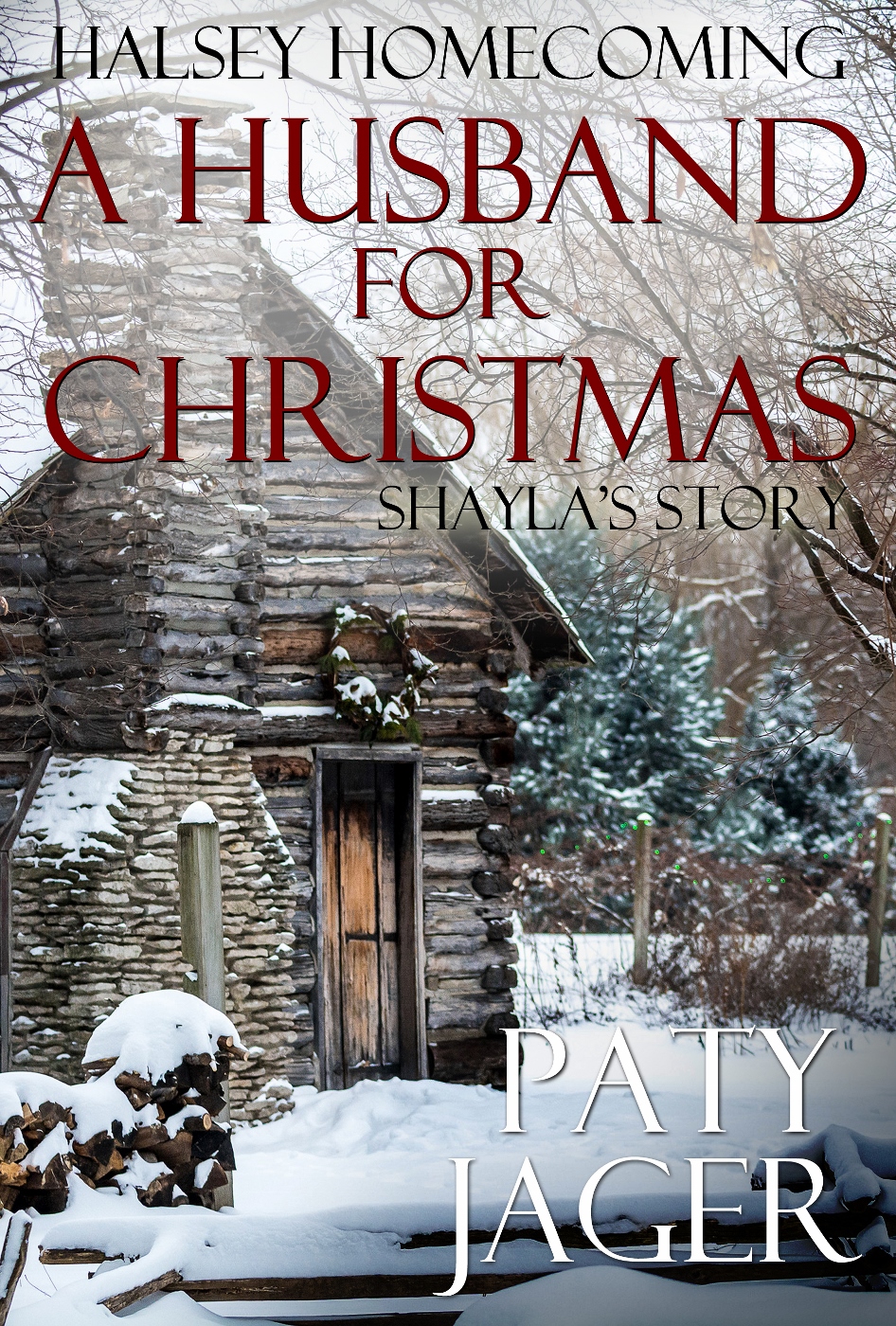
A Husband for Christmas
Final Novella in the Halsey Homecoming and Halsey Brothers Series
Shayla Halsey wanted to be home for Christmas, but never imagined her travels would include spending the night in a brooding stranger’s cabin. Snowballing events cause her to look inside herself and recognize maybe it wasn’t being home she wanted as much as it was to have a home. 
   
Mace Walker has his life in order and doesn’t want it disrupted again. Yet, when he discovers a woman stranded in the snow, he has to help her—despite her overbearing and reckless fiancé. In a matter of days, Shayla turns his life upside down and forces him to decide if he should leave town or face the consequences.


Award-winning author Paty Jager and her husband raise alfalfa hay in rural eastern Oregon. On her road to publication she wrote freelance articles for two local newspapers and enjoyed her job with the County Extension service as a 4-H Program Assistant. Raising hay and cattle, riding horses, and battling rattlesnakes, she not only writes the western lifestyle, she lives it.

All Paty’s work has Western or Native American elements in them along with hints of humor and engaging characters. Her penchant for research takes her on side trips that eventually turn into yet another story
 
You can learn more about Paty at
her website; http://www.patyjager.net  
Newsletter: Paty’s Prattle: http://eepurl.com/1CFgX
twitter  @patyjag.