Showing posts with label changes in publishing. Show all posts

Friday, May 16, 2025

The Years That Were, Are, and Will Be - A final post for RTG by M.L. Buchman


Years That Were

It’s funny looking back over the years of my coming to play at RTG. 

My very first post here, December 8, 2012, sounds very positive (https://romancingthegenres.blogspot.com/2012/12/agile-thinking.html, OMG those early covers were awful…and the next ones were worse!). 

I’m not quite sure how I did that because it was one of those depths-of-despair times that occur in any long writing career. My publishing career was taking off, very slowly. I’d just received my first royalty notice from my trad publisher. They’d bought eight books (four were already written and in the pipeline), but the first one had only just released. 

Imagine, as my wife unfolded that royalty statement while I washed the dinner dishes, how excited we were. I’d been laid off in August [thank you, Mr. Unscrupulous Boss] and we were dead broke [thank you, recession]. Then she read out the amount the represented our great hope for the future. What we’d earned was below the publisher’s minimum threshold for cutting a check ($2.34 against a limit of $10). We lost it! I mean both lying on kitchen floor holding our sides against the laughter that lay dangerously close to hysteria.

Less than six weeks later, I’d given up the corporate job hunt (after a 30-year career), dumped the city apartment for a place half the price out on the Oregon Coast, sold the house we’d built to retire in (but had to rent out) for half its real value (again, thank you, recession), and gambled on my writing career actually taking off. 

You see, it was the year after the Kindle Christmas. I’d written a little Christmas book set in the same world as my traditional books, but I was selling it indie. Curiously, The Night Is Mine and Daniel’s Christmas would continue to be my bestselling books until I launched my Miranda Chase thrillers in 2019.
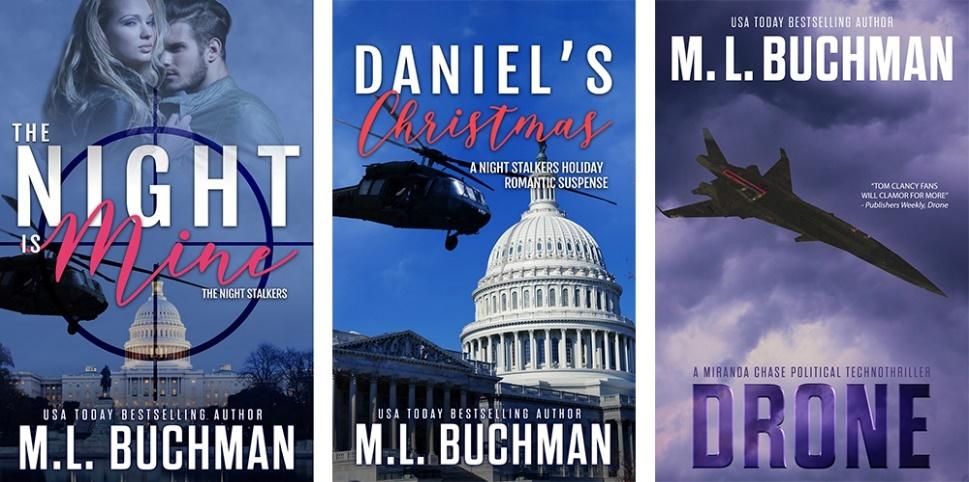

The Night Stalkers #1 and The Night Stalkers Holidays #1


Years That Are

Did I make breakout success due to indie? Well, yes and no.

I didn’t get any boost by being one of the very first to publish indie back in 2009 when the wisdom was: Publish anything indie and you’ll make a fortune. The $0.99 revolution didn’t touch me. My Amazon and Facebook ads rarely even paid for themselves (even when I got professional help). The Bookbub storm blew in some other sea than mine… 

I did it by writing the best stories that I could as fast as I could. The learning curve was horrendous, challenging, fascinating, and (did I mention?) horrendous. The production rate is something I’ve never achieved since—the power of desperation to grab onto that brass ring of being a full-time writer was immense. I’d been dreaming about that ring since I first started writing in 1993 and had my first book published in 1997.

Curious side note: though I’ve only managed to write one more book in that series, I can’t wait to get back to it. I already have two more already started…now I just need to find time to finish them.
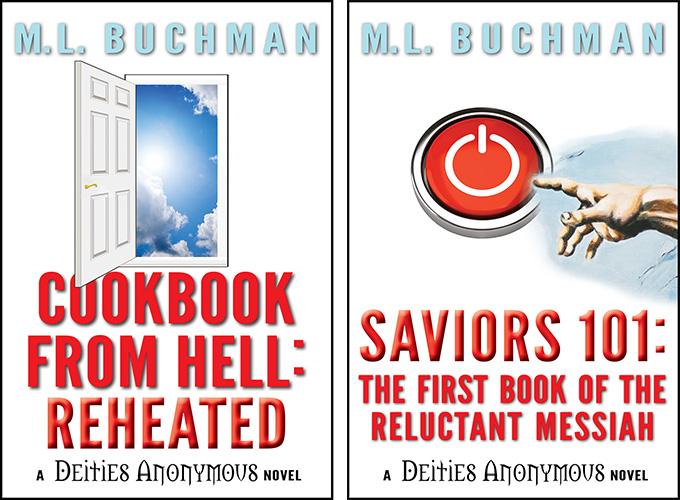
So, a mere 6 weeks after that first RTG post, I’d made the jump. I was now a hybrid author struggling to complete the leap of faith my wife had agreed to take with me.

Curiously, and rather unexpectedly, one of the most important changes to happen that year was announced very quietly in an RTG post. In 2012, while my known world was collapsing around me, an editor forced me (almost literally) to write a short story for a Christmas Ghosts anthology. The fact that I didn’t write short stories, holidays, or ghosts carried no weight with her. So, in 2013, my first short story launched—to rave reviews.

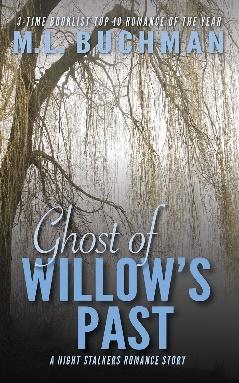
Over the next decade, I’ve written over 200 short stories and they make up a full third of my income. Ghost of Willows Past still sells nicely every Christmas season.
Always remaining flexible is one of the great keys to success in this industry. After seven years, forty-two novels, and seventy short stories in the military romantic suspense of my Emily Beale Universe (https://EmilyBeale.com), I began to worry about keeping myself challenged as a writer. That’s an essential, to always learn and grow. Otherwise creative stagnation becomes closely followed by career stagnation.

Besides, I had discovered a character who I couldn’t wait to hear from. It took me two years to develop and understand Miranda Chase enough to write her. Two years of wondering if my military romance audience would follow me into thrillers. Of wondering if fans of the ultra-competent icon of Major Emily Beale would embrace an autistic air-crash investigator unsure of everything about her.

Fifteen books later? The answer was absolutely! 
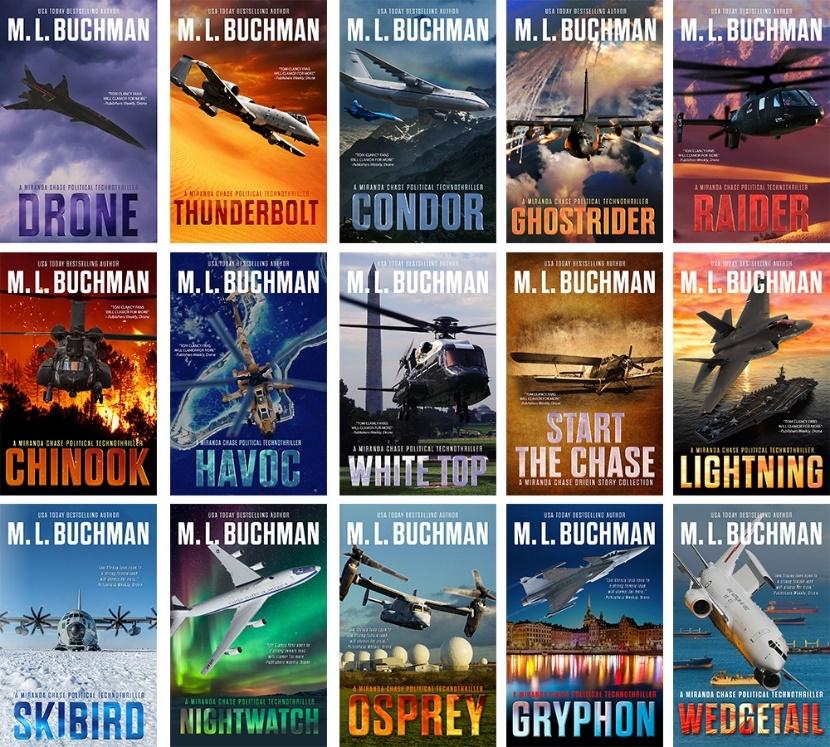
But it was only by facing my fears and following my character into story that it happened. Had I failed to embrace Miranda, I expect my career would be having a much smaller arc, rather than still supporting my family as a full-time writer thirteen years after corporate America spit me out.


Years That Will Be

In the dozen years since that first post, the publishing world has changed in new ways at a new pace. No, I’m not ignoring the history when Dickens, Twain, and others were self-published. Nor the rise of the big publishers, the catastrophic fall of the pulp magazines in 1959 and 1960, or the nearly overnight collapse of the local distributors in the 1990s. Publishing has long since proven that it is far from done with evolving. 

However, between indie, the rise of direct sales (https://shop.mlbuchman.com), and now AI, the speed of that change is mind-boggling.

They’re not the only thing that is changing in my world either. I’ve been mostly writing Miranda Chase for the last 5 years. But a funny thing happened on Wedgetail, Miranda Chase #15. My first readers asked, “So, what’s your new series?” 

“My new one? I’m still writing Miranda.”

They shook their head sadly at my writerly naiveté. 

My Emily Beale Universe, being in the romance world, had a new hero and heroine in each book. Yes, Emily was a power figure throughout the multiple series that universe became, but it wasn’t all her story.

Miranda Chase led all fifteen titles in her thriller series personally, growing and evolving with each one. And, in Wedgetail, I’d brought all of her emotional curves to closure without realizing it. Well, almost. She has at least one more book coming, probably this fall.

So, while I have many books that have been on hold while I’ve written Miranda, will any of them become such a major, career-altering force as Emily or Miranda? How will direct sales, AI, and whatever comes after that affect my career? How will it affect yours?

We have a few key phrases on our refrigerator to remind us of how to approach the future. And thirteen years coming to play at Romancing the Genres (thank you so much for the support and congratulations on achieving something so wonderful for so long), I think these make the best advice I can offer to myself and to you:

  • Semper Gumby – If you’re too young to remember the Gumby character, look it up. This fixture of my childhood is the ultimate reminder to be flexible.

  • That was so three days ago. – Don’t stay rooted in the past simply because that’s what has worked before. 

  • Violet is Level Six. Start where you stand. – This is a different version of the previous one, coming from a misquote of my second book (thankfully long since out of print). Translates as The past is meaningless. Look ahead. At every disaster along the road (and there will be plenty of those), we remind ourselves to look ahead, not back.

  • Have fun! – Seriously. This is the biggest tool I’ve got. If you aren’t having fun, a) your audience can tell, and b) why bother? Life is too short to be wasting your time.


USA Today and Amazon No. 1 bestseller M. L. “Matt” Buchman is the author of 75+ action-adventure thriller and military romance novels, 200 short stories, and lots of read-by-author audiobooks
.


PW says: “Tom Clancy fans open to a strong female lead will clamor for more.” Booklist declared his romances were: “3x Top 10 of the Year.” A project manager with a geophysics degree, he’s designed and built houses, flown and jumped out of planes, solo-sailed a 50-foot sailboat, and bicycled solo around the world…and he quilts.


Come visit: https://mlbuchman.com. 


Monday, December 14, 2015

T'is the Season of Change!


By: Marcia King-Gamble
www.lovemarcia.com 


It’s the end of the year wrap up, and I’m here to tell you that everything old is new again.  Yes, it’s true life is cyclical. Trends come and trends go, and whatever is out is merely on hiatus and back in again.


 I’m predicting that in the coming year you will see a huge return to traditional publishing. This prediction may be in contrast to what others have shared.  I for one believe that this is the year of the hybrid author. What better time for Indies to get a foot in the traditional publishing door.  


We’d all agree that tablets are here to stay. In a society constantly on the run, the mobile device is not going anywhere. While I much prefer to do my reading cuddled up with a paperback that I can hold, caress and smell the paper while ogling the hottie on the cover, electronic reading devices rule the day. How else can voracious readers have access to new material without having to tote around a huge bag or check a suitcase if on a long trip? 


Hybrid author are in. Hybrid meaning, an author who is both self-published and published by a traditional house.  This versatile author has always had a further reach. And what better time than now to make your move back to traditional publishing or get published for the first time.  Publishers are hungry for new talent.


For the last several years big name authors have been slowly making the journey from traditional publishing to self. That's LaNora (Nora Roberts)  and former RWA president Cindy Kirk above. This mass exodus began when the news sank in that unknown Indies were pulling in six figures, some in only a few months. Over time advances had been slowly decreasing, and those with no day job quickly had to find alternative means to making ends meet. Authors brushed off unsold manuscripts and got their rights back then published themselves. 


Next year social media will reign.  If you think it’s already King watch the entire dynasty come into its own. That’s a good thing for authors on a limited advertising budget.  It’s your opportunity to engage your reader and get your social media face on. There will be cyber parties galore and more communities of readers speaking to each other, dictating new trends.


Speaking of parties, we The Generistas are having our holiday blast on Tuesday (yes, tomorrow) January 15th starting at 7 pm (EST) 4pm (PST).  Join us here: https://www.facebook.com/events/1066472996710868/
There will be prizes and an incredible line-up of industry talent!
Come meet Harlequin’s Vice President of Editorial, Dianne Moggy and hear her predictions for 2016
7.00 - 730 Dianne Moggy (VP Editorial Harlequin)
7.30 - 8.00 Judith Ashley
8.00 - 8.30 Sandra Madden
8.30- 9.00 Madelle Morgan
9.00 -9.30 Marcia King-Gamble
9.30-10.00 Sophia Knightly
10.00- 10.30 Sarah Raplee
10.30- 11.00 Alyssa Maxwell
11.00 -11.30 Paty Jager
11.30-12.00 Debra Holland
12.00- 12.30 Mary Leo

Join me at 9.00 pm EST when I’ll be talking about my soon to be released book, Just You! 

I hope to see you there. 


Happy Holidays and keep on reading! Visit me on Facebook!

https://www.facebook.com/Marcia-King-Gamble-12364168212/


Marcia King Gamble

Saturday, December 13, 2014

Changes in Publishing - Part Two

By Maggie Lynch

***If you missed Part One, click on this link Changes in Publishing, Part One

What does all this mean to the individual author?


It means you have to think in terms of the long game. You don’t write a book (or even a short story) for next week’s or next month’s sales spike; and there’s no way to even see a trend before it’s gone. 

One could read all of the above and simply throw in the towel and say “I’m not writing anymore. I can’t make any money.”  However, I would suggest the author’s response to this should be NOT to play the short-game. 

Don’t count on book launches, short-term velocity, or deciding the value of your book on the first month’s or quarters, or maybe even year’s, earnings. 

Stop practicing or seeing answers to the short game. Instead focus on the long game. What is that title worth in two years? Ten years? How can it be re-used, re-purposed, re-made into new products? Duets, short stories, boxed sets, series. 

These are all thinking about long-game products and thinking about each product being more than a stand alone.


On the marketing and discoverability side, the long game approach is also very different. For example, there is no point in jeopardizing your long-term business over something that isn’t going to last. Too often authors check their sales every day and then react by trying some new latest fad to give it a boost: a Facebook or Twitter ad, a Pinterest post, a Tumblr blog, a … you name the latest new multimedia. Some subscribe to a tweet buzzer, or blast their fans with “buy, buy, buy, ” or frantically search for the secret “make millions now” scheme.

These are all temporary boosts with diminishing returns. Yes, the first time you try it you might see a few more sales, but the next time is less, and the next time may be nothing. While chasing those spikes, you’ve failed to write the next book or take into account the long-term sales results for that title.


Joanna Penn has coined a popular term for the type of author who can learn to thrive in this new publishing environment. It is: “author-entrepreneur.” I like this term because it joins both the creative and business sides that successful authors must embrace today.  Let me quote Joanna’s thinking on building an online presence.

“The author-entrepreneur” takes the long-term view, plans accordingly, and thinks ahead. For example, this is why I think relationships with other authors are so important. Some people consider social media a waste of time, but if you have a long-term perspective, you know it’s not about this one tweet, or a single blog post, or this one podcast interview. It’s about building social karma over time, about generosity that comes back to you in unexpected ways, about making friends and supporting each other on the journey. None of that is possible with short-term thinking.”

Embrace Change
Finally, I think the biggest change in publishing is the fact that it IS changing constantly. 

We are nowhere near stability or even heading toward equilibrium in the publishing game. 

We will continue to see changes in both traditional and indie options. 

We will continue to see a plethora of software solutions to speed the production cycle. 

We will continue to see power shifts among companies, countries, genres and formats. 

Authors who can find a way to continue to write great stories while being buffeted by change will be the ones to succeed, long term. 


Authors who don’t become obsessed with the latest gadget, marketing campaign, or promises of riches, will be the ones more likely to succeed in the long term. 

Authors who are willing to take chances, to experiment a little but always verify results, are the ones who will learn to be on the leading edge of change instead of hanging onto the tiger’s tail and bouncing between the earth and the sky.


Like most things in life, authors who can find some semblance of balance of creativity, business acumen, and a match with their core will now be more successful. Learn how to exercise control where you have some power and to let go of control where you do not.

And remember what brought you to writing in the first place. It probably wasn’t riches or fame. Get back to that person—that person who wrote because she had a story that wouldn’t leave her alone, or wanted her voice to be heard in a medium that has long-term staying power, or simply loved the shape of words and sentences and paragraphs. Don’t lose the core and all that flows from that will help you adapt as matches your need.


MAGGIE LYNCH
Maggie Lynch is the author of 15 published books, as well as more than 35 short stories and numerous non-fiction articles. She is also the founder of Windtree Press, an independent publishing cooperative.
Visit her online at http://maggielynch.com
Maggie's love of lifelong-learning has garnered degrees in psychology, counseling, computer science, and education;  and led to opportunities to consult in Europe, Australia, and the Middle East. Since 2013, Maggie has enjoyed the luxury of writing full-time. Her adult fiction spans romance, suspense, and speculative fiction titles under the name Maggie Jaimeson. She writes young adult fiction under the name Maggie Faire.  Her non-fiction titles are found under Maggie McVay Lynch. 

Saturday, December 6, 2014

Changes in Publishing - Part 1

By Maggie Lynch


Whenever writing about changes in publishing, the question one needs to first address is how many years of history to include? For the purpose of this article, I will only address the last fifteen years: 2000-2014. 

I choose that period because it is the beginning of massive change. Before 2000, traditional publishing had run the same way for the past 100 years. In fact, I can remember publishing a textbook about online learning in 1998 and a second one in 2000 and asking the publisher to create a website with digital links in it.

The publisher (a worldwide textbook publisher based in London and New York) balked at that suggesting that no one would want to go online to get information from a link in a paper book. It wasn’t until a book in 2004 that I finally got a website. My how five years makes a huge difference!

Traditional Publishing Changes
BOOKS, TOYS, CLOTHES
AND MORE

Five years ago, traditional publishing was the only game in town for an author wishing to reach an audience that extended beyond their personal family and friends. But getting a traditional contract had grown progressively more difficult since the 1980’s.

At the end of the 1980’s and into the 1990’s publishing morphed to become large media conglomerates. The Big 5 publishers of today are content publishers. They do that through books, radio, television, movies, and games.  When you have nothing else to do look up Bertelsmann, the parent company of PenguinRandom House and other media corporations. You will see that publishing books is not it’s only, nor it’s biggest, money maker.

 A “content publisher” is different from a book publisher. A content publisher needs larger and larger numbers of consumers to buy the content in order to pay the high prices of developing it. 
BOOKS, MOVIES
AND MORE

By the mid-1990’s traditional publishing changed from a model of buying books they liked and investing in that author for the future, with a plan to “break them out” around book five or eight if sales were decent, to a model focused on acquiring bestsellers that could also be made into movies and games and plays. Authors were easily abandoned by the second book or third if sales weren’t always on an upward trajectory.

The book distribution model five years ago was based on large booksellers (B&N, Borders, Walden, Crown) and big box stores (Walmart, Target). Small indie bookshops were ignored, and ebooks were relegated to small online publishers that received authors who couldn’t publish anywhere else or published in genres the big guys weren’t interested in (like erotica before 50 Shades of Gray). What a difference only five years make.

Indie Bookstores and Ebook Distribution Models

As of last May, the number of indie bookshops in the U.S. was 1,664—actually an 11% increase over the past five years. The only big bookseller left among the ones named above is B&N and they have announced they are closing about 220 stores over the next decade.

On the ebook side, in 2010 there was one big ebook retailer. Amazon had 22% of the market. Now there are many big ebook retailers that are online only (Kobo, Nook, Apple, Rakuten, and others). Though Amazon has ~50% of the U.S. market, they have significantly less outside the U.S. In many countries Apple and/or Kobo are the only big ebook retailers, and Amazon has no market. Simultaneously thinking locally and globally is critical to authors today.

The next hurdle for bookstores is how to get a bigger slice of the ebook pie if they are to compete successfully in the long term.
Consumer Buying Changes

In addition to the significant changes in print and brick and mortar stores are the changes in consumers' buying habits and choices. Now books compete with audiobooks, enhanced books, series books, even twitter books. In addition, a multitude of “free” books, heavily discounted books (a boxed set of nine novels for 99 cents), and a variety of membership clubs online (Kindle Unlimited, oyster, scribD) have put downward pressure on pricing and built consumer expectations of what a book is worth. This is just in the book marketing space. In addition, there is the usual competition of music, movies, games, and other entertainment-related sales and the book tie-in to all those options.

On the consumer side, the ugly industry realities that impact traditionally published and self-published authors alike are: consumer impulse buying with free or heavily discounted books that have led to purchased books never being read and therefore never reviewed or recommended. This means that in addition to lower and lower pricing, there is less and less word of mouth sales. All of that leads to discoverability challenges for everyone—including Amazon.

What does all this mean to the individual author? 

This article, therefore the answer to that question, continues next Saturday, December 13, 2014.
MAGGIE LYNCH
Maggie Lynch is the author of 15 published books, as well as more than 35 short stories and numerous non-fiction articles. She is also the founder of Windtree Press, an independent publishing cooperative.
Visit her online at http://maggielynch.com
Maggie's love of lifelong-learning has garnered degrees in psychology, counseling, computer science, and education;  and led to opportunities to consult in Europe, Australia, and the Middle East. Since 2013, Maggie has enjoyed the luxury of writing full-time. Her adult fiction spans romance, suspense, and speculative fiction titles under the name Maggie Jaimeson. She writes young adult fiction under the name Maggie Faire.  Her non-fiction titles are found under Maggie McVay Lynch.