In preparing this post, I had assumed, as I write military romantic suspense and political conspiracy thrillers, that I’d be writing about the defense of freedom and those who choose to do so in their daily lives.
But I didn’t because that lead me to the idea of the country I was lucky enough to be born into and our incredible freedoms here in the United States (and the horrifying threats that have arisen of late striving to squelch those freedoms). That being a dangerous subject in this day and age (as we’ve all learned by the friends we’ve lost to the current divisiveness), I thought perhaps not.
I therefore, and not surprisingly, turned my thoughts to publishing. There I considered writing about the reversion of rights from traditional publishing back to the author and what that could imply about freedom. My mind went there with reason.
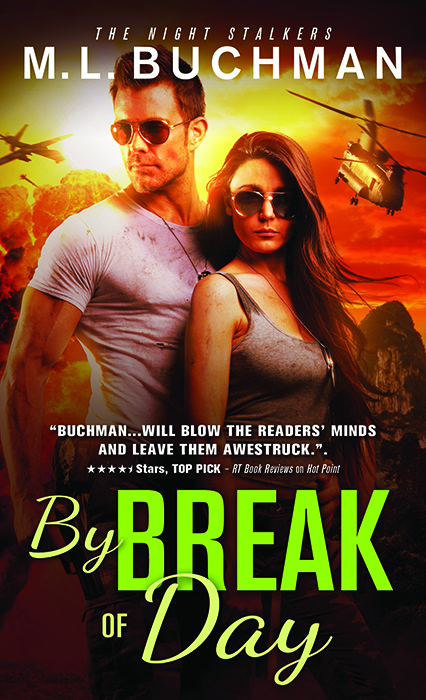
I recently managed to recover the rights to my thirteen trad press novels all at once. (That’s roughly 1.2M words!) These novels represent the front end of the 42-novel and 70-short story Night Stalkers / Emily Beale Universe. I’m now free to fix the myriad early writing habits, the gross traditional editing failures, as well as the covers that have always made me cringe. I also gained the freedom to rebrand and control the marketing of these books. A huge and overwhelming task, but also a lifegiving freedom. (The relaunch will begin next month in November.)
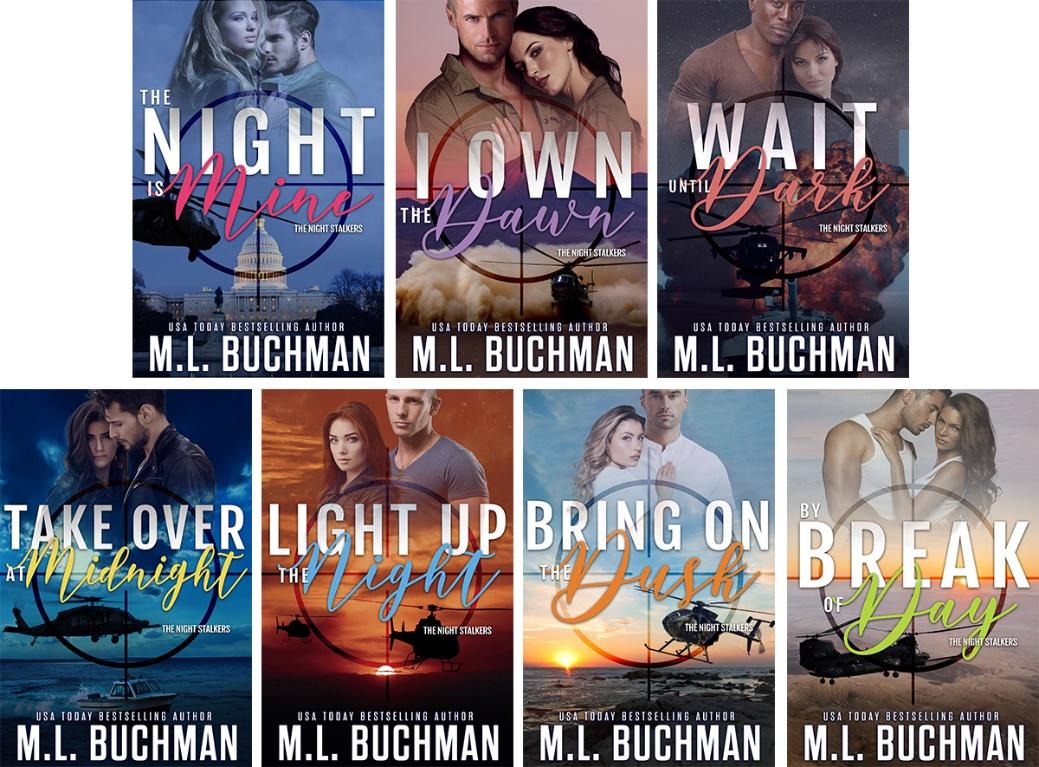
First-ever peek at the new covers
But the definition that intrigued me most as I prepared to create this post was referenced to the King James Version of the Bible: Exemption from fate.
The very first card my wife ever gave me was back when we were courting illustrates this point. It is a Quint Buchholz painting of a man laying down his own tightrope as he walks it into the unknown sky. Head up, looking forward. “Completely emblematic of who you are,” she said, or words to that effect.

I’m one of those people who sees “the box” and despises it thoroughly. In corporation after corporation, during my thirty-odd years as a crisis project manager, I confronted “the boxes” that firms had built. “We’re structured like this, so we have to do things this way.”
My job was to ask Why? “If you were to think of your business this way, you could leverage your skills in a whole new way.” I was an efficiency and effectiveness expert, and (when I was lucky) I brought along innovation as well.
Traditional publishing is in severe crisis and collapse because they failed to change with the times. The Big Ten became the Seven, the Six, the Five, and lately the Four (chose to count them as you will), headed for the big black hole of non-existence just as they’re already collapsing through non-relevance.
They forgot how to innovate (if they ever knew), then they lost how to be effective, then finally anything other than inefficient. Their inflexibility is often blamed on their size. Yet I worked with a Fortune 100 company on the road to bankruptcy that restructured itself in three years into a high-profitability venture, once again climbing the charts. (I had only a very minor role in restructuring their IT department over six months, but it was impressive to watch.)
Less impressive to watch is that I see indie publishing falling into the same patterns lately, “Well, I have to do it this way because that’s the only thing that works.”
I am no brilliant success. I’m a strong mid-list author. I make a better living that I ever did in corporate, but neither am I a millionaire. Yet I’m told, sometimes daily but usually more often, that there’s a formula, a prescribed path that will etch out a silver-lined or gold-patinaed future.
There used to be a hundred of this different “perfect” paths but lately I’ve seen a convergence toward a prescribed methodology. Whole conferences have practically become cults paying homage to one path or another. I see people walking the narrow paths of others because “That’s the real way publishing works.”
From my seat, what worked was celebrating my freedom from that “fated” path. I explore that which fascinates me. I’ve built a career of looking for what’s outside the norm yet utterly intriguing.
For example: Against all advice, except my wife’s, my current thriller series stars a high-functioning autistic heroine. Miranda Chase is the premier air-crash investigator. The aircraft crashes (which she totally understands and investigates) constantly trap her in political conspiracies she can’t begin to understand. But she must solve them to survive, which she does by being her brilliant self.

https://miranda-chase.com
Had I listened to the fates, I would still be writing military romantic suspense for traditional publishing—long past the time any joy might have leached away. Now, when I do go back to my MRS, I have a great time with it. I’m alternating series between the two. I do a quartet of thrillers, then a trilogy of military romantic suspense, then back to thrillers.
BTW, traditional would never let me have done this at all. And indies now often shout that I’m ruining my: Also Boughts, my marketing, my career, and everything else on the planet. The only ones not complaining are my wife and my fans. Gee, who should I be listening to?
Indie publishing is not about the “box”, or chasing the market from one genre to the next, or how many Facebook ads you can afford. That is what the Fated would have us believe. Instead, I’d suggest looking up, looking around, and discovering the incredible freedom that allows each of us to celebrate what we will. Begin by asking about what path you want to build across the sky.
USA Today and Amazon #1 Bestseller M. L. "Matt" Buchman has 70+ action-adventure thriller and military romance novels, 100 short stories, and lotsa audiobooks. PW says: “Tom Clancy fans open to a strong female lead will clamor for more.” Booklist declared: “3X Top 10 of the Year.” A project manager with a geophysics degree, he’s designed and built houses, flown and jumped out of planes, solo-sailed a 50’ sailboat, and bicycled solo around the world…and he quilts. More at: www.mlbuchman.com.