Showing posts with label Urban Fantasy. Show all posts

Saturday, July 6, 2019

Why I Chose a Hybrid Author Career by Award Winning BOOK 1Author Kerry Blaisdell

BOOK 1 IN THE DEAD SERIES
      I’m  often  asked  why  I  chose  an  independent  publisher  for my Urban Fantasy series (DEBRIEFING THE DEAD, WAKING THE DEAD, and their planned sequels)? Or in a similar vein, why I’m planning to self-publish two Romantic Suspense novels I’ve had on the back burner for a while now, and why I’m still (kind of…) attempting the “traditional” Big 5 route with my Historical Mystery series?

None of those questions have a simple answer, and the most important thing I can say is that every author’s journey is unique—in fact, every author—every book—is unique. Like children, what works for one person/book/series, may not work for another.

The reason I chose my current publisher (The Wild Rose Press) for this series is, on the surface, pretty straightforward: They offered me a contract, for a book that had been rejected more than 100 times by NY agents and editors. (That’s not the only reason I chose them, of course, and I thoroughly vetted them first. But I can say now that they are a truly awesome, amazing, and supportive publisher, and I’m so grateful they took a chance on me when it seemed like no one else would!)

But Kerry, I hear you ask, after all those rejections, why not just self-publish? Again, this is a complex question, with a complex answer, that will be different for every author. For me, I really wanted “a publisher” for my first book. In other words, I wanted somebody experienced to handle the back end of things, while I got my bearings and learned the promo and publicity/marketing side. Plus, while no publisher—not even the Big 5—throws much weight into marketing new authors’ books anymore, TWRP does as much as they can, including offering free weekly chats on how to do stuff, or the state of the industry, or whatever, or by offering discounts on services such as NetGalley or library/bookstore catalog inclusion.

BOOK 2 IN THE DEAD SERIES
Now that I’ve gotten my bearings, I feel more comfortable with the thought of self-publishing the above-mentioned RS books. Yes, I could send them to TWRP, and they would probably be accepted/contracted. But I don’t feel they need the support my first novel needed. And I am keeping The Dead Series with TWRP, because I think it’s a really good fit with them. 

Besides, now the first book in that series has been nominated for six awards (as of June 2019), already winning two of them. So I’m pretty happy with those results!

As for the traditional route for my Historical Mystery series… We’ll see. Despite all the awards and five-star reviews for my first two books, agents don’t seem to want to take a chance on me. And agents are still the gatekeepers for the Big 5 houses. The more publishing changes, the more some things stay the same.

Either way, I feel amazingly blessed to be where I am now. Ten years ago, after decades of writing, things looked much more bleak. So my best advice is to keep working hard, and never give up. Or, in the immortal words of Samuel Goldwyn, “The harder I work, the luckier I get.” Word.

BIO:
AUTHOR
KERRY B
lAISDELL

Kerry Blaisdell is the award-winning author of The Dead Series, including DEBRIEFING THE DEAD (Book One)— 2019 HOLT Medallion double winner for Best Paranormal & Best First Book, Romance Writers of America RITA® finalist, Booksellers Best: Best First Book nominee, and Royal Palm Literary Award semifinalist—and WAKING THE DEAD (Book Two). She lives in the gorgeous Pacific Northwest with her husband, two (mostly) adult “kids,” assorted cats and dogs, and more hot pepper plants than anyone could reasonably consume.

Thursday, May 19, 2016

Welcome to Shadow!

I love creating worlds. It’s my favorite part of writing.

Welcome to Shadow!

Population: Unknown – due to the nature of our residents it’s impossible to take a census.

It’s April Fools and things just aren’t going good for the top level witch Estella…

Here’s a peek ;-)

Estella looked inside the blood soaked box. “Shit. This is bad.”

When the doorbell had chimed at two minutes after midnight on April Fools, she’d assumed it was the jester’s first prank before leaving Shadow for the human world for a day of pranks and chaos making.

She never thought she’d be staring into Sam’s dead eyes. Looking up, she scanned into the dark. Of course, she saw glowing eyes and shifting darkness, she lived in Shadow. Minutes past midnight meant every nocturnal creature was prowling...and hunting.

Slamming the door, she leaned against the wood and muttered a protective spell. Who killed Sam? And why leave his head for her?

She mentally went through the list of Shadow residents. None of them stood out as likely candidates in Sam’s murder

Heading upstairs to her bedroom, she picked up the telecom. She pressed Zek’s number and after a dozen buzzes, he answered.

“Whhhhaattt,” he slurred. She tried to decide if it was a drunken or I’m-still-asleep lisp but it was too hard to tell from one word.

“I have trouble.”

After a long stretch of silence she pressed the disconnect button and threw the telecom on the bed. As she pulled on her clothes, her mind raced. Why had she called Zek? He’d proven he couldn’t be trusted. Yet, she’d called. 
Shaking her head, she started toward the bedroom door when a shadow formed. Her heart slammed into her ribs with enough force, she half expected to see it laying on the floor in front of her. Someone had broken through her ward.
…. And so starts April Fool’s day. Only this year the pranks won’t be funny in Shadow or the human world, they will be deadly.

In less than twenty-four hours, Estella is going to have to figure out a way to stop the pranks before Shadow and the human world slips into an everlasting darkness.
The problem is the only one who can help is her demon ex-lover, Zek, if the human world or Shadow is to survive this April Fool’s day, she will have to somehow forgive him and convince him to partner up again.


April Fool’s will be available in 2017.


Tuesday, May 20, 2014

Who's got time for summer?

It's Summer Reads month at RTG, where we celebrate cool (or hot!) books to get stuck into over the next little while.

 I'm kinda confused, though. Is a good 'summer read' no good at any other time of the year? Are there some books which are better in summer than they would be in winter? Surely quality and enjoyability aren't seasonal...


Or are they? Food and drink can be situational, after all. Some drinks only taste good in the right surroundings. Ouzo, for instance. Nauseating stuff. Yet by the waterside on a lazy afternoon on a sunny Greek island... well, an icy aniseed tipple is a bit more appealing.


Kebabs, for another. It's a scientific fact that kebabs (or gyros, if you prefer) taste way better at 4 am after a night at the pub. It's the culinary version of beer goggles.


But the most vexed question of all: who the hell has time to read in summer anyway?

Especially here in England. 'Summer' (and I use inverted commas with the greatest of respect) is short. Like, a few weeks, maybe, before the weather turns to crap again. So everything - all the events, festivals, fun, games and culture - is packed into those few short weeks. You've barely got time to breathe, let alone sit down with a nice fat book.

And work doesn't stop over summer. At least, not for me. It's just as busy as any other time of year, with the added complication that you can't get a seat at the coffee shop because it's full of schoolkids on holidays. Bah humbug! Don't you know this is my office?

So should I be recommending short books? Ones with big writing, maybe? Stories that you can skim-read?

Not sure. But never mind me. I'm just envious that everyone else seems to have so much time to read!

xx
Erica
www.ericahayes.net

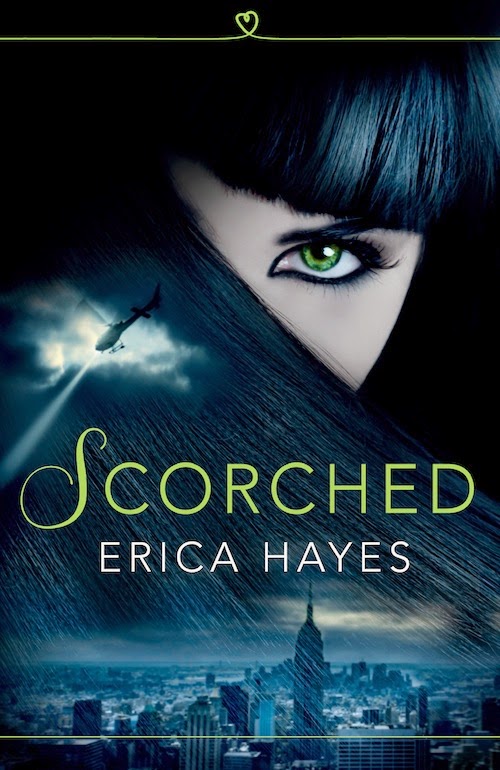
P.S. If you really are looking for something to read? :) I have a new release this week... it's a superhero fantasy called SCORCHED. Cool action adventure with a bit of romance on the side. You can check it out on Goodreads here.

Tuesday, November 20, 2012

I’ll have what she’s having – why we love kick-ass heroines in UF

Lara Croft: tough woman?
Or man with boobs?
In my genre – urban fantasy and paranormal – we’re constantly reminded that we must write ‘strong female characters’. This has come to mean women who are physically and sexually confident. She’s often a warrior, or a law enforcement type, who spends the day beating up the bad guys with snazzy martial arts moves – often sporting high heels, tight leather pants and an exposed midriff – and her nights having wild, abandoned sex with the monster-men of her choice.

But to avoid the ‘man-with-boobs’ trap, the author gives the heroine a shoe obsession, or a constant concern over whether her butt looks big in this. She’s a loner who rarely has any girlfriends, and usually has anger-management issues. And she often has to fight workplace prejudice because of her sex, despite the fact that she’s clearly competent.

Or, she gets underestimated by the bad guys because she’s pretty and female. (This one in particular irks me. Honestly, how dumb are these male characters? Talk about gender stereotyping.)

A real-life Victorian heroine
(not the steampunk kind!)
Elizabeth Garrett Anderson,
the first woman to qualify as a
medical practitioner in England
Before you rail at me for perpetuating clichés – head to your nearest UF bookshelf and tell me it’s not true. The angry, leather-clad, kick-ass chick (or her more recent equivalent, the iron-corseted yet strangely emancipated Victorian steampunk chick – sorry, but anyone who’s forced by societal pressure to wear a corset is not emancipated, despite her best efforts) is still a staple of the genre.

Because readers like it. Make the ‘man with boobs’ call all you want: it’s impossible to argue with popularity. And I think it’s because the ‘kick-ass-chick-in-a-man’s-world’ mirrors our own experience. She has admirable strengths, but she’s still sometimes treated as second-class. She’s expected to do everything a man can do, only better, yet be ‘feminine’ at the same time.

Her world is our world. Only most of us don’t have the option of kicking butts and taking names. We’re still labelled sluts and whores if we enjoy our sexuality. When people underestimate us, we’re not in a position to take advantage of it – we just don’t get the job, or we get passed over for promotion, or stupid laws get made about what we can and can’t do with our own bodies.

Kick-ass Chick might live in a man’s world, but she has power that we don’t. We read about her because we wish we could be her. She inspires us, the same way real-life heroines do, even if her world isn't 'real'.


Tuesday, August 21, 2012

Everyone loves a long weekend, or what is this Labor Day thing for anyhow?


Labor Day is one of those holidays that we celebrate without really thinking about what it means. Everyone loves a long weekend! And in the US, it's the end of summer, that last weekend of fun before the kids go back to school and parents return to sanity, at least for a while.

Where I come from, in southern Australia, Labour Day is on a Monday in March. We used it to hold the Aussie Formula One grand prix. In other parts of Australia, it's in October. As fitting for a holiday celebrating the eight-hour working day, everyone gets the day off…

But they don't, do they? Not really. Great if you're a schoolteacher, or work in a bank or a government office. But retail workers must snigger at the idea of a 'public holiday' – when are the stores and supermarkets ever closed? People who run their own businesses – writers, for example – know that the eight-hour working day is a misty-eyed myth. Same with corporate minions who bill clients by the hour. Even a 'lowly' admin worker takes calls after hours and sends emails from home. Do you even know a single person who truly works only eight hours per day?

All these decades later, have we lost sight of what Labour Day is celebrating? Those in charge would like us to go on believing we still enjoy the freedoms won by our forebears, and we're happy to go along with it, so long as we think we're getting rewards in return. Plenty of people celebrate other holidays they don't really believe in. Why not this one?

Which leads me to my obligatory segue into the paranormal. Urban fantasy, including steampunk, is often concerned with class divides. Vampire aristocrats, a seedy fairy subculture, the alpha-beta-gamma dynamics of a werewolf pack. Our heroes and heroines are revolutionaries and troublemakers, or, if they do work for the Man, they usually uncover some conspiracy that threatens to topple the regime. But even the most law-abiding UF protagonists have a cynical streak. The apple's rotten to the core, and we get the idea that they kind of knew it all along—but hey, a girl's gotta eat. They might be toppling the regime in their spare time, but they're also perpetuating it.

It's a bit like Labour Day: we all know we're being conned, right? The eight-hour day is gone, probably forever. We've traded it for more money, globalisation, 24/7 connectivity, and the Good Old Cause of making profits for other people. We may not be groaning through 18-hour shifts down a filthy coal mine, but we're sure as hell not getting 8 hours of work-free recreation before bed.

But we celebrate Labo(u)r Day anyway. Because hey, it's a day off. Might as well enjoy it!

So what's your favourite holiday? Do you like your holidays to mean something significant? Or would you rather go the way of Great Britain, where they just have random 'bank holidays'?

Tuesday, July 17, 2012

What we're all reading at the beach

Hi all! I'm Erica Hayes, a new poster on Romancing the Genres, and I'm so excited to be here! Thanks to everyone for welcoming me!

First, a little about moi. I'm an Aussie, but currently I live in the north of England, enjoying some not-so-fab British weather. I write paranormal and urban fantasy romance. I'm working through traditional publishers at the moment, but maybe soon I'll branch out into DIY too! I have a series called the Shadowfae Chronicles, featuring wild fairies and vampires and all manner of sexy beasties. And I have a new romance series called the Seven Signs starting in October, with hot fallen angels (yum!) and a very biblical Apocalypse... but you'll hear more about that soon.

So. Hot summer reads, huh? Gotta say, summer in Northumberland isn't exactly hot… but I did just spend a week on vacation in sunny Majorca. Why, yes, I did. Thanks for admiring my suntan.

Mmm, sunshine... Majorcan style!

We stayed in Cala D'Or, a gorgeous, relaxing town on the east coast of the island. Not the party-nightclub-frenzy part. I'm too old for that kind of nonsense… But all that lolling about in the sun was fantastic for beachside (or poolside!) reading. Everyone was doing it. Naturally, I spied on everyone to see what they were reading! Men mostly read the newspaper, or a thriller. I saw one guy reading an old Ian Fleming. Women's choices were a bit more diverse.

The most common paperback I sighted? Yep, you got it. 50 SHADES OF GREY. Second most popular was THE GIRL WITH THE DRAGON TATTOO or its sequels, followed by other thrillers or chick-lit… I'm sorry, did I say 'chick-lit'? Wash my mouth out. I mean 'humorous women's fiction'. Nothing to see here. Move along.

Still, blockbusters were predominant. Exactly the kind of thing that bookstores promote as 'hot summer reads', with the huge print run and the in-window advertising. Also the big-deal literary books. I saw one person reading THE NIGHT CIRCUS, and another with WOLF HALL. Maybe everyone did their book-shopping at the airport?

Sadly, apart from 50 SHADES, I didn't see a single romance book, at least not in paperback. No Mills & Boon. No paranormals. But, about half the readers I saw were using e-readers, so who knows what sweet creamy delights they were getting stuck into? My money's on 50 SHADES...

Me? Well, I packed a couple of paperbacks and stocked up my trusty Sony before I left (sadly, no Kindle for me yet) and I got through five or six books by the pool. What a horrible way to spend a holiday. Oh, the pain! Or, as my husband likes to say, 'wow, this diamond up my butt really hurts!'

Here's a few of my favourite ones in fantasy and paranormal:

The Midnight Justice mini-series. Sexy superheroes! Love these 2 novellas.
And Tarnished by Karina Cooper. Cool steampunk-y fantasy!


So what's the last book you read? Was it a 'hot summer read', according to the bookstores? Or do you just push on with your TBR pile, regardless of the season?

Friday, March 30, 2012

The Joys and Challenges of Writing Urban Fantasy


 I've always been a huge fantasy fan of both film and books. I remember when the Wolfman and Dracula were considered horror, and now horror is totally redefined as something else. We're not so horrified of vampires and werewolves anymore. They, among other beasties, have become our fantasy.

KAREN DUVALL
Urban Fantasy has been around for a while, but I remember when there used to be some confusion as to what it meant. Most people understand epic fantasy and know it as having magical elements in a medieval setting, like LORD OF THE RINGS. So when you classify fantasy as "urban," it tends to raise a few eyebrows. Or at least it did when the genre was still new. It continues to baffle those who haven't yet been introduced to the imaginary world of contemporary magic.

I think one of the most intriguing aspects of urban fantasy is that stories are set in the present, and typically in a modern city (vis-à-vis urban). It's kind of mind blowing when you think about it. Many readers associate sorcerers and dragons and elves with thatch roofed villages and horse drawn carts. But in an urban fantasy we see these characters juxtaposed with modern cars, nightclubs, gangsta rap, computers, iphones, television, skyscrapers and everything else we associate with city life. It shakes up the fantasy genre and that's what I like about it. It's unexpected. There's a special something about everyday people confronted by extraordinary circumstances, and vice versa.

Some readers assume all urban fantasies are romances, but that's not the case. Most stories will have romantic elements, but romance is not the focus of the plot. It's typically used as a subplot portrayed in varying heat levels from sweet to hot enough to melt the fillings in your teeth. An urban fantasy is more of a mystery-suspense with magic and supernatural creatures. Some have absolutely no romantic elements at all.

I enjoy writing urban fantasy because it allows me to open up creatively and gives my imagination the opportunity to do just about anything it wants. That being said, it's not an easy genre to write well. Writing fiction is hard no matter what the genre, but when you invent magical systems with their own unique set of rules, and then have to explain your world in a way that doesn't sound like an explanation, you have a huge challenge on your hands. Everything has to flow seamlessly at a fairly fast clip and not be information heavy. Concepts must be easy to grasp for any reader. It takes a few drafts to get it right.

The market for tried and true urban fantasy--meaning the kind that features traditional monsters like werewolves and vampires--is rumored to be tapering off. That only means agents and editors are looking for something that transcends the genre and presents a unique story with the potential to be the "next big thing." Or at least stand out in a crowd. A new twist on an old saw. So not only should urban fantasy writers be at the top of their game as far as craft, their stories must also be on the cutting edge of originality.

I currently write urban fantasies that feature a modern knight descended from an order of Crusading female knights who are half angel and half human. The stories feature gargoyles, elves, curses, charms, immortal warriors, sorcerers, fallen angels, guardian angels, mummies, and a variety of other supernatural characters. The main setting is Denver, Colorado. The plots and characters are very different from the norm and my editor, Ann Leslie Tuttle with Harlequin Luna, told me that's precisely why it caught her attention. 

 
To have an urban fantasy published with a traditional publisher in today's competitive market isn't easy, but it can be done. It helps to think outside the box of what's expected. Try the unexpected and let your freak flag fly.

Karen Duvall, author of KNIGHT'S CURSE and DARKEST KNIGHT.

Twitter: @KarenDuvall

Saturday, March 10, 2012

GUEST: Urban Fantasy Author Erica Hayes - Keeping It Fresh & the Lure of High Concept

AUSSIE ERICA HAYES

Writing as a paranormal romance author is more exciting right now than ever. Opportunities are exploding everywhere, and in spite of the doomsayers (y'know, those people who've spent the last twenty years saying 'vampires are over!' and 'publishing is dead!') the markets for paranormals are still going strong. But paradoxically, it's also harder than ever to sell.

Traditional publishers are forever pushing for something 'fresh'. But indie authors and e-presses are still selling a bundle of vampire and werewolf romances. So if the familiar tropes are still selling to readers – and you only need to glance at publishers' websites or online bookstore bestseller lists to see that they are – why the obsession in New York with 'fresh'?

Well, I don't think they are obsessed with 'fresh'. I think they're looking for high concept – and when you're trying for high concept, too much familiarity is death.

So what's with the high concept? This isn't Hollywood, right? But remember that NY publishers are still trying to sell into bookstores. And since the demise of our bigger bookstore chains, competition for shelf space is fierce. So for a publisher to take your book on, the sales force has to be able to pitch your book to the bookseller in a sentence. And that means that your *idea* has to be catchy.

Not your writing, or your plot twists, or your fabulously drawn characters. Your *idea*.

So if it sounds like the same old, same old, it probably isn't going to cut it for NY. Your "girl falls for mysterious boy who turns out to be a werewolf" book might be the most original, scary, lyrical, gut-wrenchingly emotional and hopelessly romantic story ever. But the booksellers don't get to read your book. All they hear is the sales pitch. And they'd be falling asleep right about the time you said "mysterious boy".

(Not so in the indie/e-press world, so far as I can tell, where books sell directly to readers, and some readers will devour a thousand "mysterious werewolf boy" stories and never get bored. Traditional publishers are waking up to this, slowly. All those new digital-only imprints? Watch that space. But that's a whole 'nother post…)

So what does this mean for paranormal authors seeking that elusive contract? High concept, folks. Log lines. Elevator pitches. One-sentence hooks. Movie posters. Snakes on a Plane. I can hear your collective groaning from here… but it works.

FIRST IN
THE SEVEN SIGNS SERIES

For instance, my upcoming series with Berkley,The Seven Signs, is this: fallen angels in near-future New York must stop a gang of demons from hijacking the seven signs of the Apocalypse and bringing on the end of the world.

Think about it. I sold this series in late 2011, when nothing was 'fresh' about demons or fallen angels. It's a tiny fresh twist on 'post-apocalyptic', I think, because it happens during the apocalypse. But basically, it's high concept. You can tell it in a sentence. It paints a clear picture of genre, and of what the stories will be about. And it sounds cool – or at least I hope it does!

Of course, the book has to be good, too, if you want to sell! But the world's full of good manuscripts that never sold. More than ever these days, we have to know how to pitch our work. For a starting point, I recommend Save the Cat! Strikes Back by the late screenwriting guru, Blake Snyder. He's got an amazing method for formulating your pitch – and for showing where your story concept is lacking. Whenever I get a new story idea, I run it through this method to see if it's going to stand up.

Because, even in paranormal, the story does have to stand up. That's where the 'freshness' lies. Especially now we've already done pretty much every magical creature there is. So keep on with those vampires and werewolves, if that's what you love. There are always more stories to tell!

So do you like reading fresh new ideas and exciting, different creatures in paranormals? Or can't you get enough of vampires and werewolves?

Find Erica on the web at: http://www.ericahayes.net
http://www.facebook.com/ericahayes.author

@ericahayes on Twitter.

Copyright © 2012 by Erica Hayes ALL RIGHTS RESERVED.

Monday, September 19, 2011

Cross-genre all the way

I’m in the middle of a blog tour right now for my September release, Shadowman, and one of the questions I’ve been asked more than once is what subgenre my Shadow series belongs in. Where should bookstores shelve me? So far I have found my books in romance, fantasy/sci-fi, and horror. One blogger named me paranormal romantic suspense, others refer to me as urban fantasy, and still others paranormal romance. All good, particularly if it helps me to reach new readers. I call myself dark fantasy romance and I want to be shelved where readers will find me.


And there’s the rub. The flip side of defying categorization is that people might not be able to find you. Case in point: Last night I went to my local B&N and discovered that the first in my series, Shadow Bound, was still shelved in Fantasy/Sci-fi, while Shadowman, book three, the same series, was happily face-out in Romance (and had diminished in number since my last visit--yay!). I’m with a new publisher now and I support my new placement in Romance--I think more readers will be apt to pick me up--but I had to squeeze my eyes shut for a moment at the insanity. I know I’m not the first author to experience this, and I also know that readers are super savvy people, who know what they like and can figure out just fine where to get it (if they have time and patience at the given moment to do so). Nevertheless, I’d sure love to make that process a little easier.

Online is a whole different world. With a click, an entire author’s list can come up. With tagging you can help identify your book. And bloggers embrace cross-genre authors; no need to walk across the store. It seems each day that more applications or features are being created to make information more accessible (My husband is a programmer). Problem is, there are so many books in cyberspace that it’s hard to stand out. Sometime it feels impersonal, and for me, books are very personal. Which takes me back to the bookstore and the kind of browsing I grew up on.

So I guess you can see how cross-genre, for me, has also become a bit of a cross-delivery kind of idea. I love my kindle (I’m on my second one), but I still have a fantasy of owning a bookstore (and reading my stock all day). I’ve mentioned a few conflicts in my cross-genre publishing experience, but let me just say that I view them as opportunities. I’m in two places at my B&N bookstore, doubling my chances for discovery. And online, there might be a lot of books out there, but I’ve got my husband in my corner making me cool stuff to help me stand out. (Check out my Segue site for his latest handiwork: www.SegueInstitute.com). We’ll see what the future holds. I’m excited.

Saturday, August 27, 2011

Face Time

Face Time: Promoting Yourself and Your Books at Reader Conventions

Before the launch of the first book in my urban fantasy romance series in 2009, I researched other authors’ marketing efforts. While the results of the campaigns I studied varied wildly, one piece of advice repeated consistently: Word of mouth is your friend.

But HOW do you spark word of mouth? If you twist the above sentence a little you get your answer: If word of mouth is your friend, friends are your word of mouth.

The past few Saturdays here at Romancing the Genres, you’ve heard from Pat Hauldren about growing friends like weeds, from Cassiel Knight about energizing your long-distance friends with a virtual launch party, and from Kristina McMorris about creating new friends through out-of-the-box marketing, so I thought I’d go old skool with a discussion of one-on-one, face-to-face author-reader interaction: the reader convention.

The Pros of Cons:
I’ve gone a handful of times so far to several different conventions geared toward putting readers and authors together. The con experience offers several advantages, I think, over other forms of marketing and promotion:

 1. The quality of reader
Con goers tend to be a highly valuable sort of reader: enthusiastic, voracious, outgoing and often well connected with other readers. On the whole, con goers read a lot and they want to share their love. Win them to your side and you have the opportunity to create a true fan, the sort of reader who harangues others to read you too.

 2. Showcasing brand over book
In the course of a career, most authors will write more than one book in more than one series for more than one publisher, probably in more than one subgenre. Promoting YOURSELF as well as your books gives readers a chance to (hopefully) connect with everything you write, not just one title at a time.

 3. They’re fun!
This might not seem like the most sensible criteria for making business decisions, but a weekend with readers can be a delightful reminder why we endure the trials and tribulations of publication: Because we want to tell our stories to an audience.

The Cons of Cons
1. The money
Oh, the money… After adding up airfare, hotel, meals, and giveaways, a long weekend of a con can run one or two thousand dollars. And that assumes you are sharing a room, eating on the cheap, and being judicious with your swag.

2. The other costs
In addition to the financial outlay, there’s the lost writing time and the energy expenditure. The con itself might be only a few days away from home, but the preparation for and recovery from it can easily take a week as you make goody bags, properly pack your fairy wings (I ask you, how many other business women have to pack fairy wings for their business travel?!) and follow up with the contacts you make.

If you decide to make cons part of your promotional repertoire, here are a few tips for making the most of your efforts:

1. At a reader convention, YOU are part of the entertainment.
And by you, I mean author-you. Not you-you and certainly not writer-you. Writer-you sits with a writing implement all day and often stares into space. This is not entertainment. At least not to anyone besides writer-you. You-you might be entertaining enough but the important person at a con is author-you.

I could do a whole post on creating an author persona, but the key is to think of author-you as the best, most engaging parts of you-you. With creative additions and fairy wings as necessary. This is the you who attends cons and attracts readers.

2. When you are in public, you are ON.
Cons can be tiring and stressful even when they are fun, but author-you is on display any time you are outside the door of your hotel room. (And sometimes when you are inside your hotel room if you don’t keep your voice down.) Everyone has heard of authors behaving badly; don’t be her. Be open, be gracious, and be quiet when necessary.

3.  Choose your swag wisely.
You want to put something in readers’ hands (as well as their minds) to help them remember you, but swag can get expensive, not to mention heavy when you are traveling. Without question, the best swag is your book. Give it to reviewers, bloggers and readers who seem particularly outgoing. Next best is a sample of your book and/or voice, including excerpts or free reads. Next best is high-value fun items: coffee mugs, good pens, etc. Don’t even bother with cheap pens. For the money, bookmarks are probably still worthwhile for now, but don’t expect them to be more than another “touch” on your audience’s awareness.

4. Set goals, pursue them and evaluate the outcome.
As with any promotional effort, knowing what you want to accomplish will help focus you. If you are a doing a panel at the con, what points do you want to make to inspire readers to seek out your stories? If you are hitting the bar to network, who do you want to meet and why? Make sure you follow up with people you connected with (you won’t “connect” with everyone, and that’s okay; you’re looking for like-minded souls anyway) and keep the conversation going.

5. Have fun!
Yeah, I said this already, but it’s worth repeating. Positive energy attracts the same. My critique partners call writer-me Eeyore for my unsunny disposition, but at cons I bring out author-me and she does know how to have a good time! (For proof, the photo of me in the black and red dress was taken at an RT ball last year. I practically have a lampshade on my head, the epitome of fun!) Like formatting a manuscript or writing a synopsis, face-to-face promotion is a skill you can learn. If you aren’t naturally an extrovert, practice with real friends. Your local writing group is a good start. Offer to lead a book club or do in-person writing workshops to get comfortable talking about books. And then know that everyone who attends reader cons loves books too.

If you have questions about reader conventions, please ask. And I’ll ask you one: Have you had a face-to-face encounter with an author that made you want to know more about her stories?


 Jessa Slade is author of the Marked Souls urban fantasy romance series with NAL Signet Eclipse. The third book in the series, VOWED IN SHADOWS, is available now. Though she is most comfortable sitting behind her computer, she ventures out to meet readers in the wild and giggle about man chest. 


You can find her online at www.jessaslade.com
http://www.facebook.com/jessaslade
http://twitter.com/jessaslade