Showing posts with label Voice. Show all posts

Wednesday, April 14, 2021

There's Nothing New Under The Sun


I have heard authors lament again and again. They were working on a project until they saw or read a story with a nearly identical plot. That leaves them feeling that what they are working on is redundant, even useless. Many end up tossing their work in progress and beginning something else, all because they saw something similar.
 

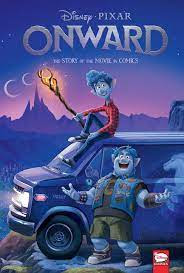
Well, a few weeks ago I saw something similar. I watched the Disney Pixar animated film, Onward. I had never seen the story before, but I practically wrote it.

At least I felt like I did.

As the movie unfolded, I felt like I was watching an animated version of my 2019 novel, Courage. Fortunately, I could not have tossed my words even if I wanted to. And really, I’d never want to. What I can do is enjoy the similarities in character, plot and theme. Loving mother dealing with two sons who don’t understand how badly they need to reconnect to each other. And a dead father who’s loss makes both boys sad and desperate.


There are also differences. The younger brother in Courage has a talent for swimming and diving that his older brother admires. In Onward, the younger brother discovers he has a talent for magic, which makes his older brother wildly enthused for him. Onward has a Manticore, Courage a younger sister. Both are a little scary, and a lot of fun. Courage has a parole officer keeping an eye on the elder brother. Onward uses a centaur police officer. Thank heavens I abandoned the subplot of having the parole officer fall for my heroes' mother. With the centaur trotting around romancing the boy's mother in Onward, that would have been one coincidence too many.

Both the movie and book have the same core, brotherhood at its worst, and at it’s finest. I am really thankful Onward did not come first. Otherwise I might have ignored the advice I give to others in a similar situation and tossed that manuscript. And that would have been a shame. Both stories deserve to exist and can be loved by any siblings who have ever lost a father and nearly lost each other.

There is no such thing as one and only one way to solve a problem or tell a story. Why else is there an endless stream of versions of Cinderella? Nothing an author can write is really unique. Just because your theme has been used once, or twice, or a thousand times doesn’t mean there isn’t room for your Voice to tell that story one more time.

Wednesday, August 12, 2020

A Writer's Voice


A writer's voice bubbles over with their feelings about their topic. Change those feelings and the voice used changes with it. Sometimes its as easy as making a decision. I recently heard one author say he had found himself using the 
word “seedy” to describe inner cities too often. He stopped and took the time to imagine how that would affect a reader living in an inner city. Now he makes certain to never use that or related words, and notes that consciously seeking better ways to describe city life has changed the way he writes.

Voice changes naturally when writers have a specific audience in mind. Think of your speaking voice. I bet it changes naturally depending on your audience, just like mine does. I can baby talk with the best of them when facing an infant or toddler. A teen or tween, an acquaintance or friend, coworker or boss, to a relative about the boss all require different voices. When I concentrate on who my listener is, I code switch without needing to consciously think about the change.

A writer's voice is the sum of the choices he or she makes while communicating information about a subject, and information about themselves, to a particular audience. Personality, attitudes, beliefs, and feelings about things, all being conveyed to a certain audience. Mainstream authors who want to write inclusively should first work to develop an inclusive Voice. It’s not enough to just want to write about diverse characters. An author must accurately see, hear and feel the world their diverse characters inhabit. If they can’t do that, their reader won’t be able to either.
Don't try to please everyone and end up with that voiceless "designed by committee" manuscript. Find that special audience member, and work to please him or her.
Now take a deep breath and let your voice flow.

Wednesday, August 9, 2017

Preserving your Voice


Hi everyone! I am YA author B A Binns , writer of contemporary and realistic fiction for teens. My tagline tells you what I am about - Stories of Real Boys Growing Into Real Men - and the people who love them. 


This is my second post on that super-elusive quality called Voice. The first post (which you can find at VOICE: It's All About You) came back in March, fittingly occurring as I was beginning the first of what ended up being three different rounds of revisions for my debut middle grade novel, Courage. I craft stories for kids. I am not one of those prolific writers who can curn out multiple books every year.  My first YA novel was published by Westside Books in 2010. Courage, which will be released in 2018 from Harper Collins, is only my fourth published novel. In between I have written several short stories and have two stories in progress.  Like a chisel wielding stone artisan, I work slowly, clawing out a finished product one chip at a time. At least my chosen media is slightly more forgiving than rock. When I mess up, I get to delete and rewrite with a keyboard.

For me, crafting a novel means doing that over and over again. The roughest part for me is figuring out how to perform major revisions without loosing my initial vision, my Voice.

Voice is hard to describe, but it’s something you just know when you hear it. Think of music. Christmas approaches (I know, I can barely believe how much of this year has gone myself).  Various artists will be releasing their versions of the old standards. Same old words, same old story, but different people find different artists compelling, singing standards that stand out because of the arrangement; the Voice.

I ponder this because I came face to face with the issue over the last few months while doing final revisions for Courage. As I said in another prior post, Revision and Editing are not the same things. Revision can involve making major changes to improve the story and reading experience. Those changes can encompass everything. Everything except dismantling the novel's basic core and theme. That has to remain to keep the voice intact.

At its core, Courage is about brotherly love and is a retelling of the Prodigal Son parable told from the point of view of the good brother who now fears the older brother he once loved and revered. I typed The End on this story in 2015. It was acquired by Harper Collins in 2016. Revisions began earlier this year for the 2018 release. Let me say that my editor is a wonderful woman. She’s interesting, loves books, and has near infinite patience. She also saw parts of the story she really wanted changed. I had to both listen to her, and remain true to the theme that moved me.

However, over the years, my own voice had changed. The 2016 elections played a large part in that, along with many of the issues plaguing people of color in America, including children of color. As I did the revisions, I realized there was no way that could not leech into my story. I was amazed to find how the personalities of several characters changed as I plowed through the revisions. But the innermost story of redemption remained strong.

As I said in my prior post on Voice, an author’s voice is the sum of their life experiences. That is the thing editors and agents prize more than they do the author’s plot. Lots has happened to me, my life and my world in the last two years. When called on by my editor to rework the ending, my updated Voice licked it’s lips and took control.

Our writer’s voice constantly evolves. That sometimes has us looking back on our body of work done years earlier and being astounded. We evolve, change, come up with things that are different because we ourselves evolve. Remember that when dealing with critique partners, beta readers, and editors. I’ve heard of writers revising to please them until their once vibrant and lively story turns voiceless. No editor or agent I know is interested in a story without a compelling, leap off the page and suck readers in, Voice.  It is Voice that makes writers. As someone said, there are only so many plots in the world. What makes a story original, what makes it yours instead of someone else’s, is how Your Voice tells Your Story.

On a related note: a number of editors, agents and award-winning authors are giving away critiques as a way to help the new a new organization, KIDLITNATION.com. Kidlitnation will use the funds to help #ownvoices. be heard. Today, August 9, is the final day of the raffle, if you are interested, take a look at the array of talent you can bid on at http://kidlitnation.com/home/own-your-voice/fundraising/. This is a chance to get feedback from industry experts on your Voice and your manuscript.

Wednesday, March 8, 2017

VOICE - it's all about YOU


Hi everyone! I am YA author B A Binns , writer of contemporary and realistic fiction for teens. My tagline tells you what I am about - Stories of Real Boys Growing Into Real Men - and the people who love them. 


This past weekend I attended a retreat sponsored by the Windy City RWA chapter focused on that elusive quality in writing called Voice. It's that thing that no one can exactly define, but editors all cry out for a fresh voice. As readers, we all know it when we see it on a page.  Voice is what keeps readers coming back for more books by a favorite author, not just more any old book.  When a reader says, "these words speak to me" they are talking about the author's voice feeling real.

About sixty authors attended the retreat at the Hilton Garden in Naperville, Il. There, Rita Award Winning author Barbara Samuel led us through discussions and a series of exercises to show us that Voice (not the character voice, but our voice as a writer) is the sum of everything we as individuals have ever experienced.

We can't not use our voice. However, we can lose it, water our voices down by trying to appeal to a specific market or editor, or by struggling to respond to critique partners or contest judges. This can lead us to blunt the edges of our unique voices and end up creating something watered down and bland that leads to a rejection or tepid reviews.

Our own personal experiences have an effect on the stories we chose to tell, and on the way we tell them. The fast-paced event (really, a day and a half went by much too quickly) was filled with insightful commentary along with short, timed writing exercises that helped us understand our own voices. Barbara Samuels also responded to questions about the differences between Voice and Tone, and how voice transcends genre.

The various exercises were instrumental in helping me understand and cultivate me own voices. For example, we were asked to list things we loved - and not people like a spouse or child. We had to come up with specific things about them that we loved, forcing us to dig deep. Many of our answers involved the senses, the taste of that first sip of coffee in the morning, the feel of certain materials on our skin, the timbre of a laugh, or the smell of different foods, flowers, etc. Some of the answers were so poetic I almost fell in love with other people's favorite things. The exercise also brought home the importance of using the senses in our writing, especially the sense of smell, because of how many memories that sense evoked. We self-examined out lives, at young ages when we first began to differentiate ourselves from our family, during the middle school years when .we started examining our place in the larger world, and in new adulthood, when we had to contend with real independence.

Setting effects more than just our stories. The culture we grew up in, the geography, and even the weather  have inevitable effects on our writing voice. Voice, Barbara emphasized, is the "sum of you." Everything that made us during our lifetimes explain how different authors can take the exact same idea and come up with vastly different stories and representations.

During one writing exercise we were in groups of two and each person wrote a small vignette based on the same picture.  (Not this picture. I assure you, the picture we had was of a more stern-faced and truly imposing woman. This one makes me think of a grandmother. But the idea remains the same.)

I came up with a piece from the point of view of a relative of the woman in the picture, describing a feisty woman with no patience for tourists.  My partner, knowing as little about what I wrote as I did about hers, wrote a story about a tourist spying an elderly woman, and stopping for selfies with her.

That's how voice has different authors of different backgrounds create totally different works and feelings even if based on the same event or person.

We were reminded that being a writer meant having an intimate understanding of the true meaning of delayed gratification.  That's one reason we must not, can not work primarily for money.

Yes, money is important, but if it is the number one reason for writing, an author will end up emotionally unfilled and without a feeling of joy in your work. The writing that results will display that plainly to any reader. The workshop included advice on ways to recover before we lose our joy in writing, to reconnect when the act of writing seems too much.

Things we can do to keep that joy infusing our Voice:
  • Take some time to read purely for pleasure – not a how to book, or the news (that's pretty joyless these days anyway) or for a class, but just something you feel a desire to read.
  • Take yourself out for “artist dates.” Go somewhere stimulating and fun, for example the botanical gardens or a pet show.
  • Spend ten minutes a day writing something just for you. Not for an editor or even for a friend, write something you want that you know only you will ever see.
  • Use discipline to combat the inevitable distractions (including that darn internet)
  • Remember to lighten up; its only a book.
At the end, participants received a worksheet of questions that were an opportunity for self-examination. Some of the questions forced us to think about things like:
  • Where we grew up (our life setting)
  • What were the main ethnic groups around us as we grew up (our cultural milieu)
  • A particular book we wished we had written
  • Our secret passion
  • Things we would like people to say about our work.
Then came the big questions – If you could only write one book in your life, what would it be. And why aren’t you writing it?

In the end we used the answers to come up with a statement about ourselves and our unique voices. Curiously, by the time it ended, I had a variation on my tagline, my voice is: about real young people facing today's trials while in the process of growing up to be real adults...and the people who love them.

As Socrates said, Know Thyself. It's the beginning of wisdom, and of an unbeatable Voice.

Barbara Samuel (contemporary and historical romance)  also writes as Barbara O'Neal (women's fiction) and as Lark O'Neal (New adult romance)


P. S. If you are interested, here is the piece I wrote:

You never see Tia Ana without her hat. And no, don't you dare tell her that's a man's hat. Actually, don't say anything to her except maybe "Good day," unless you don't like yourself and don't mind getting blasted when she lifts her head, stares at you, and lets lose with her fire-edged tongue.
Some tourist -- had to be a gringo with that pale face and blue eyes-- once asked her to let him take a picture of her.  Would you believe it, he's still alive, but his camera isn't. Not after she swung her oversized bag at his head. They both hit the cobblestones, the camera cracking as it burst into pieces, the guy sobbing. 
She harrumphed and waddled away, a smile playing on her thick lips. Never mess with my Tia Ana.
I looked back at that and said yes, that's they way I write. Real people in all their glory.

Wednesday, October 12, 2011

Why a blog is like a box of chocolate

I think, therefore I blog...or something like that.

I'm B. A. Binns, a young adult writer, but even though a lot of young adults are neither blog readers or blog writers, I still blog. For me it's a little like talking, or maybe like writing. I blog because I have something to say. And, as much as I hope there will be someone to read these words, I blog for me as well as for them.

My blog VOICE and my writing VOICE are very different.  I sometimes get too intellectual when I blog, just as I may end up too colloquial when I'm writing.  That's partly because I edit the dickens out of my books, but not the blogs.

But mainly it's because I get to be myself when I blog, and I have to be someone else, the viewpoint character, when I write. I channel someone I have created, someone that can't be me, because the stories I write are not my stories, they belong to the reader. But the blog is all me.

So maybe that's the real reason I blog, so I can leave pieces of me behind. What goes down depends on where I am in life at the time I write, I don't run and grab the character sketch, I AM the character sketch. Before I sit down I don't know what I'm going to write. After I get up, I'm sometimes amazed by what I said, and how much of myself I end up revealing.

So, open the box, check out some of the chocolate choices in a few of my prior posts for Romancing the Genres, and tell me tell me if you like what you see. 

And if you blog too, let me know, I'd love to come visit some time.

Tuesday, July 19, 2011

Finding Balance

I tend to be an all-or-nothing kind of person. When I set my mind on a goal, I pursue it without reserve. For instance, in high school, I loved science. I loved it so much, I dropped AP English so I could take AP Biology and AP Chemistry. I joined the Science Club and baked superconductors in the school kiln.

But I’ll never forget a scholarship interview I had with some engineers. They laughed that I had included some awards for poetry in my scholarship portfolio. “A poetry writing engineer.” I can still feel the heat in my face as one man shook his head in disbelief.

Only a few months later I attended a Department of Energy science camp at Lawrence Berkley Laboratory and realized what a life of science might mean for me – sleeping on a cot in the lab so I could run experiments day and night. I knew I wanted more out of life than a lab.

Once again, that all-or-nothing side of me kicked in, and I turned my back on science in pursuit of the written word. I immersed myself in Stephen King, Anne Rice, Jean Auel, and Andre Norton. I majored in English in college, and even started my first novel as my senior thesis. Fantasy, Romance, Horror. I wanted to write it all.

Now, twenty years later (yes, that’s telling my age a little) I have finally found my “voice.” And guess what? It happens to be smack dab in the middle of my two favorite subjects – science and fiction. I guess the pendulum had to swing both ways before coming to rest.

Do you have a passion that influences other parts of your life? How have you found a balance?

© Tam Linsey, 2011. All rights reserved.

Cross posted at www.TamLinsey.com