Showing posts with label dementia. Show all posts

Wednesday, November 24, 2021

Abundance at Harvest Festival Time

When I was a kid we spent many of our school holidays on a farm in rural Lincolnshine (UK). After a busy summer helping my grandparents harvest the crops, I couldn't wait for the next school holiday so I could return for The Harvest Festival. This important annual festival is tied to the seasons, and dates back to the pagan times in Britain.

Once the last of the crops has been harvested, farming communities give thanks for the bounty of crops and food from the land, and attend a harvest festival at the local church to celebrate a successful growing season. 

It's typically celebrated on the Sunday nearest the harvest moon, and occurs close to the autumn equinox at the end of September or beginning of October. It's the closest festival to the US Thanksgiving, but has many of the same elements.

Traditionally the last sheath of the harvest was used to make a symbolic corn dolly that was created to ensure the continuation of the good crop the following year. The Saxons (5th to the 11th centuries) believed that this last sheath contained the Corn Spirit, and they would harvest around it until it was the last one standing, and it would be dried and woven into a dolly.

Different rural areas around the country would weave different symbols out of the corn, and this tradition continues to this day. 

Corn Dolly Ear-rings
I still have the pair of corn dolly ear-rings I received as a teenager from my grandmother. I don't think I've ever worn them, but I love the idea of traditional crafts commemorating beliefs from earlier generations, and the magical idea that one of mother nature's spirits was trapped inside.

We Plough the Fields

One hymn that is always sung around Harvest Time is We Plough the Fields and Scatter. It brings back such wonderful childhood memories of this time of year, and reminds me of my Mum. I used it as a basis for one of my poems that honours her battle with Alzheimer's during the time she was losing her ability to speak.


We plough the fields as wordsmiths scatter letters on the land.

You hope to grow a sentence up that isn’t weak or bland.

Watering your Ps and Qs coaxing them to sprout.

Grow gentle words to whisper or raise your voice to shout.

The barren earth dry in the sun a runway for the birds.

They peck at all the seedlings that never will be heard.

If they fly away up high and soar upon their wing,

We’ll never hear the song they stole or words you failed to sing.


About Jay Artale


Jay Artale
 abandoned her corporate career to become a digital nomad and full-time writer. 
She’s an avid blogger, podcaster, and nonfiction author helping travel writers and travel bloggers achieve their self-publishing goals. She shares tips, advice, and inspiration to writers with an independent spirit at her website Birds of a Feather Press, and documents her travels and artistic endeavours at her blog Roving Jay. Follow her on Instagram or Facebook or Twitter.

Jay is the author of A Turbulent Mind: A Poetry Collection of a Mother's Journey with Alzheimer's.


Wednesday, June 23, 2021

If You Love Something Set it Free

Now my close friends with grown daughters are bidding them farewell, I'm realising what we put our mothers through in our rush to leave home and explore the world.

I was brought up with a "can-do, don't-complain" attitude. I was told I could be whatever I wanted to be. It was this belief their prompted me to leave home at seventeen to start working full-time. I only looked back long enough to see the tears running down my mother's cheeks as my train pulled out of the station. I was too excited by the unknown to cry, but I did feel selfish for leaving her behind. 

Her life had revolved around me and my brother for so long, I couldn't imagine what she'd do with her time now that she was an empty-nester. I had the rest of my life ahead of me—her life was over! (wry smile)

Mum around the time I left home
 

Of course, both of our lives changed at that point.

The norm in the rural town I spent my teen years was to marry a local boy and move a few streets away from your parents. You were born, lived, and died in the same community, and while there's nothing wrong with this cycle, it wasn't a ride I wanted to take. I wanted more. I didn't know what, but I knew it couldn't be found where I lived. It was time to leave.

Although my departure made me feel like a grown up, I realised many years later that it was just the start of my apprenticeship into adulthood. An apprenticeship that continues to this day. For my mother though, it was just the continuation of a lifetime of worry. No matter how old I got, I'd always be her little girl.

I’ll always be your little girl.

But now amid this foggy day.

Our past floats by on beads of loss.

And our shared memories drift away.

Excerpt from: A Turbulent Mind

Over the years I moved around continuously. A familiar pattern started during a childhood hopscotching around different Air Force bases. Moving and starting again didn't bother me. But the further I moved away from my mother, the more guilty and selfish I felt. It didn't stop me, but it did hang around my neck like a millstone. I travelled back to visit as often as I could, but I always left.

In my late-twenties I went on holiday to the States for a month. But ended up cancelling my return ticket and settling in New York. 

Jay in NYC 1989

The call to my mother letting her know I wasn't coming back from holiday was really difficult. I didn't handle it well. I went out and got drunk on Absolut and Cranberry, and waited until I knew she would be out at work. When she got home, she was greeted with a slurred answerphone message telling her I was never coming home. My hangover the next morning paled in comparison to the guilt and shame I felt for the cowardly way I'd shared my news about my move.

It took me a couple of weeks to summon the courage to call her and apologise. My stomach was in knots. I dialled her number. I told her how guilty I felt for leaving her that message, and how guilty I felt about my impromptu decision to move to America. 

I braced for a telling off, or at the very least, a guilt trip—instead, she knocked the wind out of my sails. "It reflects well on me that you have the confidence to do something that most people would be too scared to do" she said. "I'm so proud of you," Now it was my time to cry.

I'll never forget that conversation, and the support and selfless love my mother showed me during that call. Over the years it had helped me to manage the guilt of being away from her for long periods of time. Her words became the beacon that spurred me onto bigger and bigger adventures. She is now at the stage of her dementia that she longer knows that I'm her daughter. But my relationship with my Mum will always be my most precious relationship.

About Jay Artale


Jay Artale
 abandoned her corporate career to become a digital nomad and full-time writer. 
She’s an avid blogger, podcaster, and nonfiction author helping travel writers and travel bloggers achieve their self-publishing goals. She shares tips, advice, and inspiration to writers with an independent spirit at her website Birds of a Feather Press, and documents her travels and artistic endeavours at her blog Roving Jay. Follow her on Instagram or Facebook or Twitter.

Jay is the author of A Turbulent Mind: A Poetry Collection of a Mother's Journey with Alzheimer's.


Wednesday, April 28, 2021

Laughter as a Coping Mechanism by Jay Artale

Dementia is a serious business, but if your family is under the dark cloud of this disease you’ll know how important laugher is to the coping process.

An Austrian neurologist, Viktor Frankl, wrote that humour is the soul’s weapon to help us transcend despair. Studies have shown that laughter can boost the immune system, lower blood pressure, and alleviate anxiety. It seems natural to make fun of a life-threatening, disastrous, or terrifying situation, and when times become difficult—laughter helps.


Our Alzheimer's Journey

My Mum was diagnosed with Alzheimer's six years ago. She used to tell us about the funny things she was doing because of her dementia—that’s back in the early days of the disease when she was aware of its impact on her behaviour. 

The hallucinations of the babies crawling on the floor at night. 

Hiding her handbag again, and again...and again so her husband wouldn’t steal it. Then forgetting where she’d hidden it and blaming him for moving it.

Stock-piling kitchen rolls, and hiding those because people were stealing those too. 

Inadvertently buying super-sized or tiny groceries because her depth perception became warped.

She laughed. I laughed. It was an effective coping mechanism.

Another way I coped was by devouring dementia-related memoirs and self-help books to find comfort and solace in other people’s experiences. In an attempt to pay it forward I kept a journal to document the progression of the disease. 

Every now and then these journal entries would trigger the need to write a poem. My poetry is in a rhyming style similar to the 20th Century French/British poet and writer Hilaire Belloc. They’re jaunty, and on the surface they’re tongue in cheek, ironic or even flippant. But this surface veneer shrouds the torment beneath.

Inappropriate Laughter

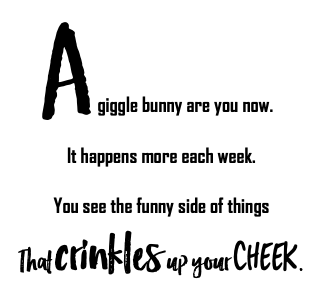
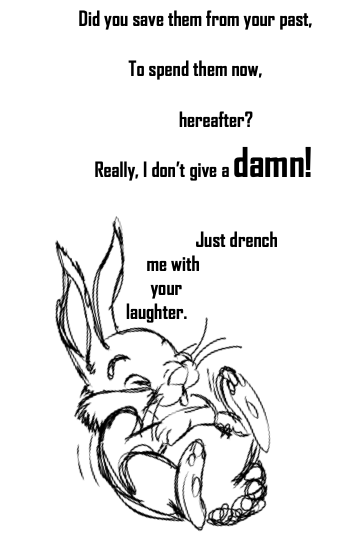
As the disease progressed, my Mum went through a phase of inappropriate laughing. She laughed when people hurt themselves, dropped something or tripped. It’s as if she wasn’t sure of the socially acceptable response so resorted to laughter. She went from a serious and empathetic adult to a giggly teenager in a matter of months. She laughed until tears rolled down her cheeks and snot bubbled from her nose. 

It was so good to hear her laugh, we didn’t care what triggered it.


Excerpt from the print version of: A Turbulent Mind


We had many years of this laughter therapy. It blinkered us to live in the moment. We didn’t look back and wallow in regret or look forward with concern—we just belly-laughed our way through the here and now. Her laugher was so infectious, even when it was misplaced.

Fast forward a few years... and my Mum has disappeared inside a shell of the person she once was. She no longer remembers how to laugh.

Friday, June 26, 2015

Do Your Brain a Favor—Support Alzheimer’s Research

By Linda Lovely
Author Vivienne Lorret, my fellow blogger, has already alerted the followers of our Romancing the Genres blog that June is Alzheimer’s & Brain Awareness Month. But I decided two blogs on this topic isn’t overdoing it.

Consider these statistics, provided courtesy of the Alzheimer’s Association (http://www.alz.org/):
·         Alzheimer’s is the 6th leading cause of death in the U.S.
·         1 in 3 seniors dies from Alzheimer’s or another dementia.
·         It’s the only cause of death in the top 10 that cannot be prevented, cured or slowed.
·         Alzheimer’s affects about 6% of people 65 years and older.
·          2/3 of Americans with Alzheimer’s are women.
·         5.3 million Americans currently suffer from Alzheimer's—an estimated 5.1 million of them are age 65 and older.

I’m over 65 and female. My mother suffered from Alzheimer’s. So every time I forget a word or a person’s name, can’t find my car keys, or stare at a pantry shelf wondering what the heck I needed, I worry. Has it started? The one thing I don’t forget is to contribute to Alzheimer’s research and support groups—the brains trying to protect my brain, and yours.

If you’ve known and loved someone with Alzheimer’s, you know how hideous this disease is. My mom was a lot smarter than me. She skipped two grades, and she could add and multiply large numbers without aid of electronics (or even paper and pencil). She was a card sharp, too. When she was about 76, we noticed she began to have problems remembering what cards were played. She asked us to repeat things a lot. At first, we thought she needed a hearing aid. No, she was stalling for time to try to make sense of what we were saying. She was able to live on her own for about four years after the symptoms began, because she recognized her illness and tried to adapt. She pinned house keys to practically every blouse and jacket she owned. She scribbled notes to herself when she had more lucid moments.

Still we were forced to put Mom in a nursing home when she was 80. By then, she was suffering from hallucinations and was extremely paranoid. She still knew the people she loved, but was often very confused and excitable. The manager of her apartment complex was afraid she’d leave on a stove and start a fire. Taking Mom to the nursing home was the hardest thing I think I’ve ever done. Mom lived ten more years. Watching the mother I knew disappear was heart-breaking. 

So, please consider what you can do to support Alzheimer’s research. We baby boomers will—unfortunately—swell the ranks of those who suffer and die from this form of dementia if something isn’t done to find answers to the why of this dreadful disease.