Showing posts with label discoverability. Show all posts

Wednesday, December 18, 2024

What's New In Publishing by Maggie Lynch - Part 1

I'm going to start by saying everything is changing AND nothing is new. I hope you are comfortable with cognitive dissonance. The one constant is discoverability—the ability for a book to be found when someone who doesn’t know me or my books “discover” it through search or word-of-mouth or paid advertising.


Competition is definitely up, advertising is less effective without considerable monetary investment, and reading is competing with all kinds of media options for people to choose.


In this three-part series of posts over several days, I’ll be sharing both my research around the impact and promise of AI, as well as the difficulties of accepting and creating change for myself and the struggle to continue writing in a changing publishing environment and a changing life as I get older.


COGNITIVE DISSONANCE DEFINITION: the state of having inconsistent thoughts, beliefs, or attitudes, especially as relating to behavioral decisions and attitude change. – Oxford Dictionary


Here are some examples I’ve experienced with cognitive dissonance in my publishing career over the past five years. I wonder if you suffer from some of this as well.


  • All the marketing that used to work between 2012 and 2018 no longer works, but I keep trying it anyway from time-to-time because it worked before and lots of bestselling authors, or those who provide courses for author marketing, keep telling me it works but I just don’t try hard enough. In some ways, that’s true. It does work today—sometimes. But it costs five to ten times more to get the same results and the overall profit (for what I can afford to pay) is significantly less.

  • I’ve always been an early adopter to changing technologies because it helped me work faster or at least more efficiently. But now the change is happening within weeks instead of months or years and I can’t keep up with it. Much of it is around generative AI. I wrote about this last year on one of my blogs. In just one year, AI capabilities have grown almost beyond recognition in additional things it can do. The question is to love them, hate them, or something in between.


  • I know I am significantly older than the average indie author. I’m a proud 70-year-old. My mind is slower than it was twenty years ago, yet I still hold myself to the standards of my creativity and the publishing of three books a year that I was doing in my fifties. I haven’t made that mark in the last six years. This results in me constantly feeling I’m no longer good enough.


I begin with these examples because they are as much a part of managing a publishing career as any single new practice or new technology or latest genre to make millions for a few lucky writers. These very examples, among many others, are what is true for me and many other authors whether published with a traditional publisher or indie. The act of creating a story and knowing, believing, hoping it will find an audience is in itself a practice in cognitive dissonance. If one looks at the statistics for financial book success it is enough to make most people give up and run away. Yet those of us who have a need to write stories persist against the odds, and many of us still expect our story to be the one that will make it and be read by many readers.


What I’ve learned over my 27 years of publishing full length books is that it is constantly changing. Both big publishers and indie authors are trying new things all the time, and success is always unpredictable. It is also very predictable that some things won’t work year in and year out. Politics, media advertising, influencers, and generational changes impact success and even the types of books that are popular. More competition heavily impacts indie authors as more creators enter the field and take advantage of technology to get their book to market. 


When I switched from traditional publishing to indie publishing in 2011 there were approximately 300,000 new books published by traditional publishers each year. In comparison, in 2011 there had been 87,000 self-published books. Ninety percent of them were ebooks. It was a rare self-published author who would do print back then and distribute to bookstores or online stores. Today, there are more than 2.3 million indie author books being released every year and and approximately 500,000 new books released each year by traditional publishers. 


NOTE: The traditional publisher number is very hard to get and sometimes portrayed as a million or even 2 million each year. This is because they also do many backlist books  2nd, 3rd, or 4th editions as new releases. They also do “new” releases of public domain books with a new forward, new cover, or some critical analysis as part of the book front matter or back matter. The numbers above are based on never-before published books in fiction and nonfiction.


To get a good sense of all the changes, particularly technology-driven changes, in publishing over the last decade read the Alliance of Independent Author’s post Ten Years of Self-Publishing 2012 to 2022. Even having experienced all these changes myself, I was heartened to be reminded that these changes were as much or more of an impact on my ability to compete in the marketplace than my  aging mind or competing life responsibilities.



Today the technology that is having the largest impact in indie author’s ability to be equal in the publishing marketplace is the increasing use of AI in the creative space of book creation. AI has always been a part of publishing but more on the production side. Now it’s clearly in the creation of books and book derivatives. Let’s explore those four examples of AI encroachment and what is changing or how one might proceed even with cognitive dissonance about using it.


Artificial Intelligence (AI)


DEFINITION: Artificial Intelligence (AI) is the theory and development of computer systems able to perform tasks that normally require human intelligence, such as visual perception, speech recognition, decision-making, and translation between languages.  –Oxford Dictionary

I can remember the first AI program I saw my freshman year of college in 1972. It was an artificial psychology program that would respond to your questions and elicit your response like a therapist would.  As my long-term plan was to be a counselor, the AI responses and how well done they were scared me to death that therapists would be replaced by computers. I couldn’t imagine anyone being interested in talking to a computer about their problems or believing in the efficacy of the proposed solutions. Later, when I completed a Master’s in Counseling I realized how little that program could do. Also, now 50+ years later therapists have not been replaced by AI.


Research around AI use shows that it has been around since the 1950s. Many programs we all value actually use AI to help us, though that acronym was not in use in any marketing of the programs. Instead, the marketing was about what the program would help you do. 

  • Spell checkers and grammar checkers

  • Online maps like Google Maps for navigation

  • Electronic Health Records for managing and providing diagnostic assistance and comparisons

  • Voice assistants like Siri and Alexa

  • All shopping, product recommendation, and check-out systems online from Amazon to Netflix, Walmart to Home Depot, and even on individual author websites that have some direct sales links with places like PayPal, Payhip, Stripe and others

  • Fraud detection contains AI-driven programs now used in every bank and financial institution

  • Any robots used in factories, recycling centers, or warehouses are all AI driven

  • Most large research programs begin with AI reviewing databases of content and other research to provide a preliminary hypothesis, or sometimes suggest a conclusion and then provide all the relevant data to the human doing the research.


All of the above has been used through the last two decades or more with only a small amount of pushback . But now that this technology is being used in the creative endeavors of writing and publishing there is an uproar among creatives who participate in this work. 


What is the reality of this use? Should you use it yourself? Who are the winners and losers when AI is used in publishing?
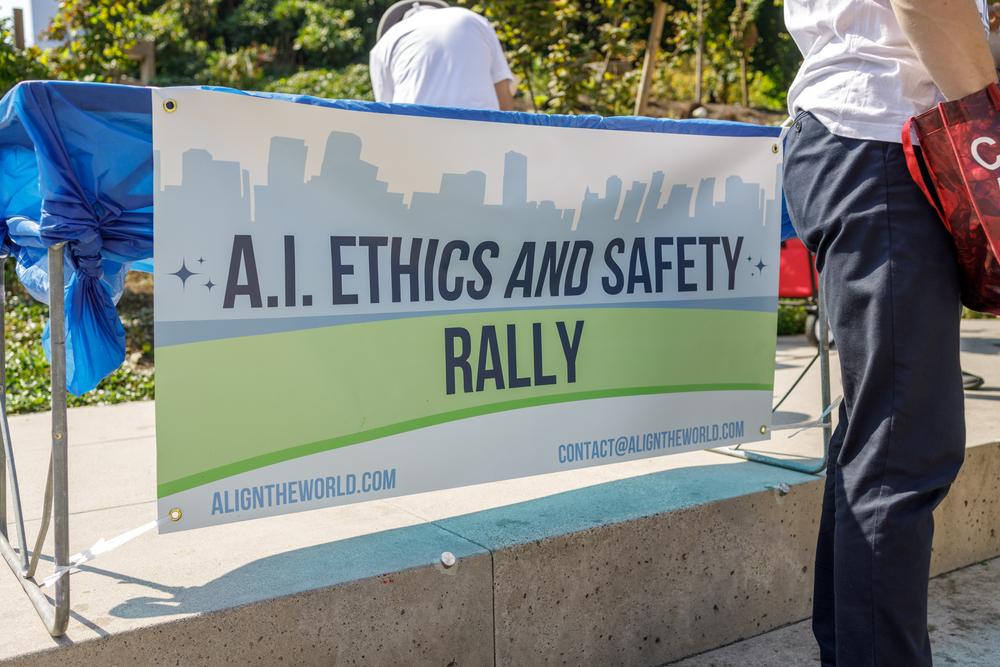


Licensed from DepositPhotos. Ethics rally in in front of art gallery in Vancouver, Canada.
Photo by Margarita Young


AI FOR INDIE AND TRADITIONAL PUBLISHERS


Let’s look at the problems some creative folks have with AI. There are four areas of AI currently where writers and artists are most concerned—translation, narration, cover design, and writing. There are two primary reasons for concern in these four areas: 


  1. Is copyright being infringed in the training of the AI software and the building of large databases from other copyrighted material (primarily books and images)? There are multiple lawsuits about this problem. The Author’s Guild has successfully sued a couple of companies. You can keep track of their progress here. on AI Licensing for Authors: Who Owns the Rights and What’s a Fair Split?


  2. Will the people who are currently do these four jobs—translating, narrating, cover design, and writing—be replaced by AI and thus deprived of a living? 


I am definitely with the Author’s Guild on this problem of copyright infringement. Though there is progress, I doubt that all the AI that has used copyrighted materials to build their database (and all of them have) will ever be compensated. As the saying goes: Closing the barn door after the horse escaped, doesn’t bring the horse back.   


As to taking the jobs of people doing things where AI is taking over, I have some mixed feelings on this myself. The discussions around this are often emotionally driven (including my own emotions) and advocacy driven (me too). As with most new technology, the fear is how it is used, if it will change the publishing landscape so that even fewer people can participate, and how someone without insider knowledge can assess its decision-making process to determine if it is breaking any laws or cultural rules. Also, there are thousands of small business people who do some of these jobs as an independent consultant. What will happen to them.


Most of you are probably familiar with this statement or something similar: “It is not technology that is evil, it is the people who use it that make it evil.” I do believe it is true. That’s the difficulty, deciding if I use a piece of technology how will I use it within my values? What am I endorsing by using it? 


Why is AI being used in the creative space? The answer is intertwined with personal productivity and financial gain. Companies do not invest in creating a new technology unless it benefits them financially AND/OR they see there is a wide need for it and they can sell the technology to others. There are also those people who create technology not for the purpose of making billions of dollars, but for the purpose of making the world a better place or serving a particular group of people they want to help have more access to upward mobility. 


In the past two decades of publishing technology has cut costs significantly for both large and small publishers. It has allowed indie publishers (self-publishers) to be present in the same marketplace that large publishers use. AI driven programs that began to surface in 2008-2012 made book formatting easier and quicker, helped create covers to the proper dimensions for uploading to printers, and helped make distribution of books around the world to multiple vendors as easy as a single load to an aggregator and then a click of a button to start the distribution. This means books are for sale with a small investment to get them to a worldwide market. 


IMO that is a good thing. There are now a lot more choices of content and story point-of-views that would never have been selected by major publishers because the “marketability” of a book is always backward looking—based on the past three years of successful books. Those people who could never get a book deal, can self-publish easily. Those people who had many book deals in the past but were no longer their publishers “favorite” list of authors, started leaving publishers and self-publishing and made more money.


The current technology puts the small publisher’s book in ebook and print into the marketplace fairly easily and inexpensively. Today, indie publishers also have access to print-on-demand hardback books and special edition books via Book Vault. (i.e., sprayed edges, unique end pages, multiple cover treatment options, inside color images without having to pay for the entire book being in color, and book sizing options) It isn’t as inexpensive as a straight black and white paperback, but you also don’t have to order a thousand of them to get it. Just one is fine. Or perhaps 10 or 20 for a special promotion. All of these capabilities are possible because of AI programs.


Now with additional AI programs, one might be able to also afford derivatives of their work through audiobooks and translations with a reasonable low-investment of money. Again, I think this is a good thing because it expands the ability to use a single creative work and gain more readers and sales through these other derivatives.


The downside to both indie authors and traditional publishers is competition. Because of the relative ease of getting a book to market, there are millions of  new books competing for readers every year. Because of large database management, those millions add up. Currently, Amazon is reported to have a database of over 20 million books, of which approximately 12 million are active (meaning they sell a certain number of books every year). 


Getting “discovered” is the problem and it continues to get harder for a book to be shown based on a general search without spending significant money on advertising, placement, influencers, reviewers, and other marketing. This likely is also why authors are scared that AI will increase that tension for them.


In Part 2 of this post. I will look in depth at the four primary areas of AI Creative Intervention. How it works, compare costs to human options, review AI reliability/quality as of this date, and provide some pros and cons of the various options. 


In Part 3 I’ll share what I’ve decided to do and how I view the ethics of this situation. I am a not a trained ethicist, but I suspect neither are the people who read this post. We are all trying to evaluate and make our own decisions that  support our creative goals and our values.


I hope you are willing to stay with me and share how you are thinking about this, too.

About Maggie Lynch

Maggie Lynch is the author of 30+ published books, as well as numerous short stories and non-fiction articles.  Her fiction tells stories of men and women making heroic choices one messy moment at a time. You can learn more about her in these venues. Website | Facebook | Pinterest | BookBub Fiction | Goodreads |


Saturday, December 2, 2023

The Quiet Year Behind, but What's Ahead, By M.L. Buchman

Note: I’ve been doing this here at Romancing the Genres for several years now. If you’re in a retro mode or want to peek at my last year’s prognostication (or want to see how right/wrong I’ve been in the past), visit: https://romancingthegenres.blogspot.com/2022/12/what-year-2023-will-be-by-m-l-buchman.html.

Looking forward, I see a couple of very clear trends. None of these are shocking news. I’ve pegged them before because the indie industry has largely stabilized. Not completely, but the Wild West of its first ten years now lies solidly in the past.

Success in the near future, as I see it, is a little about tools and a lot about strategy. So, think of this more as a wandering set of random observations and suggestions than predictions.

TRANSLATIONS

In 2021, I said we were 2-3 years from universal—on the fly—translations: choose a title, choose a language, start reading.

I know people who are now doing AI translations without a professional bilingual proofreader, but I can’t imagine how annoying those are to read. Clean-up is still needed.

So, auto-translate isn’t here yet…maybe by 2025?

But affordable AI translation backed by a professional bilingual proofreader? Oh yeah, so doable now. I’ve already started that with the first one live by the New Year if all goes well.

 ARTIFICIAL INTELLIGENCE

The pandemic effect continues. All of those programmers stuck at home were able to deeply focus on advancing AI tools and WOW did the landscape shift fast.

I also said that it would an exciting time for IP lawyers—and is it ever! Look for legal wranglings to continue for the foreseeable future.

Do you use AI for idea generation? Fine.

Do you use it to create cover art or actual words? Wow, are you ever walking into a world of potential hurt. LLM (Large Language Models, the way AIs work) are trained by, you guessed it, feeding them lots of language (or images or whatever).

Developers have two choices:

One, only feed it works legitimately in the Public Domain? The LLM will sound / look beyond archaic (because it was filtered from works created seventy years past the death of the author or from low-grade fan fiction [if it was high-grade they would need to copy other’s worlds]).

I even try not to read any books over a few decades old to avoid sticking my writing voice hideously in the past.

Train your LLM on modern materials? You’re stealing copyright according to the initial bits of case law and a little thing called the Berne Convention of 1887 ratified by 181 of the 195 countries of the world. (Hot tip: You can avoid all that mess by limiting your LLM sources to Eritrea, Iran, Iraq, Somalia, and a few choice others.)

Just yesterday as I write this, Sports Illustrated was shamed into taking down a whole series of magazine articles written / generated by AI, complete with AI-generated profile pictures and bylines. Yep, the times are going to be interesting. (Shamed before the lawyers had a chance to come after them.)

AI-Audiobooks

These and translations appear to be the only AI elements steering clear of the whole legal wrangle over how they were trained. It’s an economic way to create additional IP from your deep backlist.

Again, like a translation, it can be posted simply as it’s generated, but a proof-listen and edit is still highly recommended. Is “lead” pronounced “leed” or “led”? Does “read” come out “red” or “reed”? That alien race name in your SF masterpiece…Cthulhu anyone?

But these translations are still cheap / free and a great place to start.

ADVERTISING

I’d previously noted the collapse of the “advertising churn” model. The number of people living on the churn (spending $250,000/year to make $75,000/year because the rest gets pumped back to the ad company) has collapsed. I’m sure there are people who are still managing that, but far fewer than ever before. Readers are ad saturated.

My take on it is that ads can still be effective, but rarely anymore in a saturation mode. Targeted ads, intended to build audience and new fans, seems to be the way to go—as maybe it always was.

Remember, a fan isn’t someone who you managed to churn or discount a book into their hands. A fan is someone who finds you and thinks, “Oh, I like this kind of stuff.” Then, with proper handling (which I’ll get to in a minute), they buy a second and a third book. By the end of the third book, you are well on the way to turning them into a true fan who will now go and plow through your backlist and join your newsletter to see anything new coming.

If you’re still living in the ad churn, ask yourself this, “Been sleeping well lately?” I wouldn’t be.

PANDEMIC

As I write this, we’ve just survived 2023, the Year of the Post-Pandemic Craze.

Writers who were smart about business loved the Pandemic. Not only did we have an excuse to stay home and write, but after people burned out on the Netflix catalog, they bought books. Lots of books.

Then because of a minor miracle of science (called building a major vaccine in under a year instead of the more typical decade), the populace finally declared the pandemic to be over (well before the experts were ready). I read an article yesterday that the US population alone was estimated to have banked about $20 trillion (that’s $20,000,000,000,000) in savings during the Pandemic. They drove less, they ate out less, and they sure didn’t fly anywhere.

In 2023, it’s estimated that they’ve burned through $19 trillion of those savings. They played, they partied, they traveled far and wide, they had a great time.

There was one thing they were not doing—reading books.

Many, many authors saw their income halve overnight, and remain that way throughout 2023. (Mine dropped, but thankfully not like that.)

I expect 2024 to find some modicum of balance as the US and others are forced back to work, as college loan payments return, and budgets are once more a matter calling for some attention.

That’s good for writers, so I’m hoping for a better 2024 as are many others.

 DIRECT SALES

I harped on this at length last year (see the link at the top to revisit the discussion, https://mlbuchman.com if you want to see what I did). The only thought I’ll add to that is Do it! Do it now!

Yes, it’s a total pain in the ass. Sure it makes you a higher percentage of the cover price for each sale, which is offset by the time it costs you.

BUT it gives you direct connection to your fans.

Re-read that sentence. Here, I’ll force you to: It gives you direct connection to your fans.

You get their e-mail and that’s your ticket for the long term. You get to coax them into the second and third purchase that turns them from reader to fan. The importance of the chance to market them directly can not be overstated.

Why?

See the next topic.

DISCOVERABILITY

For the last five years or so, a friend and I have had a two-hour cross-country brainstorming session every month (And in September we met up for five days and really shorted our brains out.) In the past, we started every conversation with, “How do we break publishing?”

This was the relevant question over the last five years as we sought ways to leverage new tools in creative ways. I even built a mini-conference designed to give the software vendors more ideas and clearer feedback (several of the ideas have since appeared on their platforms).

But those platforms have stabilized. Sure, they’ll continue to improve, but they’re now about how to create or distribute a book better, faster, cheaper—rather than how to do it at all.

So, we’ve started asking a new question, “How do we break discoverability?”

Because that’s the current challenge. If you aren’t asking yourself that question daily, or at least weekly, you’re failing as the manager of your small business of being an author. Constantly ask yourself, “Other than writing high-quality stories, what can I do to improve my discoverability?” (Hot tip: If you aren’t asking the question, you’ll never find an answer.)

Personal Example 1:

I’ve started new fan outreach initiatives: bonus scenes, recipes from the books, cast lists, and readers club videos. To see what I did, visit: https://www.mlbuchman.com/fan-club-freebies/. Feel free to join!

Personal Example 2:

For eight years I wrote a short story a month and gave it away for free for a week. People read them in droves, and then bought them in droves until they were a third of my income. But after over a hundred stories (there were some years with Christmas bonus stories), I wasn’t feeling as inspired as I had been.

I planned to stop the monthly Ides of Matt short stories, but first I asked the magic discoverability question.

In answer, I came up with Thrill Ride – the Magazine. It’s an opportunity to expose my stories to the fans of the authors I bought stories from. It’s a win-win discoverability tool. https://thrillridemag.com. (By the way, submissions are open through 12/31/2023 at midnight.)

My second best advice?

Think, think hard, about creative ways that you can “Break Discoverability” and reach your fans in your own new and creative ways.

AND MY BEST ADVICE (my same final paragraph as last year and the one before that and…)

Ask: How much time am I spending writing?

It better be over 25 hrs/wk if you’re a full-time author. Over 10 hrs/wk if you’re still in the aspiring mode.

Nothing! Nothing! Nothing! is more effective than the next book for ensuring that your backlist grows, your future expands, and you’ll be in the best position to take advantage of 2024, 2025…

Note: my webstore is live at https://mlbuchman.com.


USA Today and Amazon #1 Bestseller M. L. "Matt" Buchman has over 75 novels, 200 short stories, and 50 read-by-author audiobooks.
From the very beginning, his powerful female heroines insisted on putting character first, then a great adventure.

PW declares of his Miranda Chase action-adventure thrillers that: “Tom Clancy fans open to a strong female lead will clamor for more.” About his military romantic thrillers: “Like Robert Ludlum and Nora Roberts had a book baby.” He is also the founder and editor of Thrill Ride – the Magazine.

A project manager with a geophysics degree, he’s designed and built houses, flown and jumped out of planes, solo-sailed a 50’ sailboat, and bicycled solo around the world…and designs quilts. He and his wife presently live on the North Shore of Massachusetts. More at: www.mlbuchman.com.


Saturday, December 28, 2019

So how's your decade been?

by M. L. Buchman

Yep, we humans like our round numbers and there's another tenner coming up in just a few days. So, I thought I'd take a moment and look backwards so that I could try to peer forwards.
  • 2007 - the first Amazon Kindle came out (about the kajillionth entry into the e-reader market and not the best of them). The main thing that set it apart is that it was backed up by a direct publishing platform (KDP) and a wireless delivery system.
  • 2009 - I dropped my first couple KDP books.
  • 2011 - "The Kindle Christmas" This was the year when suddenly the Kindle was THE gift under the green boughs. (That would be the Kindle 4, the one after the one that I bought with the clicky keyboard.)
  • 2015 - Hugh Howey and Data Guy set out to discover the scale of this new-fangled indie pub industry...and discover that it is over 30% of total e-book unit sales and about 15% of total e-book revenue. (This was the tail end of the $0.99 discounting madness that we still haven't fully recovered from.)
  • 2018 - By their last report, the numbers were more like 40% of unit sales and 25% of income--that's of the entire publishing industry! Poke into fiction and most genres are over 75% of unit sales.
So, let's look at this for moment.

In 2009, a small group of friends and I were very early adopters of the indie publishing realm that would reshape publishing in ways that hadn't happened since the pocket-sized paperbacks of the early 1940s, the collapse of the pulps in the late 1950s, and the distribution collapse at the turn of the century. (Remember when your grocery store had big racks labeled: "Local author"? Then Safeway said, "No, we just want to order in a few places, not 400 local distributors." Chain stores jumped on the bandwagon and suddenly every store complied with New York-mandated stocking levels rather than manager or regional preferences.)

But all that aside, I'm trying to go back to our 2009 / 2010 excitement and see how I felt about the next decade. I knew the money was there, but I knew that without an audience, I didn't stand a chance.

Thankfully, 2010 was also the year that the 440 rejections I'd earned over the 1990s (roughly a submission every 8 days for 10 straight years) finally paid off. My publisher, with their (back then) vastly superior distribution system helped my work find an audience. I spent those 13 titles on a traditional publisher from 2012-2016 knowing full well that I'd be making a tenth as much per book sale. I figured that was worth it to find an audience.

Turns out that it was. Laid off late in the recession for the second time in three years, 2013 was the year I made the jump to being a full-time writer.

How? I wrote my ass off. As did so many others.

Now lets peek for just a moment at the fads.
  • The $0.99 discounters. Made some money (and a LOT of sales), but they're gone now.
  • The madly fast-releasing single authors (any heard from Amanda Hocking lately? Certainly not the way we used to).
  • We won't mention the KU scammers (Round 1, 2, or 3)
  • The fad chasers (most are in it for a few years then gone).
  • Now we have the 20 to 50k folks chasing the hot markets with vast quantities of fast-written work. The few really successful ones have mostly created ghost author publishing collectives, some big enough to generate almost daily sales.
Then there were the career builders, in it for the long haul. That absolutely included me. My desire to go back into the corporate maelstrom is so low that I'd rather live on an Ecuadoran beach...and I don't want to live in Ecuador.

So, what sustained my friends and I through the 2010s? A lot of it was writing good story and releasing steadily.

But that's no longer enough.

By 2017-18 discoverability wasn't just a challenge, it was becoming downright hard! Even the mega-sellers who used to drop 5-10 million copies of a title are now thrilled if they can break 1M. (Their New York advances are plummeting to match.)

Why?

There is so much more choice. In 2007 (the year Kindle launched), there were approximately 43,000 fiction titles published in the US. It's now over a quarter million.

OOPS! It's over a quarter of a million if you only count the books published with ISBNs. Extrapolating from the Data Guy reports, we know that the number of fiction titles published in 2019 is probably at least twice that, maybe 3x. No e-publisher requires an ISBN.

Changing from 43,000 to 1/2-million (3/4M) new titles. Yep! That's some kinda growth. The good news is, more people are reading than ever because it is cheap, convenient, and any particular subgenre they favor is now published (rather than New York curating it out of existence).

2020 and Beyond
Is that slowing down? Dream on. More people with ideas. More first-time authors finding the urge to complete a book.

And finding newer and better tools to complete those ideas:

  • Plot builders
  • Dictation
  • Grammar fixers (Grammarly is just the beginning on that.)
  • Vellum may seem like the be-all of formatting and book layout right now, but it will get easier. (Pre-load your metadata and passwords into the file and it will auto-pub for you to the sites of your choice? That's practically what D2D is already doing for you.)
  • Anyone tried building a book cover in Bookbrush yet? They're very, very close to being a point-and-click Photoshop killer. They're hoping to pull that off within the next year, btw.
And let's look further ahead:
  • By the end of 2020 (maybe mid-2021), the massive price threshold on translations is going to crack. Instead of human translation, we're going to have AI translation in seconds followed up by a week of work for a clean-up editor. We're talking about idiomatic translation, not simple literal translation. Not so fanciful. If I had a spare ten grand lying about, I could have this up and running within a week...now! The tools are here, they'll just be common and significantly more mature by end of year. Right now, you need a really good cleanup editor and a proofreader (but that's a book in 2 weeks rather than 3-6 months). Within a year to 18 months, a proofreader should do. I know several people who've already switched over to AI-assisted translation. At present, the cleanup editor is still a critical role.
  • Oh yeah, by later in the decade, translation probably won't be an issue at all. I'll publish an English-language book. On your Kindle 2030 you just select the language you want to read it in and idiomatic translation (or close enough for 99% of folks) will show up on the screen. The translator will download just as easily as the Google Translate dictionaries now pop onto your phone. Think of all the new readers you can find for your older work then!
  • Auto-generation of new books that match the style of an author's written works? That's already being debated in copyright circles. If I upload all of Stephen King's works into an AI, then generate a new story in his voice, who owns that? Me, Stephen, or the AI? Seriously, the 2020s are going to have copyright issues that make the 2010s and ebook rights look timid. This will definitely be in the courts by 2025. And probably running reasonably well by end of decade at the latest. Clean up the auto-gen and publish.
  • You can already create a perfectly acceptable audiobook with a digital voice in minutes. I was a beta-tester on one over a year ago and they've come a long way since. Emotions will be harder (2022?) and real dynamic expression (2025?). For now? Consider doing two: a cheap read-by-machine and a spendier read-by-human version. Great for the 2x listening speed crowd anyway. (I'm not there yet, but I'm definitely looking into it.) Did I mention that you can do this right now at https://www.descript.com/lyrebird-ai for $10/month. Think of the $2.99 "Machine read" version...except you can teach the machine your voice. It will be a flat but acceptable reading. I'd price a novel something like this: $2.99 machine-generated audio in my voice, $4.99-6.99 e-novel, $9.99-12.99 human-narrated audiobook, print at whatever price matches the pages. Here now!, not 2025.
  • Will we see auto-export of scripts into film with realistic electronic characters by the end of the decade and point-and-click stage direction? Maybe... You think that one's crazy? Did you see all of the characters that Disney brought back from the dead in Star Wars? Consider what effectively turned days of QuarkXpress layout into minutes of Vellum over the last decade. 
  • Oh, and did I mention that several of the Big 5 publishers are going down. A couple will be swept up by media giants seeking massive libraries of previously contracted content. (Oh, wait, Viacom/CBS already owns Simon and Schuster). Big 4. One may just collapse (and won't that be a mess). Perhaps one will shatter into a number of medium-size pubs or just shrink until they are one? I'm betting on a Chinese billionaire buying one just to get his money out of China.
So, a wild ride is coming. But that's not the whole picture.

A friend observed, "Cultural changes take decades no matter what cool tech arises."

People have been seeking story for millennia. They've been reading books for centuries. Yes, audiobooks are on the rise in our busy society, but the vast majority of readers are still readers and will continue to seek story. The format we're consumed in may change, but the world still needs storytellers.

So, while I'm seeking to position myself for the future (a third of my novels are already in audio with more every month, and I'm hoping to get into translations in 2020), technology isn't my guide for the 2020s.

My watchword for the 2020s is "Discoverability." That's what I test all new non-writing ideas against. This kind of ad. That kind of interview. This new tool.

Will it increase my discoverability? If yes, I pursue it. Unsure? I may test it. Not so much? I don't bother.

I think that writers who consciously ask that question, will have the greatest success no matter what changes are headed our way.


M.L. "Matt" Buchman has 60+ thriller and romance novels, 100 short stories, and lotsa audiobooks. Booklist says: 3x “Top-10 Romance of the Year” and among “The 20 Best Romantic Suspense Novels: Modern Masterpieces.” NPR and B&N say “Best 5 Romance of the Year.” A project manager with a geophysics degree, he’s designed and built houses, flown and jumped out of planes, solo-sailed a 50’ sailboat, and bicycled solo around the world…and he quilts. More at: www.mlbuchman.com.

Saturday, December 14, 2019

What's New in Publishing for 2020? by Maggie Lynch


The biggest story in publishing is the shift of ebooks to indie authors while maintaining an emphasis on print books for traditional publishers. In each of the last two years the sales of ebooks in traditional publishing has gone down while print books have remained steady. Traditional publishers are also publishing significantly less genre fiction, again ceding that to indie authors.

In the indie space the discoverability problem continues to be magnified as competition has catapulted. In a world where over one million new self-published titles are created every year, and traditional publishers but out another 750,000 books, publishers and authors are left to the algorithms and bots that make a book visible or not. Traditional publishers have chosen to make visibility key by primarily publishing celebrities, experts with a platform, and those who have already proven their sales records. In other words, they are counting on the visibility of the author knowing that visibility of the book will follow.

If you don’t have celebrity, expert status, or a big network, then visibility is something you grow. There are three intertwined ways that have become critical in today’s publishing environment: good SEO; a combination of advertising and reader engagement; and product diversification.

SEO Helps Tame the Bots

I know that no author wants to hear this, but its true. In a world of algorithms your best friend is search engine optimization (SEO). In addition to the biggest discoverability search engine in the world, Google, all distributors use search engines now with different capabilities and weighting of information prior to display. That means keywords, categories, content description, product linking, targeted markets, and good calls to action.

Search engines are no longer simply matching a string of characters to produce a result. They are now AI (artificial intelligence) directed, meaning they learn and get better based on comparing millions of search results. For example, just in the search of a name—Maggie Lynch—there are a number of possibilities. What makes me show up above all the other Maggie Lynch people in the world? First my consistent use of SEO across all platforms from my website to my books on all distributors and in all blog posts. Second whenever someone types in Maggie Lynch and recognizes it as me they click to go to whatever that link is (whether it’s my website, Amazon, Kobo, Medium, etc.). If more people click because it’s me than any other Maggie Lynch in the world, then Google will assume that anytime someone wants a Maggie Lynch it is most likely they want me.

What you can’t control is the individual search engine weighting of the algorithm. For example, Amazon puts the most weight on sales but ultimately they want to deliver what the reader expects. That means if someone types in Maggie Lynch and there is another Maggie Lynch with more book sales than me, that person will come up first. Amazon also tracks the reader through web browser cookies. If that reader has most recently looked at or bought horror stories and then puts in my name (I haven’t written in horror stories), it is most likely Amazon will show them horror stories that has the name “maggie” in them.

In the end understanding the basics of SEO and putting time into making sure it is working for you as much as possible is the number one thing you can do where the only cost is your time.

Pay-to-Play vs Engagement

How does a book or author get “discovered” among over 1.7 million new books every year? There is the faster way and the slower way. Both are viable and both have pros and cons and are dependent upon both time and financial resources.

Pay-to-Play means advertising. Advertising is designed to find people who don’t know you and bring them to your product—your book. If you have zero people (outside of family and close friends) on your mailing list and a similar following on social media, then it is certainly efficient to invest in advertising to get discovered. However, the investment in dollars is pretty substantial with the current suggested average being $100 per day on Facebook or $3,000 per month. You can do advertising for less with something to giveaway (first in series book or a novella related to a series) but it takes longer. I did that at $150 per month over six months to get 6K people on a mailing list. That’s about two cents per name. The more you spend the more people you bring in faster.

In addition to Facebook, there are good advertising opportunities with several companies—Amazon, Kobo, BookBub, and Google are among the top. Again, depending on how many books you have and where you want to get pushed, the expense can be equal to or more than the Facebook expense mentioned above.

The downside of advertising based on a giveaway, besides the expense, is that only 10-20% of the people who download your free book or sign up for your mailing list will actually read the book. So, at best with that new mailing list of 6,000 I can expect 120 to have read the book and, one assumes, be excited to read the next one. Except that, close to half of those who read the book are possibly freebie seekers. Meaning they only read free books unless or until you have become important enough they are willing to spend money on your books. As you can see this method of discoverability really is a numbers game. Once you hit about 25K people on your list the numbers start working more in your favor.

For advertising on platforms like Amazon, BookBub, Kobo, etc. on most books it is difficult to get a consistent return on investment (ROI) unless you have read-through to other books (like in a series) or you have multiple book products (ebook, print, and audiobook).

Engagement is a more organic way to build your fans, but it also takes a longer time. You build fans by word of mouth, by publishing a lot of content on social media and on blogs with good SEO. It requires you to be working hard to be seen everywhere—in person, at workshops, with other authors who are selling well, and especially online delivering content your readers want.

The upside of this method is that if people come to you because they are engaged in what you have to offer they are more likely to be real buyers and truly interested in you and your books. The time and effort you are able to put into this is what determines how quickly that will happen. For me, I post nearly every day on six platforms, write blogs at least two to three times per week, remind people of my backlist at least once per week and am gaining somewhere around 70-80 new followers per month. That means to reach the same 6K numbers that I accomplished in six months of advertising and a $900 spend, will take me approximately 6 years.  And getting 25K (assuming the same rate of organic list building) would be 26 years. Now that’s depressing.

Most authors do some combination of paid advertising and organic, depending on their specific desire and need to sell books for income.

Product Diversification

Ebook and Print. The more different product types you have for a book, the more opportunities for people to find it because you are appealing to different reader types. Most authors do ebook and print, at least for books of a certain size. Though ebooks far outsell print for most authors, there is still a significant number of people who want print and you cut out that audience if you don’t offer it. If you have a series, be sure to put together a boxed set (another product type) for those who are looking for a deal and prefer to binge a series. If it is a long series it can be several boxset combinations. For example, a series of 7 books can be three boxsets: a boxset of the first three; a boxset of the final four; and a boxset of all seven. Depending on the length of your books, you can do this in both print as well. Think of how traditional publishers have often put together three short novels (or novellas) into a compendium book.


Audio. Though audiobooks still haven’t proven their sales efficacy for the majority of indie authors, it is a different way for readers to consume your book and brings in a completely different audience. In addition, audiobooks continue to rise by double figures each year, which means that more people are getting them. In audiobooks you can also do boxsets at no additional cost to you, other than time. If you can’t afford to do audiobooks—either narrating them yourself or paying for a narrator—then consider other audio options just to bring in that group of people who primarily consume content through audio. That could be through sample readings, through a podcast where you discuss your books regularly, or by participating in other people’s podcasts, or regularly reading excerpts and making them available online. The point is to have audio available in some form for bringing new readers to your books.

Other Book-Related Content. Nonfiction writers have long used the idea of worksheets, summaries of primary points, or a lead magnet instruction video to bring in new readers and show their expertise. Many authors are diversifying to offer courses in their areas of expertise. Fiction writers can do this as well. An article or course on the world building involved in your fantasy novel can peak a person’s interest in checking out the book. An article or course on the most common problems plaguing romantic relationships can be a way to interest romance readers. Science articles related to your science fiction world or a course on how to do science research for fiction works similarly. The more you are seen as someone who is not only a writer, but also has done some cool research or has an interesting background the more likely people are to look up your books.

Summary

Visibility aka Discoverability will continue to be the number one hurdle for publishing—whether it is traditional or indie. Competition will continue to be magnified because there is no longer a time by which books disappear from online distributors. In the past, creating something new was most important and writers were urged to write fast and put out as many books as possible every year. Generating a lot of books does create backlist—one part of discoverability.
 
Today, discoverability is reliant on the three parts of the stool to stand up in the long run: name recognition; backlist; and product diversity.

SEO drives discovery once you’ve built a fan base (name recognition), have a good backlist of product, and reach different reader needs with product diversity (print, ebook, audio, and others). You can have 100 products in the market, but if they don’t have the right keywords, the right categories—a way to be easily found by the majority of people searching for that kind of product—then you won’t be visible.

About Maggie Lynch:
As an idealistic nerd with a romantic streak that surpasses any scientific explanation, Maggie writes nonfiction to help authors master the business side of writing. Her character-driven fiction reinforces that life is about making heroic choices one messy moment at a time. 

You can read all about her and her books at https:/maggielynch.com. She also blogs regularly about writing, life, and topics that catch her fancy on Medium.