
Showing posts with label advertising. Show all posts

Saturday, December 16, 2023

What's New in Publishing for 2024: PART 1 by Maggie Lynch

 Paper is moving around a tablet computer being used to manage publishing. A man's hand is scrolling the information.


It is that time of year when I try to stop and take stock of all that has happened this year and how I’ve done with publishing. This is my 11th blog for RTG on this topic. All the things I mentioned last year are still very much in play now.


https://romancingthegenres.blogspot.com/2022/12/whats-new-in-publishing-for-2023-books.html


https://romancingthegenres.blogspot.com/2022/12/2023-part-2-content-creation-is-king-by.html


In the past I’ve tracked a lot of changes in technology and social media and tried most everything to see what works and what doesn’t. I’ve invested thousands of advertising dollars in Amazon, Facebook, print and e-zines over the years. As I’ve said before, much of that worked well for me from 2011-2015, but it really hasn’t since then. I’ve been rarely advertising through FB or Amazon for the past three years; and stopped it completely this past year. Change in my sales? Nothing significant that can be attributed to stopping.


As I reported last year: “There are thousands of authors who will tell you that advertising on social media does increase sales. Yet traditional publishing, who increased their advertising budgets to tens of thousands every month on Facebook, Instagram, and with TikTok influencers, have now backed off. They did not increase sales enough to even break even on the vast majority of books.”


That is still true this year.  Big publishers are not investing in advertising and publicity unless the author is already a bestseller or has a big platform. Their investment is primarily to let everyone know that bestselling author or well-known celebrity or political person has now released their book. If you know the book is already going to sell 100K copies, the investment of money to let people know it’s out is primarily a way to get your return on the printing back faster.


What are the challenges facing both big traditional publishers and independent publishers?


1. The Struggle for Profitability in a Digital World

The rise of digital media and a significant shift in consumer behavior has significantly impacted the traditional revenue models in the traditional publishing industry. Printed books, which historically brought substantial revenues, now compete with eBooks and audiobooks for consumer attention. The chart below, from Statista shows some of the changes and challenges for publishers.
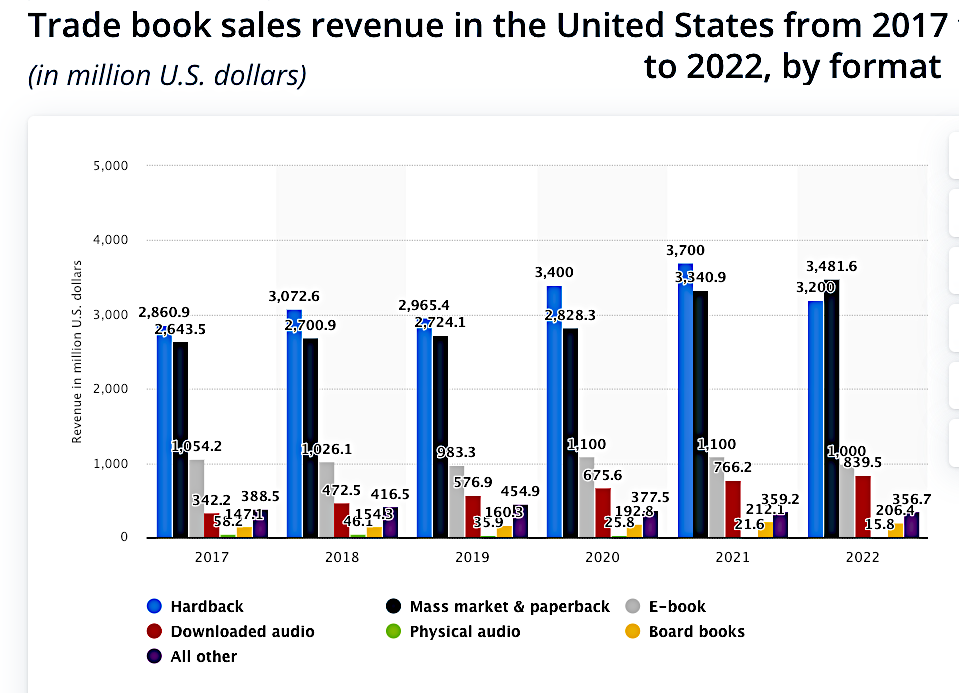


In 2022, data from the Publishers Association showed a 12% decrease in physical book sales, while digital formats continued to show strong growth. Despite the increasing popularity of digital formats, their pricing and the relatively low margins they provide have put pressure on the profitability of many publishing houses. Here is an article on Harper Collins which experienced a 45% drop in profitability.

Though self-publishers often don’t rely on printed books as much as traditional publishers, there is still that downward pricing pressure. For me, the days of keeping books at 99 cents or $2.99 and $3.99 are not sustainable. I’m taking a hard look at how my ebooks are priced, and reworking a pricing model that reflects a pricing model related to both popularity of the genre and length of the book. 

I do not recommend, however, doing what big publishers do which is price the ebook at the same price as the print book. They do that in the hopes readers will just buy the print book, where they already have larger profit margins. That is not a winning strategy. Consumers today want digital books and their expectation is significantly lower pricing because, in their mind, there are no costs for paper, printing, and shipping.

2. Market Saturation and Competition 

The publishing industry is not insulated from the impact of market saturation. With the rise of self-publishing platforms and a surge in content production, the industry has seen a significant increase in the number of books available to readers.

As reported by Bowker in 2023, over 2.8 million titles were self-published in the U.S. alone, a 21% increase from the previous year. This saturation has intensified competition, making it more challenging for traditional and self-published authors to capture readers’ attention and close sales.
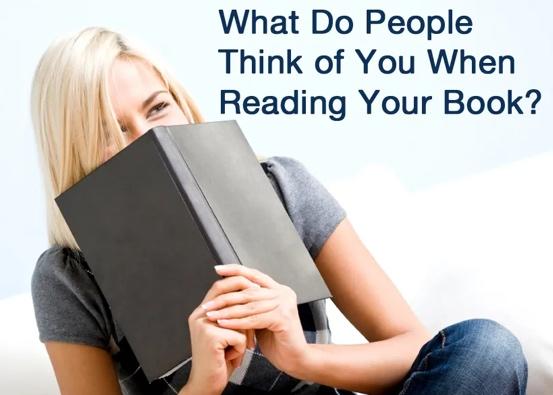
Publishers and authors need to spend significant time finding and nurturing readers in order to compete at all. It used to be that publishers didn’t care about readers. They only cared about the end of the distribution chain. They expected bookstores, online websites, and others to be the reader contact. But with readers being primarily online for all their shopping, including books, those traditional book and mortar stores are also struggling to stay afloat as they learn how to do more business primarily online. 

Now, even big publishers are building email lists and doing more direct sales. Finding ways to nurture their readers and keep them close. Many self-publishers have known this for at least a decade, though we (I include myself in this) have strayed from that edict sinking money and time into advertising and other marketing. I’m returning to focusing on nurturing readers in 2024 and beyond. Don’t have an email list? Consider this article I wrote five years ago on why an email list is important.

3. Environmental Challenges


For those who are publishing print books, you probably noticed the big hike in author copies pricing. That is because the cost of paper has gone up and, even more importantly, the supply chain for paper is not reliable. Early last year when Amazon and Ingram sent me a message about the cost of print copies going up, I had to change the pricing on every book in order to make sure I still made some money on the sales. Most of my books went up by a dollar. A few were able to squeak through without a pricing change.


The publishing industry’s reliance on paper has significant environmental implications, notably contributing to deforestation. The World Wildlife Fund reported this year that around 40% of the world’s commercially cut timber is used for paper production. Publishers are under increasing pressure to source paper sustainably. This shift often involves working with certified providers who follow responsible forestry practices. However, these sources are more expensive.
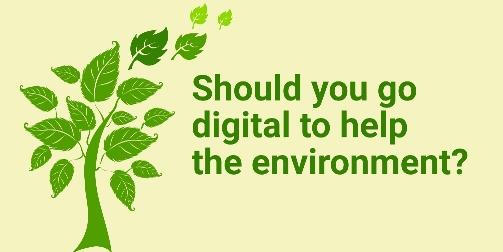
The production and distribution of books also require substantial amounts of energy, contributing to carbon emissions. The carbon footprint encompasses all stages, from paper manufacturing and printing to transportation and disposal or recycling of unwanted books. In 2022, the Green Press Initiative reported that the U.S. book publishing industry emitted over 12.4 million metric tons of CO2 — equivalent to the annual emissions of 2.6 million cars.

Since the digital revolution of ebooks, I’ve often thought that might be a great way to help the environment. No need for paper production, no returns on e-books. Unfortunately, it is not without environmental impact. Digital reading devices require energy for production and use, and they become electronic waste at the end of their life cycle. The increased energy consumption of data centers that host digital content also contributes to environmental concerns. 

There are solutions to these environmental concerns and some publishers are investing in those solutions. Self-publishers need to determine if they want to be part of this change. You can do this by choosing distributors who are mindful of their environmental footprint and working to solve the problems. 

TUNE IN NEXT SATURDAY, 12-23, FOR PART 2:


About Maggie Lynch

Maggie Lynch is the author of 30+ published books, as well as numerous short stories and non-fiction articles.  Her fiction tells stories of men and women making heroic choices one messy moment at a time. You can learn more about her in these venues. Website | Facebook | Pinterest | BookBub Fiction | Goodreads |


Saturday, December 2, 2023

The Quiet Year Behind, but What's Ahead, By M.L. Buchman

Note: I’ve been doing this here at Romancing the Genres for several years now. If you’re in a retro mode or want to peek at my last year’s prognostication (or want to see how right/wrong I’ve been in the past), visit: https://romancingthegenres.blogspot.com/2022/12/what-year-2023-will-be-by-m-l-buchman.html.

Looking forward, I see a couple of very clear trends. None of these are shocking news. I’ve pegged them before because the indie industry has largely stabilized. Not completely, but the Wild West of its first ten years now lies solidly in the past.

Success in the near future, as I see it, is a little about tools and a lot about strategy. So, think of this more as a wandering set of random observations and suggestions than predictions.

TRANSLATIONS

In 2021, I said we were 2-3 years from universal—on the fly—translations: choose a title, choose a language, start reading.

I know people who are now doing AI translations without a professional bilingual proofreader, but I can’t imagine how annoying those are to read. Clean-up is still needed.

So, auto-translate isn’t here yet…maybe by 2025?

But affordable AI translation backed by a professional bilingual proofreader? Oh yeah, so doable now. I’ve already started that with the first one live by the New Year if all goes well.

 ARTIFICIAL INTELLIGENCE

The pandemic effect continues. All of those programmers stuck at home were able to deeply focus on advancing AI tools and WOW did the landscape shift fast.

I also said that it would an exciting time for IP lawyers—and is it ever! Look for legal wranglings to continue for the foreseeable future.

Do you use AI for idea generation? Fine.

Do you use it to create cover art or actual words? Wow, are you ever walking into a world of potential hurt. LLM (Large Language Models, the way AIs work) are trained by, you guessed it, feeding them lots of language (or images or whatever).

Developers have two choices:

One, only feed it works legitimately in the Public Domain? The LLM will sound / look beyond archaic (because it was filtered from works created seventy years past the death of the author or from low-grade fan fiction [if it was high-grade they would need to copy other’s worlds]).

I even try not to read any books over a few decades old to avoid sticking my writing voice hideously in the past.

Train your LLM on modern materials? You’re stealing copyright according to the initial bits of case law and a little thing called the Berne Convention of 1887 ratified by 181 of the 195 countries of the world. (Hot tip: You can avoid all that mess by limiting your LLM sources to Eritrea, Iran, Iraq, Somalia, and a few choice others.)

Just yesterday as I write this, Sports Illustrated was shamed into taking down a whole series of magazine articles written / generated by AI, complete with AI-generated profile pictures and bylines. Yep, the times are going to be interesting. (Shamed before the lawyers had a chance to come after them.)

AI-Audiobooks

These and translations appear to be the only AI elements steering clear of the whole legal wrangle over how they were trained. It’s an economic way to create additional IP from your deep backlist.

Again, like a translation, it can be posted simply as it’s generated, but a proof-listen and edit is still highly recommended. Is “lead” pronounced “leed” or “led”? Does “read” come out “red” or “reed”? That alien race name in your SF masterpiece…Cthulhu anyone?

But these translations are still cheap / free and a great place to start.

ADVERTISING

I’d previously noted the collapse of the “advertising churn” model. The number of people living on the churn (spending $250,000/year to make $75,000/year because the rest gets pumped back to the ad company) has collapsed. I’m sure there are people who are still managing that, but far fewer than ever before. Readers are ad saturated.

My take on it is that ads can still be effective, but rarely anymore in a saturation mode. Targeted ads, intended to build audience and new fans, seems to be the way to go—as maybe it always was.

Remember, a fan isn’t someone who you managed to churn or discount a book into their hands. A fan is someone who finds you and thinks, “Oh, I like this kind of stuff.” Then, with proper handling (which I’ll get to in a minute), they buy a second and a third book. By the end of the third book, you are well on the way to turning them into a true fan who will now go and plow through your backlist and join your newsletter to see anything new coming.

If you’re still living in the ad churn, ask yourself this, “Been sleeping well lately?” I wouldn’t be.

PANDEMIC

As I write this, we’ve just survived 2023, the Year of the Post-Pandemic Craze.

Writers who were smart about business loved the Pandemic. Not only did we have an excuse to stay home and write, but after people burned out on the Netflix catalog, they bought books. Lots of books.

Then because of a minor miracle of science (called building a major vaccine in under a year instead of the more typical decade), the populace finally declared the pandemic to be over (well before the experts were ready). I read an article yesterday that the US population alone was estimated to have banked about $20 trillion (that’s $20,000,000,000,000) in savings during the Pandemic. They drove less, they ate out less, and they sure didn’t fly anywhere.

In 2023, it’s estimated that they’ve burned through $19 trillion of those savings. They played, they partied, they traveled far and wide, they had a great time.

There was one thing they were not doing—reading books.

Many, many authors saw their income halve overnight, and remain that way throughout 2023. (Mine dropped, but thankfully not like that.)

I expect 2024 to find some modicum of balance as the US and others are forced back to work, as college loan payments return, and budgets are once more a matter calling for some attention.

That’s good for writers, so I’m hoping for a better 2024 as are many others.

 DIRECT SALES

I harped on this at length last year (see the link at the top to revisit the discussion, https://mlbuchman.com if you want to see what I did). The only thought I’ll add to that is Do it! Do it now!

Yes, it’s a total pain in the ass. Sure it makes you a higher percentage of the cover price for each sale, which is offset by the time it costs you.

BUT it gives you direct connection to your fans.

Re-read that sentence. Here, I’ll force you to: It gives you direct connection to your fans.

You get their e-mail and that’s your ticket for the long term. You get to coax them into the second and third purchase that turns them from reader to fan. The importance of the chance to market them directly can not be overstated.

Why?

See the next topic.

DISCOVERABILITY

For the last five years or so, a friend and I have had a two-hour cross-country brainstorming session every month (And in September we met up for five days and really shorted our brains out.) In the past, we started every conversation with, “How do we break publishing?”

This was the relevant question over the last five years as we sought ways to leverage new tools in creative ways. I even built a mini-conference designed to give the software vendors more ideas and clearer feedback (several of the ideas have since appeared on their platforms).

But those platforms have stabilized. Sure, they’ll continue to improve, but they’re now about how to create or distribute a book better, faster, cheaper—rather than how to do it at all.

So, we’ve started asking a new question, “How do we break discoverability?”

Because that’s the current challenge. If you aren’t asking yourself that question daily, or at least weekly, you’re failing as the manager of your small business of being an author. Constantly ask yourself, “Other than writing high-quality stories, what can I do to improve my discoverability?” (Hot tip: If you aren’t asking the question, you’ll never find an answer.)

Personal Example 1:

I’ve started new fan outreach initiatives: bonus scenes, recipes from the books, cast lists, and readers club videos. To see what I did, visit: https://www.mlbuchman.com/fan-club-freebies/. Feel free to join!

Personal Example 2:

For eight years I wrote a short story a month and gave it away for free for a week. People read them in droves, and then bought them in droves until they were a third of my income. But after over a hundred stories (there were some years with Christmas bonus stories), I wasn’t feeling as inspired as I had been.

I planned to stop the monthly Ides of Matt short stories, but first I asked the magic discoverability question.

In answer, I came up with Thrill Ride – the Magazine. It’s an opportunity to expose my stories to the fans of the authors I bought stories from. It’s a win-win discoverability tool. https://thrillridemag.com. (By the way, submissions are open through 12/31/2023 at midnight.)

My second best advice?

Think, think hard, about creative ways that you can “Break Discoverability” and reach your fans in your own new and creative ways.

AND MY BEST ADVICE (my same final paragraph as last year and the one before that and…)

Ask: How much time am I spending writing?

It better be over 25 hrs/wk if you’re a full-time author. Over 10 hrs/wk if you’re still in the aspiring mode.

Nothing! Nothing! Nothing! is more effective than the next book for ensuring that your backlist grows, your future expands, and you’ll be in the best position to take advantage of 2024, 2025…

Note: my webstore is live at https://mlbuchman.com.


USA Today and Amazon #1 Bestseller M. L. "Matt" Buchman has over 75 novels, 200 short stories, and 50 read-by-author audiobooks.
From the very beginning, his powerful female heroines insisted on putting character first, then a great adventure.

PW declares of his Miranda Chase action-adventure thrillers that: “Tom Clancy fans open to a strong female lead will clamor for more.” About his military romantic thrillers: “Like Robert Ludlum and Nora Roberts had a book baby.” He is also the founder and editor of Thrill Ride – the Magazine.

A project manager with a geophysics degree, he’s designed and built houses, flown and jumped out of planes, solo-sailed a 50’ sailboat, and bicycled solo around the world…and designs quilts. He and his wife presently live on the North Shore of Massachusetts. More at: www.mlbuchman.com.