
This time last year, my predictions for the new year were influenced by the impact of Covid on indie authors, on readers, and on the publishing industry. Twelve months later, with the pandemic still rumbling on like a multi-generational saga, we’ve mostly accepted Covid restrictions as the new normal (for now), and as we head into the new year, the biggest conversation points in the indie publishing community are to do with technology.
THREE TECHNOLOGICAL ADVANCES
Just out of beta testing is the new Atticus software, masterminded by Dave Chesson of Kindlepreneur in response to indie authors’ need for a Vellum equivalent for PC users. Atticus is both PC- and Mac-compatible and it provides facilities for drafting and editing as well as formatting. Atticus also provides healthy competition for Vellum. Both reasonably priced, they will be a powerful and transformative resource for self-publishers in 2022.
The second big tech story of 2022 will be the NFT (non-fungible token) – effectively another publishing format, offering buyers a unique and uniquely valuable product.
Find out more about the concept on this helpful podcast, including a transcript, by ALLi director Orna Ross and Joanna Penn of The Creative Penn: https://selfpublishingadvice.org/technologies-for-authors/
While futurists are getting excited about the potential of NFTs for authors, others have yet to be convinced. Says ALLi’s Technical Manager Robin Phillips: “There’s a lot of talk and hype around NFTs at the moment, but I suspect by this time next year there will be very little talk of them around books. If authors and publishers do use them in the long term, the model will be the occasional one-off offers, not a continuous steady income stream, like books, I think it’s more likely though that by this time next year, they will all be mostly ignored, probably with a small cadre of people buying and selling them, albeit at much lower and more sensible prices than what we are currently seeing.” It will be interesting to revisit this conversation at the end of 2022 to see how NFTs are panning out in the indie publishing sector.
The third technology making news in the new year will be AI (Artificial Intelligence), particularly for audiobook narration. Amazon’s Audible will not currently stock audiobooks narrated by a non-human voice, but other platforms are available, including direct sales from authors’ own websites. 2022 will reveal how readily readers will embrace AI narration. According to ALLi director Orna Ross, AI is especially good for non-fiction books: “Research shows most serious audiobook listeners don’t care about robot-voices when it comes to how-to non-fiction. They are getting used to the robotic voice from YouTube and other places and they just want the info—many of them speed up and listen at double or even triple speed.”
More nuanced narration is required for fiction, but Dan Holloway is optimistic: “I expect AI to come up with voice narration that’s not only good but genuinely indistinct from human narration. Whether this is an opportunity or whether it changes creative industries the worse forever is unlikely to be clear within a year.”
Will 2022 also see refinements to make AI narration cope better with fiction audiobooks than at present? If they do, it will make self-publishing audiobooks far more affordable, given that AI narration costs about a third of a human voice artist’s fees – the most expensive element of audiobook production and publication.
AUDIOBOOK PLATFORM CHANGES
Still on the topic of audiobooks, Audiblegate – the industry shorthand for Amazon actively encouraging Audible subscribers to return listened-to audiobooks for full credit at the expense of their authors/publishers (find out more about the indie publishing industry’s Audiblegate campaign here) – remains unresolved. In consequence, in 2022, more indies are likely to seek alternative audiobook publishing platforms, including the wide distributor Findaway Voices and the Authors Direct service that enables authors to sell their audiobooks direct from their own websites.
Spotify’s recent purchase of Findaway Voices promises an even wider reach with its vast and well-established customer base for music-streaming. Says Rachel McLean, best selling indie author of crime novels, “In a year’s time we could very well find that Spotify is on the road to replacing Audible as the dominant force in audiobooks. It’ll make the decision between wide and exclusive to ACX very different and will in turn make Findaway Voices a bigger player in the indie space.”
Not all indie authors are as optimistic about Spotify’s acquisition of Findaway. “It didn’t make my heart sing when I heard the news, knowing what Spotify did to the music industry and its artists,” says Dawn Brookes, indie author of thrillers, mysteries, memoir, and children’s books. “For now, they are making reassuring noises, but my gut feeling is they will cheapen audiobooks and potentially chip away at author rights and royalties. In a year’s time, we might no longer see ACX as the villain.”
Personally I think the Spotify/Findaway deal comes not a moment too soon, as at least it will provide more competition for Audible and encourage Amazon to review its business practices regarding Audiblegate.
Calling the Spotify/Findaway deal “the biggest news story of 2021”, Dan Hollway sums up: “I expect the repercussions of that to ripple throughout 2022. I don’t expect we’ll know for sure whether it marks the start of a land of opportunity for us or the beginning of the end of meaningful payment for audiobooks, but we should at least have an idea.”
Meanwhile Amazon continues to expect indie authors to “pay to play” to gain traction on its storefront, with indies who opt for Amazon advertising needing to spend significant amounts of time and money to keep up with its ever-changing algorithms. Yes, there are indies who master the system and do very well, but there are untold numbers making a loss and losing heart.
VALUE YOUR RIGHTS
As the indie publishing sector matures, its authors are becoming ever more aware of the value and significance of their IP (Intellectual Property), and more are selectively selling rights to specialists to reach territories and formats beyond their comfort zone.
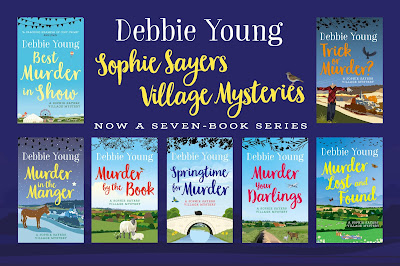
I predict that in 2022 more indies will seek foreign language rights deals, not least because it’s nigh impossible to market a book published in a language you don’t speak. Similarly uncertainties surrounding Audible, Findaway and Spotify will encourage indies to sell audio rights. I’ve just done this myself this month, signing a seven-book audio deal for my Sophie Sayers Village Mysteries, and am glad to have been able to delegate their production and marketing to an expert, giving myself more time for new content creation.
With some English-language book markets starting to feel saturated, a growing number of indies will focus on foreign-language markets as the key to future growth and profitability. I’ve been surprised by recent success stories with German translations, given the excellent standard of English in the key German-speaking countries (Germany, Austria, and Switzerland), but it’s heartening too.
ECO ISSUES
In the wake of the COP26 Climate Change Conference, fiction editor Amanda Waller, who works exclusively in the indie publishing sector, says, “I predict an increase in eco fiction where green themes are woven through the narrative rather than being the obvious focus and an awareness of how self-publishing is greener than traditional publishing – not least because of print-on-demand. I’ve even seen eco-credentials listed as a reason why someone would choose to self-publish.”
At the same time, a growing awareness of the inherent waste in traditional publishing practices, which are built around the sale-or-return model, will put pressure on all publishers to reduce their carbon footprint.
“41% of all emissions in trade publishing are down to unsold book returns,” advises Dan Holloway. “Publishing has committed to tackling climate change en masse. In 2022 , more traditional publishers may turn to print on demand, where printing is more local to customers and there are no, or fewer, returns. This could either level the playing field and mean better facilities are built that we all benefit from, or it could see indies competing with traditional publishers for POD printing facilities.”
Personally, I’d be glad if the ongoing shortages of paper and card and constant price hikes in print costs persuaded publishers to rethink their increasingly extravagant use of materials. It’s startling to compare chunky 21-st century print books, with their widely-spaced lines and copious white space on every page, to the frugal early Penguins, designed to make reading cheap and affordable for the masses, and with books printed during the Second World War when paper was rationed. It would be a brave publisher to sacrifice the high production values that modern readers expect, but, hey, we need brave decisions to reverse climate change, so here’s hoping…

OPENING UP TO INDIES
Since its launch in 2012 ALLi has campaigned for a more level playing field across publishing, and as each year we have seen encouraging progress. The Crime Writers’ Association is the latest author organisation to welcome indie members. “It’s another step towards total inclusion,” says Dawn Brookes. “And others may follow suit. However, there are still so many places where indies are treated separately, such as CrimeFest, so there’s still a way to go.” Fingers crossed that 2022 will bring more such developments.
SUBJECT MATTER
I’ve talked a lot about production, distribution and marketing, but what kind of books indies will be writing, and what will readers want to buy, in 2022?
In a world that will continue to feel full of threats, I predict there will be huge demand for comfort reads: escapist, feel-good fiction genres that lift our spirits and bolster us against bad news. Not least of these is romantic fiction, which I hope will receive greater recognition in the new year. Clare Flynn, indie author of historical novels and a member of the Romantic Novelists Association’s management committee, comments: “In 2022, publishers and the media will need to wake up to the fact that romantic fiction authors are not something to be sniggered at or completely ignored, but make up a financial juggernaut that powers their industry. These are the writers whose lousy deals but astronomic sales allow the publishing industry to cream in the profits and fund those books they do consider to be worthy but never make any money.”
Perhaps in 2022, we’ll see many more writers of romance decamp to the indie sector, which keeps its authors firmly at the heart of its business model – and in receipt of all the profits from their books.

AIMING HIGH
With many more trade authors of all types turning to self-publishing, will there be enough bookbuyers to go round in 2022 and beyond? Dawn Brookes hopes so: “I think there will be a lot more focus on indie business models with indie author millionaires who challenge the traditional view that authors don’t or can’t make money from their writing. These are no longer outliers.”
I believe there will always be huge winners on the indie stage, but for most indie authors, including the highest earners, self-publishing success won’t happen without hard graft. In a new year which looks likely to include rising inflation and increased economic pressure on individuals, I would not be surprised to see more authors spreading their financial risk and growing their earning opportunities by going wide (which in any case is ALLi’s recommendation), and even by offering author services such as editing and formatting, capitalising on skills learned throughout their self-publishing careers. Extra income streams will always help even out the rollercoaster of book sales.
Whether your priority as an indie author is to earn big bucks, to gain creative fulfilment, or simply to leave as a legacy a body of work you are proud of, 2022 will see continuing change, and it will pay indie authors to keep up with developments, eg by joining ALLi and following its blog.
Last word to ALLi’s Outreach Manager, Michael La Ronn:
“2022 looks to be a year of convergence, new developments in the audiobook space with potential AI narration, cryptocurrency and NFTs gaining strength in the publishing space, AI-assisted writing tools and new tools like Atticus that streamline the writing process, I predict that savvy authors will start figuring out how to put all these tools together with tried-and-true methods and create new ways of earning income and growing a readership. 2022 may give us some promising glimpses at what the indie writer of the future could look like.”


