In preparing the blog this year, I wondered
what I said last year and if any of my predictions came true. I know 2018 was
definitely the year of overwhelm for me. I hit the wall on technology, new
marketing ideas, and keeping up with my fans. Keeping up with that and still
getting out ebooks, print books, and audiobooks among the normal chaos of life
made me realize I’ve gone too far into the weeds and needed to fight my way
back to a “real” life that included time for writing, as well as engaging with
family and friends.
I wasn’t the only one feeling this. I
spoke with my editor and she said that 2018 was the year of missed dates for
many of her clients. They were dropping out of her schedule, unable to get the
writing done. Even the three most prolific author friends I have decided to
drop at least one book in their 2018 schedule. I ended up dropping two books
out of the six I had scheduled for 2018. But I made up for it in other
products. I would have preferred to have finished all six books. It just wasn’t
possible with all the challenges this past year presented.
So, what happened that so many long-term
and professional authors were feeling so overwhelmed? Was it the chaotic
political arena? For some that did play a role in their ability to focus.
However, for most it was how fast the “rules” were changing. First there was
the entire GDPR legislation in Europe. Then various big vendors did some buying
of companies, selling of companies and partnering with companies—including
aggregators.
Amazon alone did at least four major
system renovations in the past year:
1) They tried to stop scammers and stuffers;
and in doing so set up additional automated processes to do that. Some of those
processes caught up innocent people as well.
2) Amazon decided to change its
Advertising backend and name. The roll out of that process was not smooth and
not very well documented. Even support personnel weren’t quite sure what was
going on.
3) In the early Fall, Amazon decided to close CreateSpace and began
switching all of those customers to KDP Print. It was a well-telegraphed
move—if not in actual messaging. When KDP Print started to look more and more
like CreateSpace it was obvious the move was imminent. However, as with other
huge system changes it was not smooth and that caused great drama, lost sales
for some, and certainly a lot of confusion for the less technically inclined
authors.
4) Without warning Amazon changed their buy pages to no longer reflect
“also boughts” a way in which indie authors could work to build their
discoverability in the algorithms by making sure that the cross-pollination of
also boughts was as close as possible to their genre. Amazon exchanged the
“also boughts” display for two rows of sponsored ads on most pages. It is still
rolling out in full. This now means that to be discovered on Amazon you either
have to be a bestselling author OR pay for advertising. What many people call
pay-to-play. In the end, Amazon is a business that wants to make as much money
as possible. Once authors realize that every decision is a business decision
(not only at Amazon but also at other vendors), and has nothing to do with
whether they value authors or not, they can plan accordingly. I see far too
many people, instead, hoping that any vendor will suddenly become beneficent
and run their business as a charity for authors because we are so valuable to
them. In my view, that is not a realistic take on the business world.
The competitiveness of the market has
grown exponentially in the last two to three years. In the U.S. more than 80%
of people buy ALL their books online—ebook, print, and audio. This means
authors must be web savvy, mobile-ready, and willing to make changes quickly
without spending time worrying about the fact the change must be made. In 2018,
already 2.4 million books have been published! http://www.worldometers.info/books/
According to Statista’s
data on publishing, there have been more than a million books a year being
produced for four years in a row now. So consider all those backlist titles.
This is why discoverability is so important. This is why we can’t wait and hope
the world changes so we can suddenly become competitive. We need to understand
the reality of the market and PLAN how we are going to fit into that market and
find OUR readers.
Old Posts and Predictions and How it Compares to Today’s
Environment
I’ve been doing this “What’s New in
Publishing” and/or Predictions for the New Year on Romancing the Genres since
2013. That makes this my sixth year of being proven right or wrong. Here are the past six years posts with a
brief summary of the primary discussion and what is still relevant in 2018 and
moving into 2019.
2013 Focus on your TEAM – It
was true then and is still true now. Only now I think it’s imperative to have a
good team. I call these “partners” because most authors are not in a position
to have a company with employees who create their ultimate team. Instead, we
partner with critical individuals or companies and pay
them as we need them. And don’t be afraid to change your
partner relationships when they aren’t working out.
2014 was the year the indie publishing movement became
mainstream. So, I had two blog posts that year. Part 1 was a history of changes
in publishing over a decade (2004 to 2014). Part 2 focused on what the indie
author could do. My big advice was to Focus on the Long Game
instead of short-term returns. Given all the angst online about every Amazon
change and keeping the rankings up, I don’t think anyone listened to me on that
one. J I still believe that for a long-term career,
one has to look at long-term investment of time and finances and grow
consistently year over year. This is even more true in 2019 and beyond.

Can you become a six-figure author in
your first year of publishing? Of course you can, some authors have done it.
BUT it requires investing a good sum of money ($10K-$20K) and religiously
following a plan for releasing a book every three weeks or so, that is straight
down the middle of the genre, and creating discoverability with lots of
advertising money. There are several people who teach this methodology and it
can work. The question is if you can afford to do that year after year. Do you
have the time to learn the process? Do you have the talent and energy to churn
out 10-12 books in a year or the money to pay ghostwriters to do it for you? Do
you have the funds to spend significant money on advertising? And the biggest questions is, are you willing
to do this year after year to maintain that income? Or is your desire to do it
for the ONE book you plan to write and that’s it? Only you can answer that
question.
For me, that system doesn’t work because
I don’t want to spend the time to churn out 10-12 books a year every year. I
already work too many hours doing 6 books a year. I do write genre fiction, but
it’s not straight down the middle and I don’t want to write straight down the
middle fiction. I know it’s a trade off, and I’m willing to take that trade off
of earning less. Finally, I’m not willing or able at this time of my life to
spend $10K-$20K in advertising.
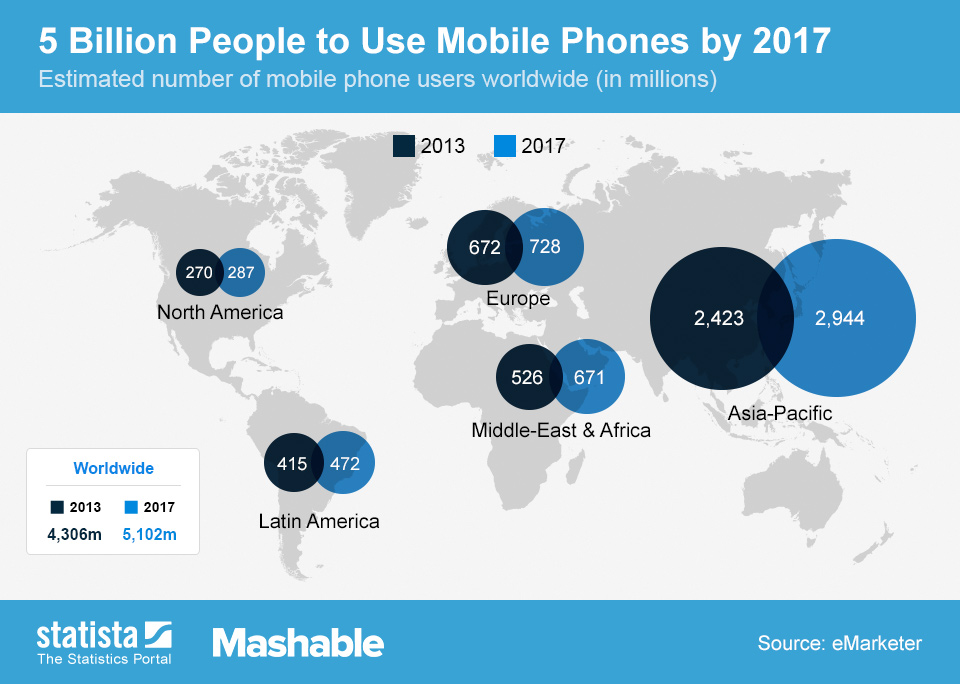
2015 Top Three Markets: mobile domination (e.g., phones);
foreign rights; and writing in series. In my
top three markets for 2019 Mobile Domination is still 100% true. In fact, I
used to believe that people would abandon e-readers for tablets. I was wrong,
it appears they are abandoning e-readers for smart phones. It is even more
important today than three years ago that an author’s business is mobile
friendly. That means your website, your store if you are selling direct, and
your engagement with readers whether via email or social media.
I think I missed the mark on the importance
of foreign rights. They are important but that importance has moved down the
list for me. Whether we like it or not, English has become a global language
and many countries where English is not the first language have a sufficient
population of English speakers to make selling English-only books viable. Can
you make even more money with translations? Yes, you can. The question is if
you can make a sufficient amount to make up for the cost of the translation OR
the cost of shared rights with a translator. For me, right now the answer is
still no. I suspect that in a few more years and books, the answer might
change.
In 2015 I also missed the mark regarding the
building importance of audiobooks. They weren’t even on my radar. To have pursued
audio in 2015 would have been a good idea for me. I wouldn’t be trying to catch
up now. But I’m not a look-at-the-past-and-feel-bad kind of gal. I know I can’t
do it all or know it all; and there is still plenty of time to be in audio.
I started into audio in late 2017. If you
haven’t yet, and you have more than five or six books, 2019 MIGHT be a time for
you to definitely consider it.
2016 post reflects that the top two trends were Mobile
Phones and Audiobooks. So, two years in a row #1 was making sure
everything was compatible with mobile phones. I
must admit, I am always surprised when now in 2018 there are still a number of
authors who have not done two important things with their website. 1) Make sure
it is responsive. In other words, make sure it looks good and works well on
smart phones. 2) Make sure it is secure. Install SSL. It’s not expensive and
it’s worth it! More about that later. Both of these are critical for search
engines to pay attention to you AND for readers to find you and, once finding
you, feel safe to be on your website.
2017 My #1 prediction was “things will continue to change
more quickly.” Nailed that one. No wonder 2018 felt
overwhelming. I’d forgotten that was my prediction. I’m sure I was already
feeling it myself at the end of 2017 and it has been more powerfully true than
I even imagined a year ago. Trends for 2018 were in the following order. You
won’t be surprised by #1—mobile phones. #2 engaging readers. Still important
but it’s getting more complex now. #3 Audiobooks. Enough said. #4 Direct Sales.
I think this can be a game changer in 2019 for those who are ready to take
advantage of it. #5 Blockchain. For me, the promise of Blockchain technology for
authors is still too early for most authors AND for the systems that exist. I
still believe in the promise, and it’s definitely a paradigm shift in terms of thinking
about rights licensing and the economics of book selling. However, I don’t
think the current platforms are ready for even the first wave of indie author
early adopters to make a difference in sales for the time and learning
required.
Okay, what about planning for 2019? For
me 2019 is about the realization that if you want to have a career there are
three things you MUST do.
1) Be willing to work with and pay for business
partners.
2) Have a brand and presence OUTSIDE of vendors like Amazon, Kobo,
Apple, Google, etc.
3) Mobile, mobile, mobile. Let’s look at each of these in a
little more detail.
Partners and Investment of Money
I know that most indies start off with
the idea of learning the ropes and doing everything for themselves. I think you
COULD do that in 2010 and 2011; maybe
even as late as 2013. By 2014 the tide had shifted and self-publishing was
mainstream. It was already become extremely difficult to learn and manage
everything one person needed to do. I don’t think you can do it now. Not only
is the competition astronomically larger and more sophisticated, but it is also
more professionalized.
When I started selling indie it was a
mixed bag of professionalism. A lot of people created their own covers. A lot
of people used their mother or best friend as their editor—actually as more of
a catch-my-typos-and-grammar person. A lot of people did formatting however
they could and lived with it if it wasn’t perfect and wasn’t pretty. In the
early years you could get away with that because the competition was a lot
smaller and being “indie” was cool. It’s not “cool” anymore. It is just the
primary way the vast majority of authors are getting published.
Since about 2014, the professionalism has
increased in leaps and bounds. The top sellers, those who began in earnest in
2010 and 2011 and made their first bestseller status, realized that it was
important to have a great cover—a genre-specific cover that rivaled NY. These
bestsellers were primarily people who had left traditional publishing or were
doing both. They were willing to pay for professional editors, for cover
designers, for formatters. Most important they were building their team so they
could write more books and spend less time on the technology. If you don’t do
that today, it is near impossible to move up and make any significant dent in
sales.
Fast forward to 2018. We are ending this
year in a pay-to-play discoverability universe. What I mean by that is that the
competition is so stiff that your discoverability engine must be honed and used
consistently. The fastest way to do that is through advertising dollars spent
exactly right. Links to selling Landing Pages with great copy and a bang on
mailing list developed for consistent growth. Can someone still do all of this?
I know a few people who have all those skills AND write well AND write fast and
are still holding it together. The other 98% of the population cannot but keeps
pretending they can and are disappointed by the results after working so hard.
When you don’t have partners or funding
to pay for partners, then one of two things happen.
1) You become overwhelmed
and you go in circles dealing with the technology and the sales aspects, but
you don’t write the next book. That is a quick failing model. You need new
product every year.
2) You burn out because you are doing too much. You get
sick. You get angry because no matter how much you do it’s not enough to move
the selling needle. Then you give up. Maybe not forever, but I’ve seen really
good authors give up for several years.
I’m not going to label giving up as
failure, because I think some people SHOULD give up on being an author.
Contrary to popular belief, it is not an easy profession. It is not a quick way
to riches. It requires constant learning, improving, analysis, and doing it all
over again. If you don’t LOVE writing first, you won’t be able to make the
constant sacrifices you have to make for it to be a viable career.
If you are not intending on publishing
books as an income-generating career, then ignore everything I’ve said. That is
a different goal. That is a goal not based in business, but in bringing
non-tangible happiness in the process.
Finding Good Partners and Determining Who/What You Need
The first step is deciding what you CAN
do well, and what you WANT to do outside of the writing itself. The answer to
this is different for each person. And how much you want to do or have the time
to do is also different.
I’ve been a do it all myself person, and
a bit of a control freak, my entire life. So, it’s no surprise that when I
decided to make a career as an author I tried to do it all. I began indie
publishing in 2011 while I was still working a full-time executive job—about 50
hours per week. I have a good technology background, so I felt comfortable with
most of those aspects of creating and publishing. However, even then I knew
there were two things I shouldn’t do myself. One was designing my own covers
and the second was editing. I’m a decent developmental editor for other
authors—though not a professional, but I knew I couldn’t do it for myself. I’m
just too close to the work. I’m also a decent proofreader, but again can’t do
it for myself. I always miss things. These are two big-ticket items that many
authors choose NOT to pay for. But, in my opinion they are more important than
any other aspect of the publishing process.
 |
| Maggie McVey Lynch |
Because I have a good background in
technology I did all the website design, social media, SEO, formatting, loading
of books myself. That division of labor—using two professionals and me doing
everything else worked for about five years. At twenty books behind me and
putting out a minimum of six new products a year, plus marketing, it became too
much for me last year. The first thing I did was hire a part time virtual
assistant to coordinate a lot of things and keep me straight on due dates,
timing, etc. I thought it would be enough. By summer, as I realized more of the
importance of my author brand and presence on the web, I knew I had to let go
of the one thing I was MOST sure of technologically—my website design.
I admit that aging has made me less
astute at multi-tasking; however, I am still quite capable of learning. But the
reality is things do continue to change rapidly and the depth of knowledge
required for a complete understanding in EVERY area is just not doable. Sometimes
that means finding a partner to do something you do well. For me I found that keeping
up with website technology and SEO was the most time consuming task for me. I
needed a major SEO update, a secure direct sales platforms, and a modernized
look and feel for my buy pages that would provide more information for the
reader without looking too busy or overwrought. For me to do that on my own
would have been, minimum, a one year process. It’s likely by the end of the
year I will need to make changes again. So, I broke down and found a good
partner. Now nearly three months into the overhaul, I am soooo glad I gave that
up. It was painful at first, and took some trust building on my part, but now
it’s a huge blessing.
The more books I have, the more work I
have to do to maintain them, manage them, market them. The more non-writing
tasks I do myself, the less time I have for writing. In 2018 I probably spent
at least a third of my book income on partners. Is that smart? I’m not sure.
But I’m in it for the long term. I believe with the partners and systems I have
in place now, I can write more in 2019. Having more product is the engine I
need to move to the next level. I can only do that by carving out time.
My top 5 Things to Care About for 2019 are in this order of
importance
1)
Individualized and personalized communication with fans. This continued building a good email list of true fans. Mailing Lists
are STILL the #1 predictor of sales.
2)
Search. Everything having to do
with visibility, discoverability, finding new people to love your books is
related to search. This means you have to pay close attention to it and
understand it well. Search includes the things we already do like keywords,
categories, linking to related content. But it also has to do with structure.
How to structure our website, our blog posts, our social media posts, and our
buy pages across multiple vendors so that it is easily indexed and
cross-indexed with critical searches.
3)
Audiobooks continue to trend up. The statistics point to a consistent 20%-25% increase. Definitely
that market is growing faster than ebooks or print. My 2019 goal is to get all
of my backlist fiction into audio so that any new book release is accompanied with
an audio book.
4)
Direct Sales to Fans is What Orna Ross, of ALLi, calls Indie
Publishing 3.0 I believe it can become a game changer
in income and control of that fan relationship moving forward. My prediction
about going direct to fans and cutting out the middleman by 2020 is starting to
become a reality for many indies. I started putting in place the search,
delivery, and banking linked processes for this in September of this year. For
indies who have a good following, an established fan base of 20K or more, going
direct can be a major income stream. For those in the midlist, like me (a 8K to
20K emails), going direct can generate income but it is a longer-term
commitment to growth and training readers as to the value of buying direct.
5)
Focus on one thing at a time and make it work really well. If I’d paid attention to this rule earlier in my career (say five
years ago) I might be in a better place instead of throwing money and energy at
the next “big” thing. I’ve always known this rule as a business person in
software, in education, in psychology. However, as an author entrepreneur I
ignored this rule by buying into the belief that a “creative” business needed
an approach that reached out to every unicorn reader and catered to them. Not
true. Unicorn readers are outliers. The focus is to find the larger middle of
your fan base and focus on them. The unicorns will decide on their own whether
that is enough to keep them.
So, what is your focus for 2019? Which
ONE area is the one you know you need the most? Do you see yourself adding a
new partner for any part of your writing and marketing process? I’d love to
hear your feedback and experience. Of course, I’m also happy to respond to
questions with my thoughts.
 Maggie Lynch is the author of 20+ published books, as
well as numerous short stories and non-fiction articles. Her fiction
tells stories of men and women making heroic choices one messy moment at a
time.
Maggie Lynch is the author of 20+ published books, as
well as numerous short stories and non-fiction articles. Her fiction
tells stories of men and women making heroic choices one messy moment at a
time.
After careers in
counseling, the software industry, academia, and worldwide educational
consulting, Maggie chose to devote her time to her career as a full time
author. Her fiction spans romance, suspense, fantasy and science fiction
titles. Her non-fiction focuses on guiding authors to business success in their
career through planning, distributing, and marketing their completed work.
You can purchase Maggie's newly released Author Secret's boxed set here:
https://maggielynch.com/book/secrets-to-becoming-a-successful-author-boxset/
Contacts:


 As a rule of thumb, nine thousand words will record to about
1 hour of audio. This means that a 65,000 word novel will end up being around a
7 hour audiobook. If a narrator charges $200 per finished hour, that production
will cost you $1,400.
As a rule of thumb, nine thousand words will record to about
1 hour of audio. This means that a 65,000 word novel will end up being around a
7 hour audiobook. If a narrator charges $200 per finished hour, that production
will cost you $1,400. So how much time, effort, and energy is it going to take to
make your audiobook? At Findaway Voices, we've worked hard to make it as simple
as possible. Most productions are complete in about 6 weeks, with minimal
effort from an author.
So how much time, effort, and energy is it going to take to
make your audiobook? At Findaway Voices, we've worked hard to make it as simple
as possible. Most productions are complete in about 6 weeks, with minimal
effort from an author. Once you find the perfect narrator, we help guide you
through the rest of the process. The narrator hits the studio with your
finalized manuscript, and you enter your audiobook's metadata and choose where
you want your audiobook to sell. As the narrator uploads audio files to the
website, you're notified that they're ready for review. Once you've approved
the audio, you pay for the production and we get to work sending the audiobook
to every retailer you've chosen.
Once you find the perfect narrator, we help guide you
through the rest of the process. The narrator hits the studio with your
finalized manuscript, and you enter your audiobook's metadata and choose where
you want your audiobook to sell. As the narrator uploads audio files to the
website, you're notified that they're ready for review. Once you've approved
the audio, you pay for the production and we get to work sending the audiobook
to every retailer you've chosen.  Findaway Voices is the wide option for audiobook
distribution. We help your audiobook reach about 30 storefronts all over the
world. Some are big names like Apple, Google, and Audible. Others aren't
household names, but have strong presences in libraries or international
markets. They span different business models and target different types of
audiobook listeners. Some are taking big bets in monster markets, others are
taking lots of small bets in multiple niche markets.
Findaway Voices is the wide option for audiobook
distribution. We help your audiobook reach about 30 storefronts all over the
world. Some are big names like Apple, Google, and Audible. Others aren't
household names, but have strong presences in libraries or international
markets. They span different business models and target different types of
audiobook listeners. Some are taking big bets in monster markets, others are
taking lots of small bets in multiple niche markets.