Showing posts with label historical romance. Show all posts

Saturday, October 9, 2021

Claiming Your Personal Freedom by Bethany Bennett

OMG I can’t write that. My mother will read it.

That’s the panicked thought that ran through my head for years. YEARS. And that’s why, when you look at the timeline of my writing, there’s a big desert of absolutely nothing between my mid-20’s, and 37.

People ask in interviews when I knew I wanted to be a writer. The answer? Always. My whole life. I wrote my first full length romance novel at 15. No, you can’t see it. That sucker stays on the hard drive where it can’t inflict itself on hapless readers. So why didn’t my debut novel release until I was 40?

It turned out, there were innumerable layers of ingrained toxicity, self-doubt, shame, anxiety, and fear of judgment standing between me and my true self. Only once I got to work deconstructing that mess did I discover the freedom that comes with shedding those harmful things I unwittingly carried around.

Life is a roller coaster. It leaves a mark, changes how we see ourselves, and often dictates how much power we give to the opinions of others. The good news, is that it’s not over yet. As long as you draw breath, you are capable of chasing freedom, healing, and claiming yourself back from your baggage.

What does that look like?

Prioritizing your needs over someone else’s opinion (note the word NEED. This isn’t a hall pass to be a selfish jerk). Listening to that twist in your gut when someone says or does something that you don’t like. Establishing boundaries with people who give more thought to what you can do for them, than what you need from the relationship.

Sometimes, it means accepting that your mother is going to read that hot sex scene you wrote, and realizing that her reaction is a whole lotta not your business. Or looking your pastor in the eye and proudly telling them you write open door romance novels because you know there’s nothing shameful in the full scope of human relationships, and you believe in modeling healthy sex on the page.

Every layer of fear, that inner ‘what will they think’, or the awful thing someone said that you let run around in your head on a loop, stands between you and true freedom.

We toss around the word freedom a lot in our society. In this context, I am talking about the brilliant peace and untapped well of possibility within each of us that we embrace when we become the person we were created to be. This particular freedom can be scary to reach, and it doesn’t come easily. That said, I promise it’s worth the work to get there.

This is the core story I tell over and over. The journey my characters take, and I hope you as a reader, see truth in that process on the page.

Shed the shame, the damage, the labels other people gave you, and love yourself enough to search out who you can be. As the great Dolly Parton said, “Figure out who you are. Then do it on purpose.”

That’s freedom.

I hope you’ll enjoy the process of self-discovery my heroine goes through in my latest release, West End Earl. Phee takes quite a ride, but in the end, she’s the beautiful, strong, capable woman she was created to be.

https://www.read-forever.com/titles/bethany-bennett/west-end-earl/9781538735701/

Want a free short story? Sign up for my newsletter and claim your copy of the Wallflower Code here: https://dl.bookfunnel.com/dhx8fqxy9i

Website: BethanyBennettAuthor.com

Twitter: https://twitter.com/bethanyromance

Instagram: https://www.instagram.com/bethanywriteskissingbooks/

Facebook: https://www.facebook.com/BethanyBennettHistoricalRomance

Facebook Reader Group: https://www.facebook.com/groups/bethanybennettshive/

Amazon: https://www.amazon.com/Bethany-Bennett/e/B084X5BZLG

Goodreads: https://www.goodreads.com/author/show/19789823.Bethany_Bennett

Bookbub: https://www.bookbub.com/profile/bethany-bennett

Bethany Bennett is a bestselling author who grew up in a small fishing village in Alaska where required learning included life-skills like cold-water survival and several other subjects that are utterly useless as a romance writer. Eventually settling in the Northwest with her real-life hero and two children, she enjoys mountain views from the comfort of her sofa, wearing a tremendous amount of flannel, and drinking more coffee than her doctor deems wise.

Tuesday, November 12, 2019

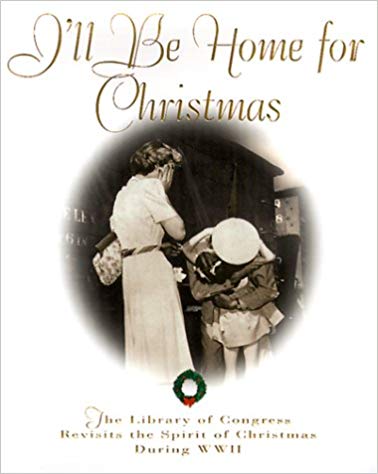
I’ll be Home for Christmas By Eleri Grace

Many classic Christmas songs, stories, and films date to the 1940s, to WWII in particular, and with good reason. Almost half the popular Christmas tunes performed and played today were written and originally recorded in the 1930s-40s, with the majority of the remainder dating to the 1950s-1960s.

Why such an outpouring of creativity in celebration of Christmas? Homesick American soldiers, together with their lonely sweethearts, wives and mothers on the home front, spurred a nostalgic idealization of the holiday. These Christmas tributes sound universal themes of love, fellowship, hope and resurgence, presenting a stark contrast with the harsh realities of war. Through the vehicle of popular culture, artists united Americans in common purpose and camaraderie. 

Christmas Eve will find me
Where the love-light gleams
I’ll be home for Christmas
If only in my dreams.
                         
Kim Gannon, Walter Kent, and Buck Ram (1943)


This beautiful Library of Congress compilation of photographs, essays, magazine articles, journal entries and other reminiscences is the perfect way to step back in time to the bygone era of WWII this holiday season. It captures the spirit of the men and women serving overseas, as well as the hopes and fears of those who kept the home fires burning, who longed for the safe return of their loved ones.

The heroines of my Clubmobile Girls novels helped alleviate the acute homesickness experienced by so many young soldiers as Christmas neared. Suppressing their own longing for the comforts of home, the Red Cross Girls threw themselves into creating innovative holiday decorations, procuring gifts, and hosting holiday parties. Wherever possible, American soldiers were anxious to spread Christmas cheer to locals, particularly to area children. Red Cross Girls worked with the military to plan and pull off these festive celebrations that brought so much joy to the young men fighting the war so far from home.

 
In my debut novel Courage to be Counted, my heroine Vivian experiences an intense longing for her sweetheart and for home while singing “Silent Night” at a party the Red Cross and men of the 305th Bomb Group hosted for village children in England. The party she and her friend Mabs plan would have looked something like this photograph from the 379th Bomb Group in Kimbolton, England.
379th Bomb Group (National Archives)


Photo ID: 342-FH-3A-14449-65542AC.

Meanwhile, her hero Jack wishes desperately that he could introduce her to his family as he shares what he knows will be his last Christmas dinner at home for a long while. Two years later in 1944, huddled under blankets in a freezing billet in Belgium with the Battle of the Bulge raging all around her, Vivian recalls with a pang of nostalgia the previous Christmas, when she and Jack spent holiday leave in London.

Making Christmas cards from Chinese currency in December 1944 (National Archives)
Inventive Christmas tree near Buna, Papua New Guinea, 1942
As you can see from the photos I’ve included here, the Red Cross Girls called on no small amount of ingenuity to replicate Christmas traditions for American soldiers serving all over the world. They made paper chains, used aluminum cans, cigarette cartons, and the metal strips known as chaff that the air forces released from their planes to jam radar defenses, strung popcorn, and made use of recycled Christmas cards.

The subtitle of I'll be Home for Christmas is The Library of Congress Revisits the Spirit of Christmas During World War II. The spirit of Christmas was especially strong in these tumultuous years, leaving us all with a lasting legacy of treasured Christmas music, stories and films. 


Learn more about me and my writing on my website, and you can also find me on Facebook, Twitter, Pinterest, and Instagram

You can purchase my debut novel through the links below.
Amazon US  ~  Amazon UK  ~  Amazon CA  ~  Amazon AU  Google ~ Nook  ~ Kobo


Tuesday, October 8, 2019

Extraordinary in the Ordinary By Eleri Grace

A “superhero” is a fictional character with extraordinary or superhuman powers or an exceptionally skilled or successful person.

Rather than paying tribute to the numerous actual people who populate my life and have exceptional or superhuman perseverance, strength, and empathy for others, I decided to write today about a group of women who straddle both worlds in a sense.  The heroines of my Clubmobile Girls novels are fictional, yet they are rooted firmly in our documented history. Based on the thousands of women who answered the call to wartime service with the American Red Cross, my heroines have a strong sense of duty and patriotism, resilience, an adventurous and independent streak, and exceptional courage.

Courage is the first word in the title of my first Clubmobile Girls novel, and it is the attribute my heroines call forth more than any other. As all good fictional characters do, my heroines must summon their mental strength to withstand and extricate themselves and others from dangerous situations. But my heroines evidence mettle from the beginning, way before they are in any sort of perilous situation. Indeed, they have built up and drawn on an enormous reservoir of tenacity before my readers meet them. Of course, most American women served in some capacity during WWII, whether working in a factory or defense plant, enlisting in one of the auxiliary military service units, volunteering with the USO, the Red Cross, or a local hospital, or tending a victory garden and economizing in her household. But the women who secured overseas assignments with the American Red Cross evinced particularly exceptional spirit and drive.

Well before the first women shipped out, before their overseas work was operational, the Red Cross intuited that the women who would organize and staff their clubs and mobile units all over the world must be self-starters with stamina, confidence, and adaptability.
Most of the women who applied (only one in six would be successful) were poised, charming, and accomplished professionals who could draw on a varied life experience. They were good conversationalists who could hold their own in a male-dominated environment, who could laugh at a dirty joke but retain “girl next door” respectability, who could offer comfort and stability to both the homesick and shell-shocked soldiers. But it was her inner fortitude that likely won her the job, and it will be that same strength that will see her through it all.

Stand in her shoes and close your eyes. It’s 1942, and you’ve just signed on for the duration.
You don’t know where you will be posted (a bomber base in southeast England or in the large cities of southeast Australia, a club in Algiers, Calcutta or Chungking, a train serving men working in the deserts of Persia, a naval base in Iceland or Cuba) or what your day-to-day work will entail. You don’t know when you might next see your parents or family and friends. Tied to that, of course, is the dawning realization that you don’t know what the “duration” actually means. You have no crystal ball that shows a return to normalcy by 1946. You don’t know yet how the war years will shape and change you profoundly, how those years more than any others will stand out as having been the most meaningful of your entire life. But you know one thing for certain: you wouldn’t trade this opportunity to serve your country with courage for anything.

Amazon US  ~  Amazon UK  ~  Amazon CA  ~  Amazon AU  Google ~ Nook  ~ Kobo

Learn more about me and my writing on my website, and you can also find me on Facebook, Twitter, Pinterest, and Instagram

Tuesday, September 10, 2019

The Devil's in the Details


Hi, I’m Eleri Grace, a new blogger at Romancing the Genres, and I’m excited to share more about me and my novels with all of you. I write WWII historical romance featuring trailblazing Red Cross Girl heroines and flyboy heroes. My novels reflect my passion for the 1940s era, and my hope is that readers will come away with an appreciation for the many couples swept up in war-time courtships forged in a time of larger-than-life uncertainties. 
 
We’ve commemorated many “75th” anniversaries for key milestones in World War II in the last year, and recently marked the 80th anniversary of the start to the conflict in Europe. The war years lived by the Greatest Generation seem paradoxically a bygone era and not so long ago. Many elements of our current lives were in existence and use in the 1940s. But as a historical author writing in that time period, I take special care to confirm the specifics. I know I’m not the only historical author to find that being a stickler for historical accuracy can be a slippery slope. I can’t tell you how many times I’ve lost hours to a research rabbit hole that ultimately didn’t perhaps merit that level of sleuthing. The trick is knowing when to stop, when you’ve hit a brick wall and need to “write around” the issue, when you’ve learned all you can via Google, or when you’ve lost sight of the bigger picture.

Some details are fun and relatively straightforward. I have always enjoyed perusing baby name books, so naming my characters is particularly rewarding.  I regularly consult the online Social Security Administration database of “Popular Names by Decade.”  My heroes and heroines were born in the 1917-1922 time period, so I browsed both the 1910s and 1920s lists and created a master list of possible character names. Now, some of the popular names in those decades don’t appeal much to modern readers. So I made a list of era-appropriate given names with modern currency. In my first Clubmobile Girls novel, Courage to be Counted, my heroine is Vivian Elaine Lambert, and the hero is John “Jack” Peter Nielsen. Both Vivian and Jack have seen a resurgence of popularity in the last few decades.

One only needs to read a few memoirs to pick up on the era’s propensity to bestow quirky nicknames. So while I’m reading memoirs and historical non-fiction for research purposes, I add to my ongoing list of unusual nicknames. While I probably won’t use those names for my hero or heroine, I do populate my cast of secondary characters with names like Ace, Tink, Duck, and Bizzy.

Some details are easy to verify. If you are writing a Christmas scene, your characters might sing songs that remind them of home, and a large number of familiar Christmas songs still enjoyed today date to the 1940s and 1950s. Most of us immediately associate Bing Crosby’s classic “White Christmas” with the WWII years, but it only takes a few seconds to confirm that it was originally performed and released in 1942. Whew, your 1943 Christmas scene can easily incorporate this well-known Christmas song. But you can’t include “Rudolph the Red-Nosed Reindeer” which was first recorded in 1949.

Many common items were rationed during the war years. Internet sleuthing usually yields a quick answer to what sorts of food items were rationed in different countries, but you have to be careful here too. Even if a food wasn’t rationed, its typical packaging might have been.

WWII authors should always keep the blackout regulations in mind. Consider this scene from Courage to be Counted:

A trace of musty odor hung about the stuffy room. Vivian crossed the room and pulled on the sash to raise the window. A waft of cool, damp air left a light mist on her face. She closed her eyes in contentment.

She should move back and let the blackout drapes fall closed, but the delicate spray of mizzle continued to beckon, refreshing and relaxing.

Other regulations, such as the restriction on bath water limits, provide another opportunity to immerse one’s readers more directly in the realities of life during that time: “Did she have time to run a bath? It would only be a few inches of tepid water, but a big improvement over her toiletry for the last several days.”

Reading deeply in memoirs and narrative non-fiction can illuminate customs, patterns of behavior that weren’t dictated by regulations but were prevalent at the time. I wanted my hero’s scenes to reflect the challenges he faced in the air but also the realities of his life on a bomber base in southeastern England.

Bowie opened the door, and Jack followed him out into the night. A crisp bite of wind stung his chapped face and whooshed through his heavy clothing, chilling him deep in his bones. Darkness, dense and inky, enveloped them like a shroud. Occasional pinpricks of light marked a hut door opening and closing. They stumbled across the mucky footpaths by instinct, the huff of their breaths and the crunch of their boots on the frost-coated ground the only sounds.

No one talked. Not on their way to the mess. Not in the chow line. Not even as they ate powdered eggs and fried Spam washed down with black coffee. Apparently, they had been up too many times this week to merit the fresh eggs and bacon that would normally be served on the morning of a maximum effort mission.

These are but a few examples of the ways a historical author can weave tiny details into the story, giving it depth and color. At the same time, it’s important to use those sorts of details with a deft touch. Translating every line of dialogue into the slang of the era would be overkill. Avoiding the information dump is equally important. For all the research I do – and I do way more than I probably ought to – I only include a fraction of what I know. You have to know when to stop researching and when you’re laying it on too thick in your writing. The devil is in the details. 


Amazon US  ~  Amazon UK  ~  Amazon CA  ~  Amazon AU  Google ~ Nook  ~ Kobo


Learn more about me and my writing on my website, and you can also find me on Facebook, Twitter, Pinterest, and Instagram

Tuesday, March 5, 2019

I need my plumbing!


Would I want to live in a different time period?

As an avid reader of historical romance, I love to be immersed in the pageantry of long ago. The excitement of a crowded ballroom, the gleam of jewels, the rustle of silken gowns, all carry me back to a romantic time. I can almost picture myself strolling the sun-dappled lanes whilst clad in a sprigged muslin gown, stepping aside to allow a curricle to speed past – driven by a dashing and most eligible bachelor, of course.

As a writer of historical romance set in the Victorian era, I attempt to inject as much realism as I can into my stories without ruining the reader experience.

Not everyone was a duke, and not everyone had an army of servants. In my novel, Love & Turmoil, heroine Arabella, daughter of an earl, has fallen on hard times. Her gowns are many times mended, and her silk stockings turned to dust years ago. The one luxury she clings to is a proper bath. She’s fortunate that her rented cottage has a bathtub modern enough to have a drain. Gravity empties the water, “grey water”, into the flower garden. But there is no tap with which to fill the tub. Her combination gardener/ coachman/ handyman, one of two servants she employs, needs to lug buckets of water up the stairs to fill the tub.

A popular scene in many of the historical romances I’ve read is for the heroine to be in the bathtub when the hero storms into the chamber, forcing the shy virgin to duck under the water in an attempt to protect her modesty. Unless she was quite wealthy, the tub would be filled by bucket and thus the water level wouldn’t be all that deep. (Or it would be tepid by the time it got filled!) Which would make for an interesting scenario <wink, wink, nudge, nudge, say no more>.


Could I live for a week in the era I most enjoy writing about? Well, I prefer taking baths over showers so that wouldn’t be an issue, except I’m not a duchess with a small army of bucket-wielding footmen so my baths would be quite shallow.

Then there’s the whole privy situation.
As an avid wilderness camper, I’ve used outdoor privies on many occasions at campsites accessible only by canoe or kayak. A household privy is not glamorous – I’ve used those too, but that’s a story for another day. <grin> I can’t imagine negotiating privy use while wearing a long gown and numerous petticoats.

While I love the idea of shopping trips to the modiste, carriage rides with a handsome rake, and cute bonnets perched atop my artfully arranged curls, I need modern indoor plumbing.  Send me back to hang out with Hercule Poirot in the equally romantic “between the wars” era and I’d be thrilled.

How about you? If you considered the realistic, day-to-day challenges of living in a certain era, how far back in time would you be willing to travel?


Stay up to date on Luanna’s writing and other shenanigans by subscribing to her newsletter. Or follow her on Facebook.

Photo of old tub by Photogeek Photography on Unsplash

Photo of outdoor privy by Amy Reed on Unsplash