Showing posts with label medieval romance. Show all posts

Friday, September 6, 2019

Do You See How I ...?

Hi, I’m Judith Ashley, author of The Sacred Women’s Circle series, soul nourishing romantic women’s fiction that honors pagan spiritual practices. My stories show you what life could be like if you had a place like The Circle where you are unconditionally accepted, supported and loved. And where, with this support, you do overcome obstacles and find your happily-ever-after.

Another one of those “brilliant ideas” in August 2018 that draws a blank as to what we (at least I) had in mind when Sarah Raplee and I came up with it. What I vaguely remember is that there are books I’ve read and reread because of the way an author writes. It isn’t just about the story, but about the way in which the story is written.

For example: I’ve just read/reread several of Claire Delacroix’s Medieval Romance. How does she take me back to that time (1100 – 1500)? Part of it is in the language. Twould be nice if it twas so easy in other times. Another is the description of clothing – actually not a description but the word used when referencing an article of clothing like kirtle and chemise. Beyond seeing the date at the beginning of Chapter One and knowing Ms. Delacroix’s book are set in Medieval times, I know by the time I’ve read a couple of paragraphs in what time period this book is set.

Another favorite author of mine is Jo Beverley. As a lover of history, I’ve some awareness of fashions, who the monarch was in England at various times, etc. but Ms. Beverley does much the same as Ms. Delacroix. Her use of language and dress orients the reader to the stories setting in either Georgian or Regency England.

I write Contemporary Romance set in the early 2000’s. Hard to believe the changes that have occurred in less than twenty years. To assist readers, I do note the date at the beginning of each book and also for important events such as the Sabbats. As my stories are set in Oregon, Ireland and Italy, I also make that clear at chapter beginnings and scene breaks.
Because my professional life did lead to my being in unsafe situations, I took the time to remember how I dealt with difficult even dangerous situations with no cell phone available, no automatic locking car doors, much less emergency buttons on key fobs. Before easily carried cell phones, I did have pepper spray (mace) in my purse or pocket. (You can read the exciting adventure I had at Heathrow airport, London, England because I carried mace here.)

What would you do if you were caught without your cell phone or couldn’t reach it and you were in danger?

My The Sacred Women’s Circle series begins in 2002 and sequences through 2006. Lily: The Dragon and The Great Horned Owl is set in 2002 – 2003 but the trauma that resulted in her PTSD was in the early 1980’s. Answering machines were available but not voice mail.

Email? Nope.

Stalking laws? Non-existent.

What about sexual harassment laws? None.

And domestic violence? In some enlightened jurisdictions police would respond and protect the victim but not in all. In earlier still considered “contemporary” times victims did not have the resources available today. There was a stigma of being an abuse victim evident in the culture. What did she do to invite the beating, rape, etc. was common thinking.

If you were born in the late 1980’s or later, you might not know that in the “good old days” I was considered my husband’s property. In the 1960’s I was even told I “belonged” to him. That mind set is, in some cases, alive and well to this day—even in the United States.

What I show in my books is that, “contemporary” times have dramatically changed in the past fifteen or so years. For readers from teens to maybe early thirties, the reality of how their own lives have changed and that what they take for granted now wasn’t readily available ten to fifteen years ago is one of my goals.

My characters, as do all of us, have choices. Like us, some choices they embrace and some they fight. Some are based on their beliefs and some on their experiences. What I show is that we all have choices in what we believe and our actions. And our beliefs and actions today create our tomorrows.

It takes courage to trust in the future a choice may bring us rather than to stay in a challenging situation because we know what to expect. At the heart of each story, the heroine and at times the hero must take the leap and trust in the future a different choice can create for them.

And because I write romance you know that even in the darkest times there will always a “happily-ever-after.”

You can find all of my books at your favorite e-book vendor. Be sure to ask your local library if you’d prefer to read my books through that resource.

Learn more about Judith's The Sacred Women’s Circle series at JudithAshleyRomance.com

Follow Judith on Twitter: JudithAshley19

Check out Judith’s Windtree Press author page.

You can also find Judith on FB! 

© 2019 Judith Ashley

Friday, June 2, 2017

Authors Tammy J. Palmer and Mercer Addison, Oregon Originals

Hi, I'm Sarah Raplee, author of BLINDSIGHT, Book 1 in the Psychic Agents Series. This month we Genre-istas are sharing some of our favorite “local” Romance Authors. Since I live in Oregon, I’m talking up two awesome Oregon Authors. Both are immensely talented.

Tammy J. Palmer is one of those rare authors who debuted with a wonderful, unique voice and quirky characters. Her novella, Cousin Q, is a gem of a story!

Cassie Anders is struggling to make rent and keep her antique store afloat when her cousin shows up looking for work and a place to lay down his sleeping bag. With his history of depression and suicide attempts Quinton isn't likely to be any more reliable than her last employee-- her lying cheating ex---but Cassie has always had a soft spot for her younger cousin and is willing to give him a chance. She soon finds herself fighting an attraction that, for the sake of family harmony, must be resisted.

Ms. Pamer followed her Cousin Q tour de force with a novel, Playing House, which promises to be equally entertaining.

Pierce Vaughn, poker –playing, motorcycle-riding, business owner is done with women who want him for the wrong reasons. He doesn't want to be used, even for sex. But this is no ordinary situation. Ginny is asking for one night with the sole purpose of losing her virginity. He's too nice of a guy to turn her down. Besides, she's cute, and it's been awhile.

TAMMY J. PALMER

Ginny Cotton, bike- riding, chess- playing, loan processor must overcome anxiety and risk a panic attack in order to achieve her goal: have sex with the hot guy she met on a dating site. She's convinced that this is the way to finally get over her best friend, the guy she's been saving her virginity for---the guy who is currently dating her sister.

When things don’t go as planned, Pierce invents a game to help Ginny overcome her fear and achieve her goal. It’s a simple game until emotions get involved, the rules become harder to follow, and neither is sure anymore that winning will be enough.

Tammy J. Palmer lives in Oregon’s rainy Willamette Valley. Visit her website for occasional posts on Life in the Express Lane, free flash fiction, and other random ramblings. 


Mercer Addison’s historical romances feature unforgettable characters that walk right off the page and stories that bring history to life. My 5-Star Review of Even Nectar is Poison follows:

This sweeping story of love, betrayal, tragedy and happy endings takes you on an emotional roller coaster from the Irish slums to the homes of New York City's rich upper class. Ms. Addison's characters will walk off the page and into your heart - and they'll never leave.

Stalwart Irish family man Donald seeks to raise his family from poverty by emigrating to the United States. But when he is able to send for them, his wife and children go down with the Titanic. Mired in grief, Donald travels to Nova Scotia to identify his wife's body, but discovers another woman was carrying her travel papers - a woman who was strangled before the ship sank.

What became of his wife, his children?

Meanwhile, rich suffragette and Titanic survivor Olivia becomes guardian of a mute little girl who was thrown from the sinking ship. When Donald rescues Olivia from a riot, their lives become entangled as they each try to get to the bottom of seemingly unrelated mysteries - mysteries that center around one ruthless and elusive killer who will stop at nothing to get what he wants.

Ms. Addison's characters stole my heart! She writes children exceptionally well. Her meticulous research made her settings come alive and shone a bright light on the injustices that prevailed in society during this time period. On top of all this, she has written a love story that will remain in your heart forever.

MERCER ADDISON
Five O’Clock Whistle takes place in the 1930s during the Great Depression.

This love story is set in a rural southern community decimated by poverty, dealing with racial issues, but determined to hold onto their dignity and their souls.

When Mae Jameison's husband is killed, she is left to keep their cotton farm producing, raise their small child and fight to survive the Great Depression hammering the country. Two men enter her life and vie for her love, the local cotton mill owner, and a stranger, a hobo riding the rails (whom she shoots when she catches him raiding her henhouse.) Mae must come to terms with the loss of her husband and build a future with the right man. One offers comfort and security, the other integrity and determined grit—and a second chance at true love.

Mercer Addison has authored fiction stories set in time periods from the medieval era to the Great Depression, as well as contemporary romantic comedies. She and her husband live near Portland, Oregon. Their little Shih Tzu, Gracie, manages their home with a firm bark.


I hope you will give these two amazing authors a try. Don't forget to check for more recommendations from the Genre-istas throughout June! ~Sarah Raplee

Tuesday, July 21, 2015

Romance Through Time by Susan Horsnell


This month I thought I would take a look at Romance and how it's changed over time.

Where would we be without romance? What was courtship and marriage like for our distant ancestors? Beginning with the ancient Greeks' recognition of the need to describe more than one kind of love, inventing the word eros to describe carnal love, and agape to mean a spiritual love.

Ancient


In ancient times, many of the first marriages were by capture, not choice - when there was a scarcity of nubile women, men raided other villages for wives. Frequently the tribe from which a warrior stole a bride would come looking for her, and it was necessary for the warrior and his new wife to go into hiding to avoid being discovered. According to an old French custom, as the moon went through all its phases the couple drank a brew called metheglin, which was made from honey. Hence, we get the word, honeymoon. Arranged marriages were the norm, primarily business relationships born out of the desire and/or need for property, monetary or political alliances.


Medieval


From buying a woman dinner to opening a door for her, many of today's courting rituals are rooted in
medieval chivalry. During medieval times, the importance of love in a relationship emerged as a reaction to arranged marriages, but was still not considered a prerequisite in matrimonial decisions. Suitors wooed their intended with serenades and flowery poetry, following the lead of lovelorn characters on stage and in verse. Chastity and honor were highly regarded virtues. In 1228, it is said by many that women first gained the right to propose marriage in Scotland, a legal right that then slowly spread through Europe. However, a number of historians have pointed out that this supposed leap year proposal statute never occurred, and instead gained its legs as a romantic notion spread in the press.


Victorian


During the Victorian Era (1837-1901), romantic love became viewed as the primary requirement for marriage and courting became even more formal - almost an art form among the upper classes. An interested gentleman could not simply walk up to a young lady and begin a conversation. Even after being introduced, it was still some time before it was considered appropriate for a man to speak to a lady or for a couple to be seen together. Once they had been formally introduced, if the gentleman wished to escort the lady home he would present his card to her. At the end of the evening the lady would look over her options and chose who would be her escort. She would notify the lucky gentleman by giving him her own card requesting that he escort her home. Almost all courting took place in the girl's home, always under the eye of watchful parents. If the courting progressed, the couple might advance to the front porch. Smitten couples rarely saw each other without the presence of a chaperone, and marriage proposals were frequently written.

I hope you have enjoyed this travel through romantic time.
Until next month, stay safe.

Sue


Susan Horsnell - Western Romance Author

Author's Page:
http://www.amazon.com/Susan-Horsnell/e/B00BXR5FMM/ref=sr_tc_2_0?qid=1437206600&sr=1-2-ent

Blog:
http://susanhorsnell.com

Website:
http://horsnells.wix.com/susan--1

Saturday, June 27, 2015

Anna Markland on Medieval Romance

Thanks for having me as your guest. After two successful careers, first in teaching then in disaster relief, I embarked on writing a
Anna Markland
romance, mainly because it was something I’d always wanted to do. I chose the medieval period because it’s my favorite to read.

I have a keen interest in genealogy. This hobby has had a tremendous influence on my stories. I based the plot of my first novel, Conquering Passion, on a bizarre incident that actually happened to a Norman noblewoman.

My medieval romances are tales of family honor, ancestry, and roots. As an amateur genealogist, I cherished a dream of tracing my own English roots back to the Norman Conquest—most likely impossible since I am not descended from nobility! This led me to make up a family and my stories follow its members through successive generations.

I want readers to feel happy that the heroes and heroines have found their soul mates and that the power of love has overcome every obstacle. For me, novels are an experience of another world or time. I lose myself in the characters’ lives, always knowing they will triumph in the end and find love.

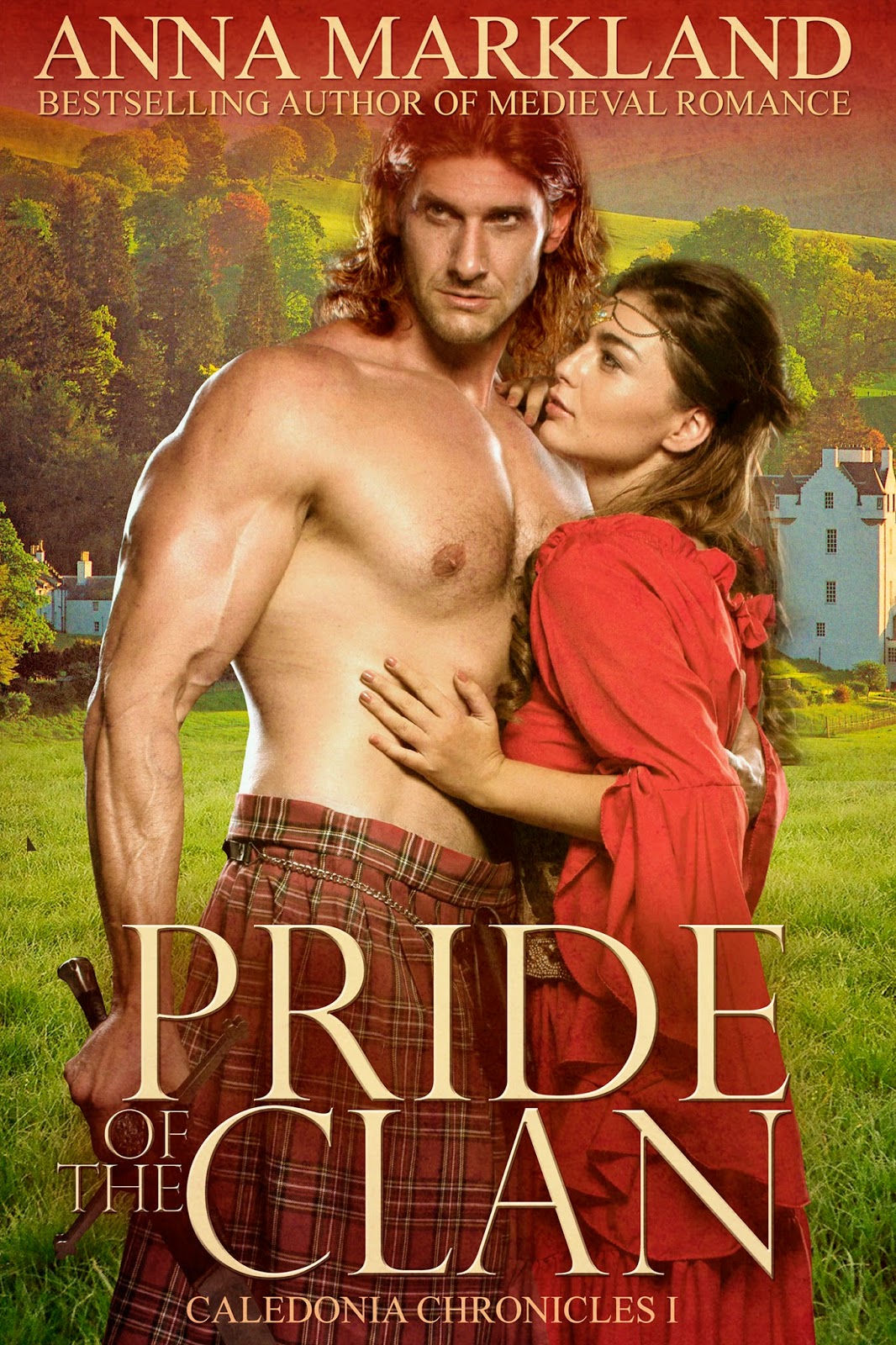
One of the things I enjoy most about writing historical romance is the in-depth research necessary to provide readers with an authentic medieval experience. I love ferreting out bits of historical trivia I never knew! But I have to admit I sometimes “tinker” with the facts to make for a more readable story (and to ensure a happy ending). For example the noblewoman whose life inspired Conquering Passion didn’t live a happy life, and if I hadn’t changed some of the names in my latest novel, Pride of the Clan, every male would have been called Robert!
                       
Links:
@annamarkland


Saturday, June 20, 2015

WRITING MEDIEVAL ROMANCES by Delle Jacobs

Amazon Bestselling Author and three time Golden Heart Winner Delle Jacobs knows whereof she speaks. Her Medieval Romance, FAERIE, has sold over 50,000 copies!

Hello everyone! 

I’m writing this in London, having just finished a tour of Waterloo on the 200th anniversary of the battle. All that has nothing to do with writing medieval romances, but here I am anyway, and I will hope for a great internet connection so I can chat with you. I just might be a bit delayed.

I write both medieval and Regency era romance, but some processes are not all that different. For any successful novel you need good character development and visually exciting settings. You need a good, believable plot, and always for any romance, a satisfactory ending with a committed relationship.

A medieval romance though, must specifically dovetail with its time period, and to be successful and believable you must have authentic, unique and believable characters who fit into their time period yet can be understood and with whom the reader can identify. Unfortunately, you can’t be completely authentic or your reader will not even understand what’s going on. But not being authentic means you don’t have a medieval story. It’s the conundrum of using the modern to create the ancient.

The medieval world is so different from today’s world, it  can feel like it came from another planet. You cannot use the language spoken because it could not be understood by anyone who in this time period has not specifically studied it. The way people thought, their lack of science in a deeply faith-based society in which all people belonged, regardless of class is very much unlike today’s world. You can’t just put a heroine in a kirtle, and hang a veil over her head. Hero is more than a knight in shining armor. And whether or not you like it, your characters have a life that is completely circumscribed by religion that might seem to us to be more like mythical folklore than math or science.

Yet while you have to have a reasonable background suitable to your characters, you have to write them in a way your readers can accept as real, and at the same time, you have to make your characters fit into their world socially, yet give them uniqueness.

You can set the story in a stone castle, populate it with a spunky heroine in a dress with pointy sleeves, a stalwart hero in shining armor, throw in a cathedral, a primitive village, a villain in black armor swinging a mace, or all kinds of other details, but you still don’t have a medieval story. Instead, you’ve got Halloween in words on the pages. You have an imitation period story, not the real thing.

Your saving grace as an author is that people are all different. Each person is unique, and needs to be treated as such. If you want to have a memorable story, you need to find the unique aspects of your main characters. You could so easily write a heroine who meets all the requirements of her culture, but if you don’t add something that makes her stand out. You have a boring heroine.

When I wrote FAERIE (a paranormal medieval) in 2011, I wanted a heroine who was only half human, and the other half Faerie. Like everyone else in her world, she has many contradicting beliefs, some of which are based on medieval Christianity, but others remnants of the region’s pagan past. Leonie’s physical appearance was unusual, yet not outside the norm. She was very tall and thin, and her hair was utterly out of control with outrageous blonde curls that grew far too long to be normal. She was impulsive, and outrageous in her behavior, often speaking out when she shouldn’t, and behaving ways in which ordinary maidens would not consider.  She was, in a word, immature. Having been raised by an uncle without either mother or father, she felt out of place in her world.

She was not the usual maiden, but her yearnings to be like other people, to become the wife and mother that her destiny prescribed, often got her into trouble. She was hungry to belong, and desired to be just like everyone else, but she couldn’t be. And like many a teenage girl, she had a crush on the very older guy who rejected her. Yet she had many endearing qualities like loyalty to her family and friends, compassion for those in pain, and reckless courage that brought readers to identify with her. She had a long way to grow to become a full-fledged adult, but she had no idea just how much she would change or how to do it. She was a girl in the midst of a rite of passage she didn’t think she could complete.

Thus, she was both a woman of her own time, clearly medieval, yet she was unique. And that was why her story was such a success.

So whatever else I might tell you about writing medieval romances, the one thing I have to suggest is that you make your main characters endearingly real people who can exist within their own cultures, yet who do not or cannot fit perfectly because something about them is different.

Do not make them modern. No foot-stamping heroines who don’t’ get their way or who want to become independently self-supporting. That simply doesn’t fit with their world. Yet like many a girl in many a culture or time, they might be immature, perhaps have a jealous or peevish streak in response to the hero’s rejection of their all-too real crush on him because he wants a bride who is circumspect and demure, something the heroine can never be. You can use the cultural fact that girls married at a much younger age at that time, yet even then a relatively young girl would often be relatively immature and not quite ready for a life as an adult woman. Give her room to grow and watch her do it. All young girls are immature at some time, and they all must struggle to become the adult they want to be.

Whatever you choose for your heroes and heroines, give them emotional flaws and assets universal over time, yet mix them with struggles that are uniquely theirs in their world and you will have people who are truly medieval yet  are understandable to the modern reader.

Thank you for reading. ~ Delle Jacobs

Visit Delle:

Saturday, June 13, 2015

English Medieval Romance Author, Kathryn Le Veque

My name is Kathryn Le Veque and I write English Medieval Romance. I have over 60 published novels including 10 contemporary novels. Most of my novels are on Amazon but I do have a select number of novels on other platforms, including all of the contemporary romances. I’m a top 10 ranked author in Historical Romance on Amazon.

Available 06/12/2015
One of the most frequent questions I get is WHY I write English Medieval Romance.

For me personally, it’s all about the knights and their bonds as men, as warriors, and as brothers. There’s something very sacred about it, something that transcends blood or friendship. It’s the core of who, and what, they are.  It’s the Band of Brothers mentality.

Medieval knights went through some changes in the 366 years considered the High Middle Ages. From coats of mail and leather armor to plate armor of tempered steel, better swords, better general equipment, and to finally the introduction of gunpowder and firearms. That’s where Medieval becomes something else because a knight on horseback is no match for a cannon.

Available 08/2015
Still, Medieval men fought and died together much like men of our era do. There is something that goes beyond loyalty with these warriors – trusting the man next to you enough that you knew, if you got into close quarters combat, that he would literally protect your back. Where do you think the modern terms “have your back” or “I’d trust him/her with my life” came from? 

Those terms were born from a bond between brothers, blood or otherwise.

The passage from Henry V that contains the phrase, Band of Brothers, truly embodies these men I have worked so hard to do justice to:

From this day to the ending of the world,
But we in it shall be remember’d;
We few, we happy few, we band of brothers;
For he to-day that sheds his blood with me
Shall be my brother.


ABOUT KATHRYN LE VEQUE

Medieval Just Got Real.

KATHRYN LE VEQUE is an Amazon All-Star author, and a #1 bestselling, award-winning, multi-published author in Medieval Historical Romance and Historical Fiction. She has been featured in the NEW YORK TIMES and on USA TODAY's HEA blog along with numerous other publications and blogs. 

In September 2014, Kathryn was the 41st MOST READ author on Amazon and now she is finding success on other platforms. She is extremely prolific with over 50 published novels and 37 #1 Hot New Releases in Medieval Historical Romance since May 2012. 

You can find Kathryn on Amazon, Barnes and Noble, ibooks, Kobo, and Smashwords. Please visit Kathryn Le Veque’s website for a complete list of books and ordering information.

On Facebook
On Twitter
On Tsu

On Amazon
On iBooks
On Barnes and Noble
On Smashwords
On Kobo


Saturday, June 6, 2015

Catherine Kean, Medieval Romance Author

Catherine Kean
Readers often ask me why, out of all the historical eras to choose from, I write about the Middle Ages.

I pen emotionally-intense, romantic books about knights in chain mail armor and the strong-willed ladies who win their hearts because, as I teenager, I fell in love with all things medieval.


My British dad often took me to England during summer vacations to visit relatives. We toured many historic sites, including windswept castle ruins; Medieval churches; and the British Museum and V & A where I admired textiles, armor, swords, sculptures, and other items crafted centuries ago. Every place and object had a fascinating story to tell.

After I completed a B.A. in English and History (Double Major, first class), I spent a year in London, England studying with Sotheby’s auctioneers. Part of the course included visits to private collections and museums. To me, history was no longer a textbook timeline of facts. It became tangible, poignant even.


In the oak trestle table that had once been in a manor hall, I saw the scratches left by bowls, mugs, and eating utensils. The silver goblet, gleaming in the museum case, had once 
held French wine sipped by a nobleman. The jeweled cloak pins lined up on display had held ladies’ garments closed against the biting cold—because in medieval times, catching a chill could be deadly.


When I sit down to write, all of those first-hand memories fill my mind. I have plenty of good research books, but my best inspiration comes from my own personal experiences because, after all, my characters are people, individuals with heartfelt dreams, deep desires, and emotional conflicts. I hope that through my stories readers not only fall in love with my characters, but grow to share my lifelong love of the Middle Ages.

To learn more about Catherine's books visit her website: Catherine Kean 


Thursday, June 2, 2011

Finn, The Enchanted Cat

In my mental waiting room, the chairs have metal legs and the burgundy fabric is natty and rough. Most who wait don't sit. Depending on personality and how anxious they are to get the heck out of there, each character will pace a bit, shift and stand and stare at the little number tag in their hand.

Finn, the enchanted cat in Irish Moon, skipped the line with a hiss and a snide remark.

No one held it against him.

Perhaps because Finn, a cat who talks, who is
tired of waiting for Breanne O'Donnell to finally master her talents, is just one of those characters we love to hate. Finn tells it like it is. He's a reluctant companion who'd rather be his own cat than beholden and dependent on Breanne.